0%

Table of Contents

znsbaso4 lithopone b301 28% is a crucial inorganic pigment widely used across a diverse range of industries, from paints and coatings to plastics and printing inks. Its significance stems from its ability to provide opacity, brightness, and durability at a cost-effective price point, making it a preferred alternative to titanium dioxide in certain applications. Understanding its properties and applications is vital for businesses seeking to optimize product performance and cost structures.

The global demand for znsbaso4 lithopone b301 28% is intrinsically linked to the growth of end-use industries like construction, automotive, and packaging. Recent market reports indicate a steady increase in demand, particularly in emerging economies experiencing rapid infrastructure development. However, challenges related to environmental regulations and the availability of raw materials present ongoing considerations for manufacturers and consumers alike.

The increasing need for sustainable and cost-efficient pigments fuels the relevance of znsbaso4 lithopone b301 28%. As environmental concerns rise, the industry is focusing on optimizing production processes and exploring innovative applications to maximize its utility and minimize its ecological footprint. This pigment plays a critical role in enabling affordable and durable products for a wide spectrum of applications.
Znsbaso4 Lithopone B301 28 A Comprehensive Guide to Properties and Applications

Introduction to znsbaso4 lithopone b301 28%

Znsbaso4 Lithopone B301 28 A Comprehensive Guide to Properties and Applications

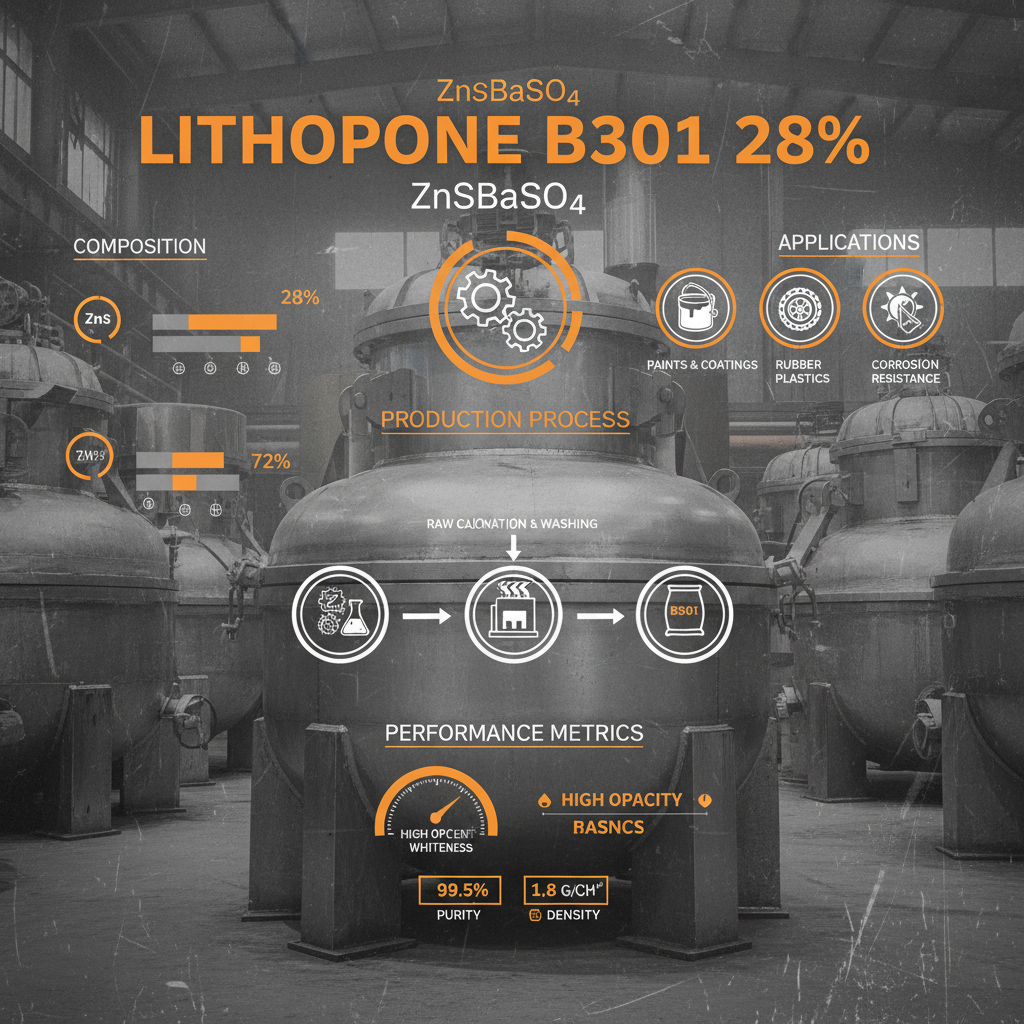
znsbaso4 lithopone b301 28% is a mixed pigment composed of zinc sulfide (ZnS) and barium sulfate (BaSO4). This unique composition grants it a distinct set of properties, including high refractive index, excellent hiding power, and good chemical resistance. These characteristics make it a versatile pigment for a wide array of industrial applications.

Its affordability compared to alternatives like titanium dioxide (TiO2) positions znsbaso4 lithopone b301 28% as a valuable option for cost-sensitive projects without significant compromise on quality. The 'b301 28%' designation refers to the specific grade and barium sulfate content, influencing its opacity and other performance parameters.

Global Relevance & Industry Context

The global production and consumption of znsbaso4 lithopone b301 28% are primarily concentrated in regions with robust manufacturing sectors, including China, India, and Europe. According to industry reports, the Asia-Pacific region accounts for the largest share of the market, driven by the rapid growth of construction and automotive industries.

The demand is closely correlated with economic indicators like GDP growth and industrial production. Furthermore, increasing stringency in environmental regulations concerning TiO2 production, alongside supply chain disruptions, have driven a renewed interest in znsbaso4 lithopone b301 28% as a viable and readily available alternative.

The UN's Sustainable Development Goals (SDGs), particularly those relating to infrastructure (SDG 9) and responsible consumption and production (SDG 12), indirectly influence the demand for cost-effective and durable pigments like znsbaso4 lithopone b301 28% in construction and manufacturing.

Defining znsbaso4 lithopone b301 28%

znsbaso4 lithopone b301 28% is a synthetic inorganic white pigment created by precipitating barium sulfate within a zinc sulfide matrix. This process results in a finely divided powder that exhibits excellent light scattering properties, contributing to its opacity and brightness. The ‘lithopone’ designation historically referred to pigments made from zinc sulfide and barium sulfate, and ‘b301 28%’ specifies a grade containing approximately 28% barium sulfate.

Its connection to modern industry lies in its ability to provide a cost-effective white pigment for a broad range of applications where extremely high purity or UV resistance are not critical requirements. It’s used extensively in paints, coatings, plastics, paper, and rubber production. It also contributes to humanitarian needs by enabling affordable and durable building materials in developing countries.

Unlike TiO2, znsbaso4 lithopone b301 28% does not possess photocatalytic properties, meaning it doesn't contribute to the degradation of surrounding materials upon exposure to UV light. This makes it suitable for applications where stability and longevity are paramount, despite having slightly lower opacity than TiO2.

Key Factors of znsbaso4 lithopone b301 28%

One crucial factor is Opacity & Brightness: znsbaso4 lithopone b301 28% offers good hiding power, effectively concealing underlying surfaces. This contributes significantly to the overall aesthetic quality of finished products.

Another essential aspect is Cost-Effectiveness: Compared to titanium dioxide, it represents a more economical pigment option, particularly in applications where peak opacity isn't essential.

znsbaso4 lithopone b301 28% Performance Metrics


Global Applications & Use Cases

znsbaso4 lithopone b301 28% finds widespread use in the paint and coatings industry, particularly in architectural paints, industrial coatings, and primers. It contributes to the opacity, brightness, and durability of these coatings, enhancing their protective and aesthetic qualities.

The plastics industry utilizes znsbaso4 lithopone b301 28% as a filler and pigment in a variety of plastic products, including PVC pipes, films, and molded components. This reduces material costs while providing the desired color and opacity. In remote industrial zones where cost is a primary concern, it provides a reliable, affordable coloring agent.

Advantages & Long-Term Value

The tangible benefits of utilizing znsbaso4 lithopone b301 28% include significant cost savings compared to titanium dioxide, while still maintaining adequate performance characteristics. Its chemical stability and resistance to degradation contribute to the longevity of finished products.

From a sustainability perspective, it offers a viable alternative when TiO2 supply is constrained, reducing dependence on potentially environmentally intensive production processes. The consistent performance and reliable supply chain foster trust among manufacturers and end-users.

Future Trends & Innovations

Research and development efforts are focused on enhancing the performance characteristics of znsbaso4 lithopone b301 28% through particle size control and surface modification. This aims to improve its opacity, dispersibility, and compatibility with various polymers and coating systems.

The integration of digital transformation and automation in manufacturing processes is optimizing production efficiency and quality control. Furthermore, exploring synergistic combinations with other pigments and additives can unlock novel applications and functionalities, aligning with sustainability trends.

FAQS

What are the main differences between znsbaso4 lithopone b301 28% and titanium dioxide?

While both are white pigments, titanium dioxide (TiO2) typically offers higher opacity and UV resistance. znsbaso4 lithopone b301 28% is more cost-effective and doesn’t exhibit photocatalytic activity, making it suitable for specific applications where TiO2’s drawbacks are undesirable. The 28% barium sulfate content in b301 affects its optical properties, reducing the cost but slightly lowering the hiding power.

Is znsbaso4 lithopone b301 28% environmentally friendly?

Compared to some TiO2 production methods, znsbaso4 lithopone b301 28% can have a lower environmental impact depending on the manufacturing process. It doesn't contain heavy metals and doesn't contribute to photocatalytic degradation. However, responsible waste management and adherence to environmental regulations are crucial during its production and disposal.

In what applications is znsbaso4 lithopone b301 28% typically used?

Common applications include architectural paints, industrial coatings, plastics (PVC pipes, films), printing inks, and rubber products. It’s often used where cost is a significant factor and extremely high opacity isn't essential. It is particularly beneficial in applications where UV resistance isn’t crucial.

What is the significance of the 'b301 28%' designation?

The 'b301 28%' refers to a specific grade of znsbaso4 lithopone with approximately 28% barium sulfate content. This percentage influences properties like opacity, brightness, and dispersibility. Different grades are available to suit specific application requirements, and 'b301' denotes a specific manufacturing standard.

How does znsbaso4 lithopone b301 28% compare to other white pigments in terms of cost?

znsbaso4 lithopone b301 28% is generally more cost-effective than titanium dioxide (TiO2) and other specialty white pigments like lead white. The price difference makes it an attractive alternative for applications where high opacity isn’t the primary concern and budget constraints are significant. Pricing varies based on quantity and supplier.

Are there any limitations to using znsbaso4 lithopone b301 28%?

While cost-effective, znsbaso4 lithopone b301 28% generally exhibits lower opacity and UV resistance compared to TiO2. It may also require a finer grinding process for optimal dispersion in certain applications. Consider these limitations when selecting a pigment for a specific application.

Conclusion

znsbaso4 lithopone b301 28% represents a valuable and versatile pigment solution, offering a compelling balance of cost-effectiveness, durability, and performance. Its widespread application across diverse industries underscores its continued relevance in a global market increasingly focused on sustainable and affordable materials. Understanding its properties and limitations allows for informed decision-making in product development and manufacturing.

Looking ahead, continued innovation in particle size control and surface modification will further enhance its capabilities, expanding its application scope. For organizations seeking reliable pigment solutions, exploring the benefits of znsbaso4 lithopone b301 28% can unlock significant opportunities for cost optimization and product enhancement. Visit our website to learn more: znsbaso4 lithopone b301 28%.

Samuel Garcia

Samuel Garcia

Samuel Garcia is a Logistics and Export Coordinator at Hebei Caiqing New Material Technology. He ensures the efficient and timely delivery of Caiqing’s products to international clients, spanning regions like the Middle East, India, and Russia. Samuel is responsible for managing documentation, coordinating with shipping partners, and navigating complex import/export
Previous Lithopone 30 A Comprehensive Guide to Properties and Applications
Next Exploring Lithopone for Leather Applications and Industry Trends