In the complex world of industrial chemistry, pigment lithopone stands as a cornerstone white pigment, blending the properties of barium sulfate and zinc sulfide to provide a cost-effective yet high-performance alternative to pure titanium dioxide. As global manufacturing shifts toward balancing cost-efficiency with material durability, understanding the nuances of this inorganic compound becomes essential for producers in the paint, plastic, and rubber industries.
The global demand for high-quality white pigments is driven by an ever-growing construction sector and the expansion of the automotive and consumer goods markets. While titanium dioxide offers unmatched opacity, pigment lithopone provides a strategic advantage in applications where a slightly softer white and superior chemical stability are required, making it indispensable for specific industrial coatings and primers.
By delving into the chemical synergy of its components, manufacturers can optimize their product formulations to achieve the perfect balance of brightness, weather resistance, and economic viability. This comprehensive guide explores the technical properties, global applications, and future innovations surrounding pigment lithopone, providing a roadmap for professionals seeking to enhance their material science strategies.
Global Relevance of Pigment Lithopone
On a global scale, the adoption of pigment lithopone is closely tied to the economic fluctuations of the raw materials market. In regions like Asia-Pacific and Latin America, where infrastructure growth is rapid, the need for affordable, high-volume white pigments has propelled lithopone into a critical role. By adhering to ISO standards for purity and particle size, manufacturers ensure that this pigment meets the rigorous demands of international trade.
The primary challenge addressed by this material is the cost-performance gap. While the industry often defaults to TiO2, the volatility of titanium prices creates a demand for stable alternatives. Lithopone fills this gap by offering a reliable white shade and excellent opacity at a fraction of the cost, allowing companies to maintain profit margins without compromising the visual integrity of their end products.
Technical Definition and Chemical Composition
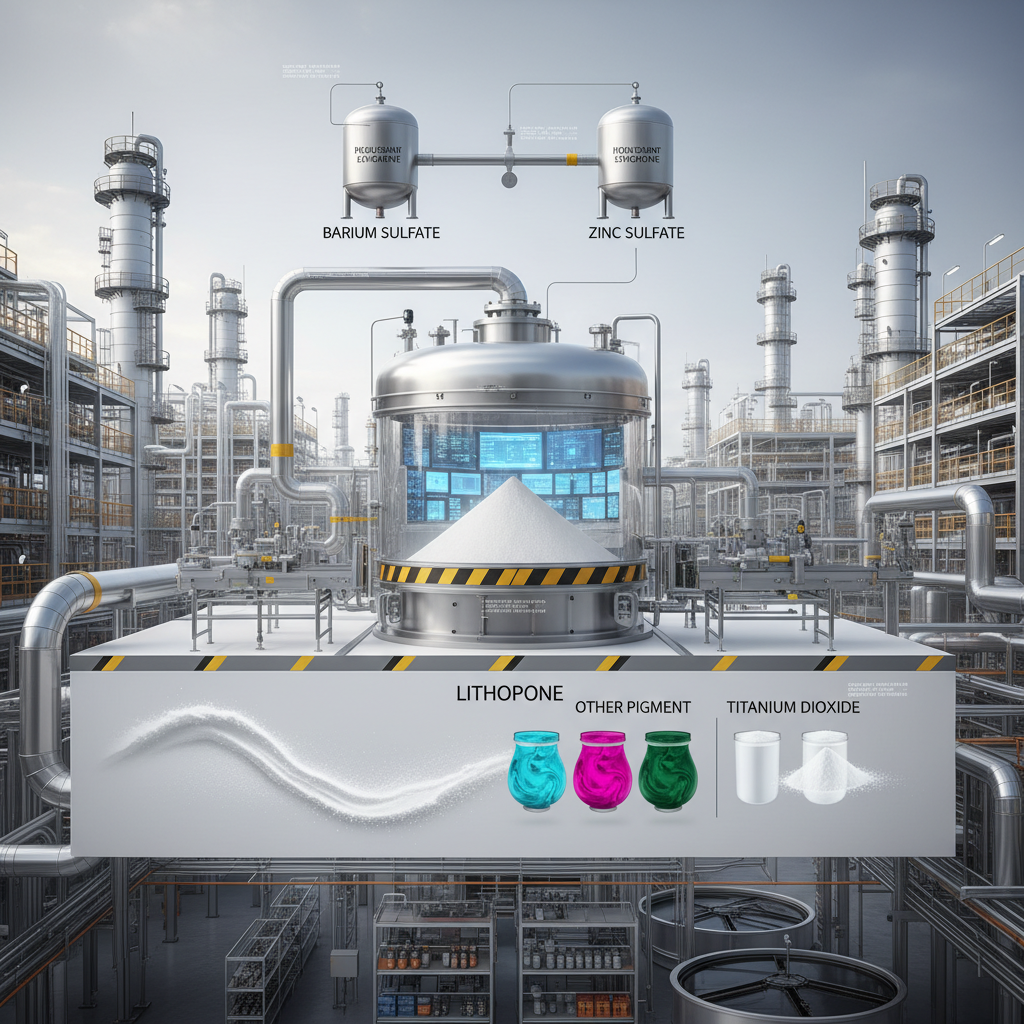
At its most fundamental level, pigment lithopone is a synergistic mixture of barium sulfate (BaSO4) and zinc sulfide (ZnS). This inorganic compound is produced through a precise chemical precipitation process, resulting in a brilliant white powder that exhibits low toxicity and high chemical stability. Unlike single-component pigments, the combination of these two salts creates a material that is particularly resistant to sulfur-containing atmospheres.
In modern industrial contexts, this composition is more than just a chemical curiosity; it is a calculated solution for durability. The barium sulfate acts as an extender, providing bulk and improving the gloss and flow of the paint, while the zinc sulfide contributes the essential white opacity. This partnership ensures that the final product has a consistent particle distribution, which is crucial for preventing clumping in large-scale industrial mixing.
Furthermore, the connection between pigment lithopone and humanitarian needs can be seen in the production of low-cost, high-durability paints for social housing and public infrastructure in developing nations. By reducing the cost of essential coatings, it enables the protection of buildings against environmental degradation, thereby enhancing the living standards and safety of urban populations globally.
Core Components for Performance Optimization
One of the most critical factors in the effectiveness of pigment lithopone is its chemical durability. Because it is inherently stable, it does not react readily with other ingredients in a formulation, making it an ideal choice for alkaline environments where other white pigments might degrade or yellow over time.
Cost Efficiency remains the primary driver for the widespread use of pigment lithopone. By optimizing the ratio of zinc sulfide to barium sulfate, manufacturers can tailor the pigment's hiding power to the specific needs of the client, effectively lowering the cost per square meter of coverage in large-scale projects.
Additionally, the dispersion scalability of the pigment ensures that it can be integrated into various mediums, from oil-based enamels to water-borne emulsions. This versatility allows for a seamless transition across different production lines, ensuring that the same quality of whiteness is achieved regardless of the carrier medium used.
Industrial Application and Comparative Efficiency
In real-world contexts, pigment lithopone is extensively utilized in the production of interior paints, primers, and plastics. In the rubber industry, it is employed to provide a clean white finish and improve the mechanical properties of the compound. For instance, in remote industrial zones where high-cost materials are difficult to transport, lithopone serves as a reliable, locally sourced alternative for heavy-duty protective coatings.
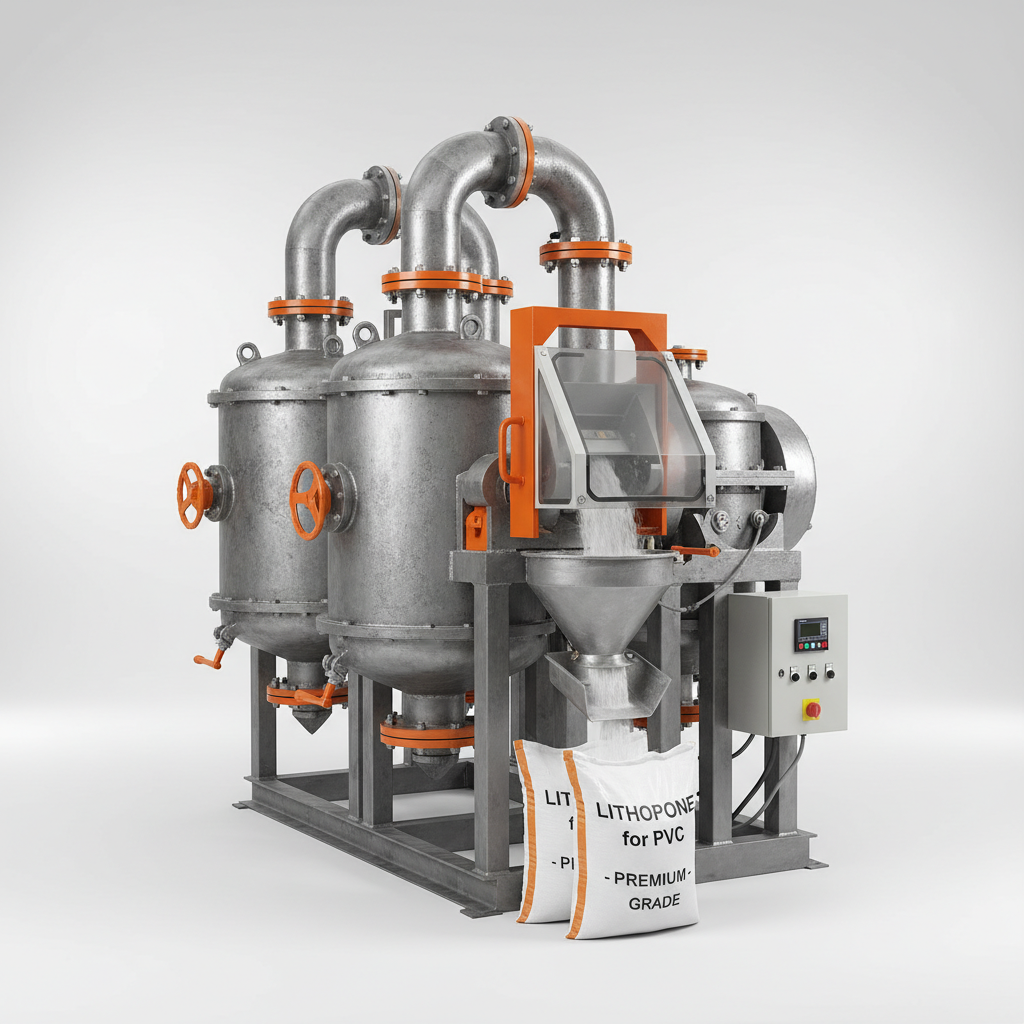
Beyond traditional coatings, this pigment is vital in the manufacturing of linoleum and various synthetic resins. Its ability to maintain color consistency across large batches makes it a favorite for manufacturers of white PVC and other thermoplastic elastomers. By integrating lithopone, these industries achieve a professional finish that resists the yellowing effects typically caused by heat during the extrusion process.
Efficiency Analysis of Pigment Lithopone Variants
Strategic Advantages and Long-Term Value
The long-term value of utilizing pigment lithopone lies in its sustainability and reliability. From a logical standpoint, the reduced dependence on more expensive rare-earth processed pigments lowers the overall carbon footprint associated with mining and refining titanium. Furthermore, its chemical inertness means that finished products have a longer shelf life and require fewer additives to prevent degradation.
Emotionally, for a brand, the use of a stable, high-quality white pigment translates to trust and dignity in the final product. Whether it is the crisp white of a medical device housing or the clean finish of a residential wall, the consistency provided by lithopone ensures a professional aesthetic that consumers associate with quality and innovation.
Future Trends in White Pigment Innovation
Looking ahead, the evolution of pigment lithopone is being shaped by the digital transformation of the chemical industry. Automation in the precipitation process is allowing for unprecedented control over particle size distribution, leading to pigments with higher scattering coefficients and improved brightness. This "nano-engineering" approach ensures that the pigment can perform even closer to TiO2 while maintaining its cost advantages.
Green energy and environmental policies are also pushing the industry toward "Eco-Lithopone." This involves utilizing recycled barium sources and implementing closed-loop water systems during production to minimize waste. As global regulations on industrial runoff tighten, the shift toward these sustainable manufacturing practices will become a competitive necessity rather than an option.
Furthermore, the integration of smart coatings—where pigments are combined with photo-catalytic materials—is an emerging trend. Researchers are exploring how pigment lithopone can act as a stable substrate for these functional additives, potentially creating self-cleaning surfaces for urban skyscrapers and industrial warehouses.
Challenges and Technical Solutions in Production
Despite its benefits, the production of pigment lithopone faces challenges, primarily regarding the consistency of the white shade. Variations in the purity of the starting zinc sulfide can lead to a slight yellowish tint, which is unacceptable for premium architectural coatings. To solve this, advanced spectroscopic monitoring is now being used in real-time to adjust the chemical feed during the reaction phase.
Another limitation is the potential for agglomeration during the drying process. Large clusters of particles can lead to "seeds" or lumps in the final paint application. Expert insights suggest the use of specialized dispersing agents and high-shear milling technologies to break down these agglomerates, ensuring a smooth, micronized powder that integrates perfectly into any medium.
Lastly, managing the environmental impact of the sulfate byproduct is a recurring concern. Innovative approaches now include the conversion of these byproducts into agricultural gypsum, transforming a waste stream into a value-added product. This circular economy model not only solves a disposal problem but also improves the overall economic profile of the pigment lithopone production facility.
Comparative Analysis of Pigment Lithopone Production Methods
| Production Method |
Purity Level |
Cost Efficiency |
Environmental Impact |
| Traditional Precipitation |
Medium |
High |
Moderate |
| Controlled Crystallization |
High |
Medium |
Low |
| Nano-milling Process |
Very High |
Low |
Low |
| Closed-Loop Synthesis |
High |
High |
Very Low |
| Rapid-Mix Precipitation |
Medium |
Very High |
Moderate |
| Eco-Friendly Hybrid |
High |
Medium |
Very Low |
FAQS
While titanium dioxide (TiO2) offers the highest opacity and brightness, pigment lithopone is a combination of barium sulfate and zinc sulfide. Lithopone is generally more cost-effective and provides a softer white shade. It is often used as a partial replacement for TiO2 to reduce costs in industrial coatings without sacrificing too much hiding power.
Yes, pigment lithopone is widely considered safe for industrial and residential interior applications. It is chemically stable and non-toxic under standard conditions. However, as with all industrial powders, it is recommended to use proper ventilation and protective equipment during the mixing and application phases to avoid inhalation of dust.
Lithopone can be used in plastics, but for high-exposure outdoor environments, it is often blended with UV stabilizers. While it is more stable than some organic pigments, TiO2 still provides better UV protection. For most plastic applications, lithopone offers excellent color consistency and heat stability during the molding process.
Yellowing is typically caused by impurities in the zinc sulfide raw material or imprecise temperature control during the precipitation process. High-quality manufacturers prevent this by using high-purity precursors and implementing real-time spectroscopic monitoring to ensure the correct chemical balance is maintained throughout the reaction.
To achieve optimal dispersion, we recommend using high-shear mixing equipment and adding a compatible wetting agent or surfactant. This prevents the barium sulfate and zinc sulfide particles from agglomerating, ensuring a smooth finish and maximum opacity in the final resin-based product.
Modern production methods are increasingly sustainable. By utilizing closed-loop water systems and converting sulfate byproducts into agricultural gypsum, the environmental footprint is significantly reduced. Furthermore, its lower production energy compared to some high-grade titanium pigments makes it a more sustainable choice for volume applications.
Conclusion
In summary, pigment lithopone serves as a vital bridge between high-performance opacity and economic feasibility. By leveraging the combined strengths of barium sulfate and zinc sulfide, it provides the industrial world with a versatile, stable, and cost-effective white pigment that supports everything from basic infrastructure to advanced plastics and rubber. Its ability to maintain consistent quality while reducing production costs makes it a strategic asset for any manufacturer looking to optimize their material overhead without sacrificing aesthetic integrity.
As we move toward a future defined by green chemistry and digital precision, the role of lithopone will continue to evolve. The transition toward eco-friendly synthesis and nano-engineered particle control ensures that this classic pigment remains relevant in a modern, sustainability-driven market. For businesses seeking to enhance their product durability and market competitiveness, integrating high-grade lithopone into their formulations is a proven path to success. Visit our website: www.cqtitaniumdioxide.com