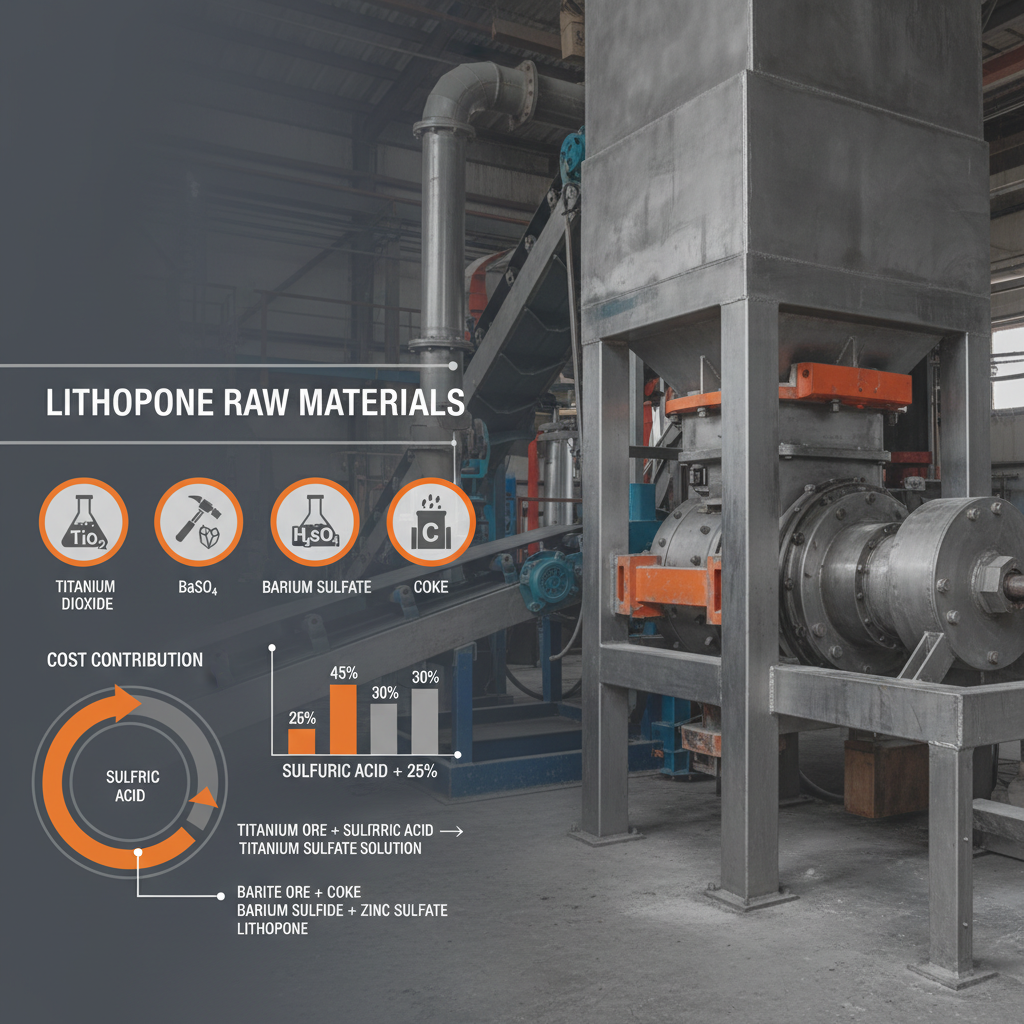
Lithopone quality in china is a critical factor influencing the performance and application of this essential pigment. Globally, lithopone, a mixture of zinc sulfide and barium sulfate, serves as a cost-effective white pigment used extensively in paints, plastics, and paper. China’s position as a leading producer and consumer of lithopone means the quality of its output significantly impacts the worldwide supply chain and pricing. Understanding the nuances of lithopone quality in china is therefore paramount for industries relying on this material.
The increasing demand for high-performance coatings, coupled with tightening environmental regulations, is driving a need for improved lithopone quality in china. Traditional lithopone production methods often result in inconsistencies in particle size, purity, and whiteness, impacting final product performance. This presents a challenge for manufacturers striving to meet stringent quality standards and consumer expectations. The ability to consistently produce high-quality lithopone is becoming a key competitive advantage.
The importance of lithopone quality in china extends beyond industrial applications. Improved pigment quality translates to more durable and visually appealing products, enhancing brand reputation and customer satisfaction. Addressing concerns around heavy metal content and promoting sustainable production practices further contribute to the long-term viability of the lithopone industry in china and globally.
The Significance of Lithopone Quality in China
Lithopone quality in china is not merely a technical specification; it's a reflection of the nation’s manufacturing capabilities and commitment to producing reliable industrial materials. As a substantial portion of global lithopone production originates in China, its quality directly influences the availability and cost of this pigment for industries worldwide. Variations in lithopone quality impact everything from paint opacity to plastic durability, making consistent standards crucial.
Understanding the factors affecting lithopone quality in china – including raw material sourcing, production processes, and quality control measures – is essential for businesses seeking to optimize their supply chains and ensure the integrity of their products. Prioritizing high-quality lithopone also aligns with growing consumer demand for safer and more environmentally friendly products, further emphasizing its significance.
Defining Lithopone Quality in China
Lithopone quality in china is defined by a combination of physical and chemical characteristics. These include particle size distribution, whiteness index, oil absorption, and the levels of impurities such as heavy metals. A high-quality lithopone will exhibit a fine, uniform particle size, resulting in excellent dispersion and opacity in various applications. Whiteness is critical for achieving desired color effects, particularly in paints and coatings.
Beyond these core properties, quality also encompasses consistency between batches. Manufacturers in china must demonstrate the ability to consistently produce lithopone that meets specified standards, minimizing variability in performance. This consistency is vital for ensuring predictable results in downstream processing and finished products.
Furthermore, modern definitions of lithopone quality in china increasingly include considerations of sustainability and environmental responsibility. Reducing waste, minimizing energy consumption, and adhering to stringent environmental regulations are becoming integral aspects of achieving a truly high-quality product.
Core Components of Lithopone Quality
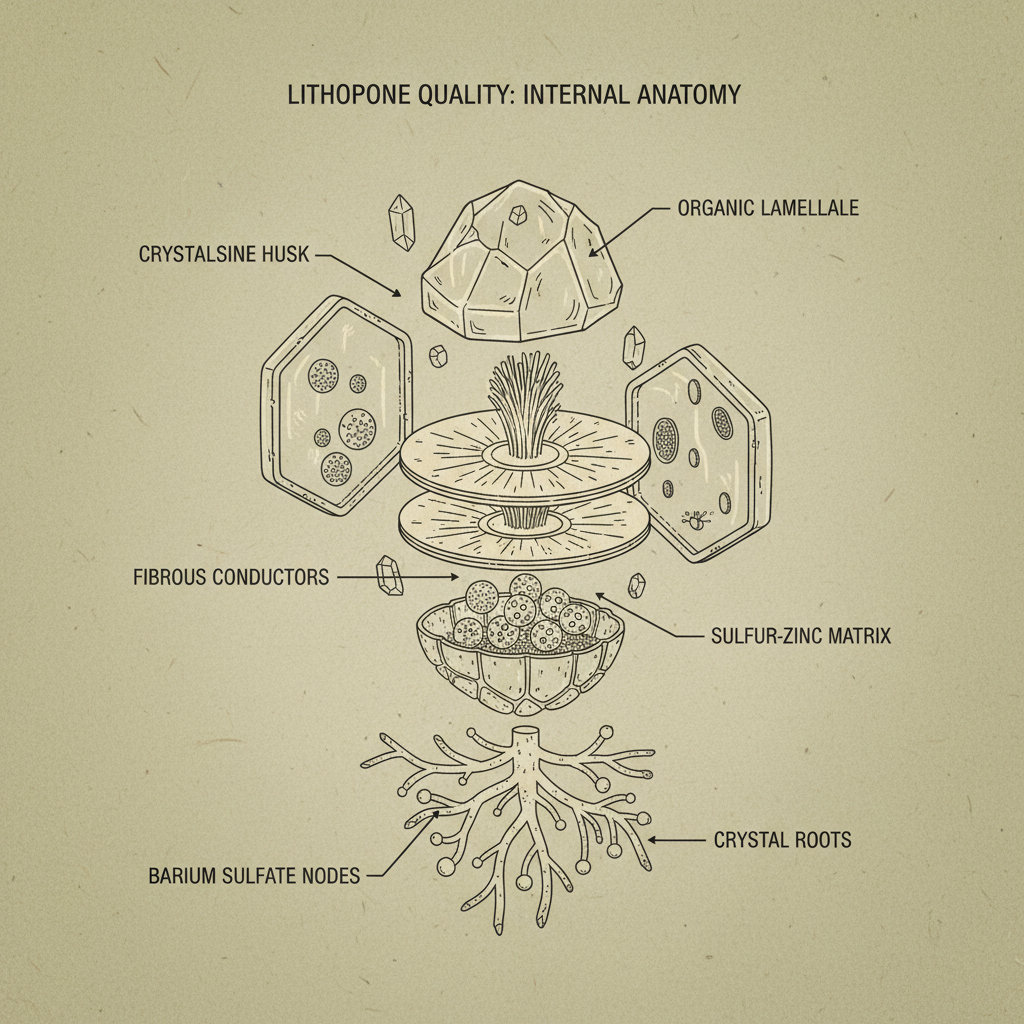
Several key factors contribute to the overall quality of lithopone produced in china. Firstly, purity of raw materials – zinc sulfide and barium sulfate – is paramount. Impurities can negatively affect whiteness, opacity, and chemical stability. Secondly, particle size control during the precipitation process is critical for achieving optimal dispersion and light scattering properties.
Thirdly, surface treatment with additives like silicates or phosphates enhances compatibility with various binders and improves resistance to weathering. Fourthly, a robust quality control system that includes rigorous testing at each stage of production is essential for ensuring consistency and meeting specified standards. Finally, manufacturing process optimization plays a crucial role in ensuring a consistent and high-quality output.
These components aren’t isolated; they interact with each other to determine the final lithopone quality. A deficiency in one area can compromise the performance of the entire pigment, highlighting the importance of a holistic approach to quality control and production.
Practical Applications of High-Quality Lithopone
High-quality lithopone derived from china finds extensive application in the paints and coatings industry, providing excellent opacity and hiding power at a competitive cost. It's a key ingredient in architectural coatings, industrial finishes, and automotive paints. The superior dispersion and whiteness of high-quality lithopone contribute to the durability and aesthetic appeal of these coatings.
Beyond paints, lithopone is utilized in the plastics industry as a filler and pigment, enhancing the brightness and opacity of PVC, polyethylene, and polypropylene products. It also serves as a component in paper coatings, improving printability and whiteness. These applications all benefit from the consistent quality and performance of lithopone.
Lithopone Quality in China – Performance Metrics Across Manufacturing Methods
Global Impact and Use Cases
The robust lithopone industry in china influences global pigment markets, providing a cost-effective alternative to titanium dioxide in many applications. This affordability makes lithopone particularly important in developing countries where cost sensitivity is high. Exported lithopone from china finds its way into countless products around the world, impacting industries from construction to consumer goods.
In remote industrial zones, where access to specialized materials may be limited, high-quality lithopone provides a reliable and readily available pigment solution. Similarly, in post-disaster relief operations, affordable and durable coatings utilizing lithopone can be crucial for rebuilding infrastructure and providing temporary shelter.
Advantages and Long-Term Value
Choosing high-quality lithopone from china offers several tangible benefits. Firstly, the cost-effectiveness of lithopone compared to other white pigments translates to significant savings for manufacturers. Secondly, advancements in production techniques are enhancing the durability and weather resistance of lithopone-based products, extending their lifespan and reducing maintenance costs.
From a sustainability perspective, responsible lithopone production, incorporating waste reduction and energy efficiency measures, contributes to a smaller environmental footprint. Furthermore, the reliable performance of high-quality lithopone builds trust with consumers and enhances brand reputation.
The consistent quality and performance of lithopone also provide significant long-term value by reducing product failures and ensuring customer satisfaction. Investing in reliable lithopone is a strategic move that minimizes risks and maximizes return on investment.
Future Trends and Innovations
The future of lithopone quality in china is intertwined with advancements in materials science and sustainable manufacturing practices. Research is underway to optimize the lithopone production process, minimizing waste and reducing energy consumption. The development of novel surface treatments is enhancing compatibility with various binders and improving pigment dispersion.
Digitalization and automation are also playing a growing role, enabling real-time monitoring and control of production parameters, leading to greater consistency and improved quality. Furthermore, the integration of circular economy principles – such as utilizing recycled barium sulfate – is gaining traction, promoting a more sustainable and resource-efficient lithopone industry.
Finally, exploring the potential of combining lithopone with other pigments and additives to create specialized formulations with enhanced properties is a promising area of innovation.
Summary of Quality Control Measures for Lithopone Production in China
| Raw Material Analysis |
In-Process Monitoring |
Final Product Testing |
Environmental Compliance |
| Purity assessment of zinc sulfide and barium sulfate. |
Particle size distribution control during precipitation. |
Whiteness index measurement using spectrophotometry. |
Wastewater treatment and emission control. |
| Heavy metal content analysis (lead, cadmium, etc.). |
pH and temperature control during reaction stages. |
Oil absorption testing to assess compatibility. |
Adherence to national environmental standards. |
| Trace element identification using ICP-MS. |
Visual inspection for color and consistency. |
Dispersion stability testing in various mediums. |
Waste management and recycling initiatives. |
| Moisture content determination. |
Filtration and washing efficiency monitoring. |
Chemical resistance assessment. |
Carbon footprint analysis. |
| Supplier auditing for quality assurance. |
Drying process control to prevent agglomeration. |
Lightfastness and weather resistance evaluation. |
Implementation of ISO 14001 environmental management systems. |
| Statistical process control (SPC) of raw materials. |
Real-time monitoring of key process parameters. |
Packaging integrity and labeling verification. |
Regular environmental audits and reporting. |
FAQS
The primary factors influencing lithopone quality in China encompass the purity of raw materials (zinc sulfide and barium sulfate), precise control over particle size distribution during manufacturing, the implementation of effective surface treatments to enhance dispersion, and a robust quality control system encompassing rigorous testing at every production stage. Consistent adherence to these factors ensures a reliable and high-performing pigment.
While titanium dioxide generally offers superior opacity and brightness, lithopone provides a cost-effective alternative, particularly in applications where extreme whiteness isn't critical. The quality of lithopone in china has been steadily improving, closing the performance gap with titanium dioxide. However, titanium dioxide still typically exhibits better UV resistance and durability, making it the preferred choice for demanding applications.
Lithopone production in China typically adheres to national standards (GB) and, increasingly, international standards like ISO. Common quality control tests include particle size analysis, whiteness index measurement, oil absorption testing, heavy metal content analysis, and dispersion stability assessment. Many manufacturers are also implementing statistical process control (SPC) to ensure consistency.
Surface treatment is crucial for enhancing the compatibility of lithopone with various binders and resins. Treatments with substances like silicates or phosphates improve dispersion, prevent agglomeration, and enhance resistance to weathering and chemical attack. A properly treated lithopone exhibits superior performance in paints, plastics, and other applications.
Yes, environmental considerations are increasingly important. Lithopone production can generate wastewater containing sulfates and other byproducts. Responsible manufacturers are investing in wastewater treatment technologies, emission control systems, and waste recycling initiatives to minimize their environmental footprint and comply with stringent regulations.
Future trends include optimization of production processes through digitalization and automation, the development of novel surface treatments, the integration of circular economy principles (utilizing recycled materials), and research into new formulations that enhance performance and sustainability. A focus on reducing energy consumption and minimizing waste will also be critical.
Conclusion
In conclusion, lithopone quality in china is a multifaceted issue with significant implications for global industries. The consistent production of high-quality lithopone relies on meticulous control over raw materials, manufacturing processes, and quality assurance protocols. Advancements in technology and a growing emphasis on sustainability are driving continuous improvement in this critical pigment.
Looking ahead, prioritizing innovation, embracing digitalization, and adopting circular economy principles will be key to ensuring the long-term viability and competitiveness of the lithopone industry in china. Investing in high-quality lithopone is not simply a cost-saving measure; it’s a strategic decision that safeguards product performance, builds brand trust, and contributes to a more sustainable future. Visit our website to learn more.