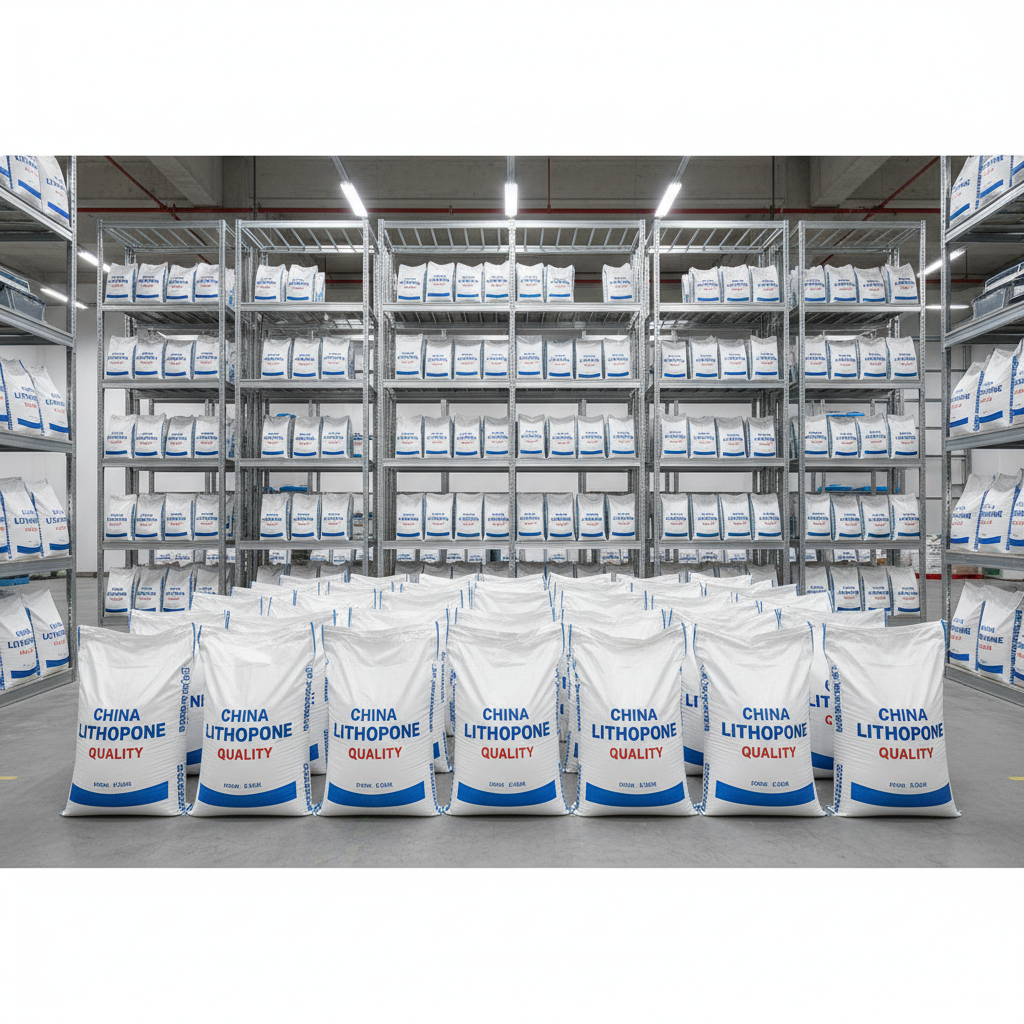
High-quality lithopone is a crucial component in numerous industrial applications, ranging from paints and plastics to ceramics and even some specialized medical applications. Its unique blend of zinc sulfide and barium sulfate provides exceptional opacity, brightness, and durability, making it a preferred choice for manufacturers worldwide. Understanding the properties and applications of this versatile material is vital for industries seeking to enhance product quality and performance.
The global demand for high-quality lithopone is consistently growing, driven by expanding construction, automotive, and consumer goods sectors, particularly in emerging economies. This demand necessitates a continuous focus on improving production processes, ensuring consistent quality control, and exploring sustainable sourcing options. Addressing these challenges is critical to meeting current needs and fostering future growth in the industry.
Investing in research and development related to high-quality lithopone allows for innovative solutions tailored to specific industry needs. This also promotes the exploration of environmentally friendly manufacturing techniques, aligning with global sustainability goals. Furthermore, a deep understanding of its properties can unlock new applications, extending its utility beyond established markets.
The Core Properties of high-quality lithopone
High-quality lithopone possesses several key properties that make it highly desirable across various industries. Its exceptional whiteness, coupled with strong hiding power, allows for vibrant and uniform coloration in paints, coatings, and plastics. These properties are directly linked to its carefully controlled particle size distribution and chemical composition.
Beyond its aesthetic qualities, high-quality lithopone demonstrates excellent chemical stability and resistance to weathering. This makes it suitable for outdoor applications where durability and color retention are paramount. Furthermore, it’s a cost-effective alternative to titanium dioxide in certain applications, without sacrificing significant performance characteristics. high-quality lithopone can be a game changer for many industries.
Global Production and Market Dynamics
The production of high-quality lithopone is largely concentrated in a few key regions, including China, India, and Europe. These regions benefit from readily available raw materials, established manufacturing infrastructure, and skilled labor forces. However, fluctuations in raw material costs and evolving environmental regulations can significantly impact production costs and market prices.
The global market for lithopone is influenced by the growth of downstream industries such as construction, automotive, and packaging. The Asia-Pacific region represents the largest and fastest-growing market, driven by rapid urbanization and infrastructure development. North America and Europe continue to be significant consumers, albeit at a slower growth rate.
Recent market trends indicate a growing demand for more sustainable and environmentally friendly lithopone products. Manufacturers are increasingly adopting cleaner production technologies and exploring alternative raw materials to reduce their environmental footprint and meet evolving customer expectations.
Chemical Composition and Manufacturing Processes
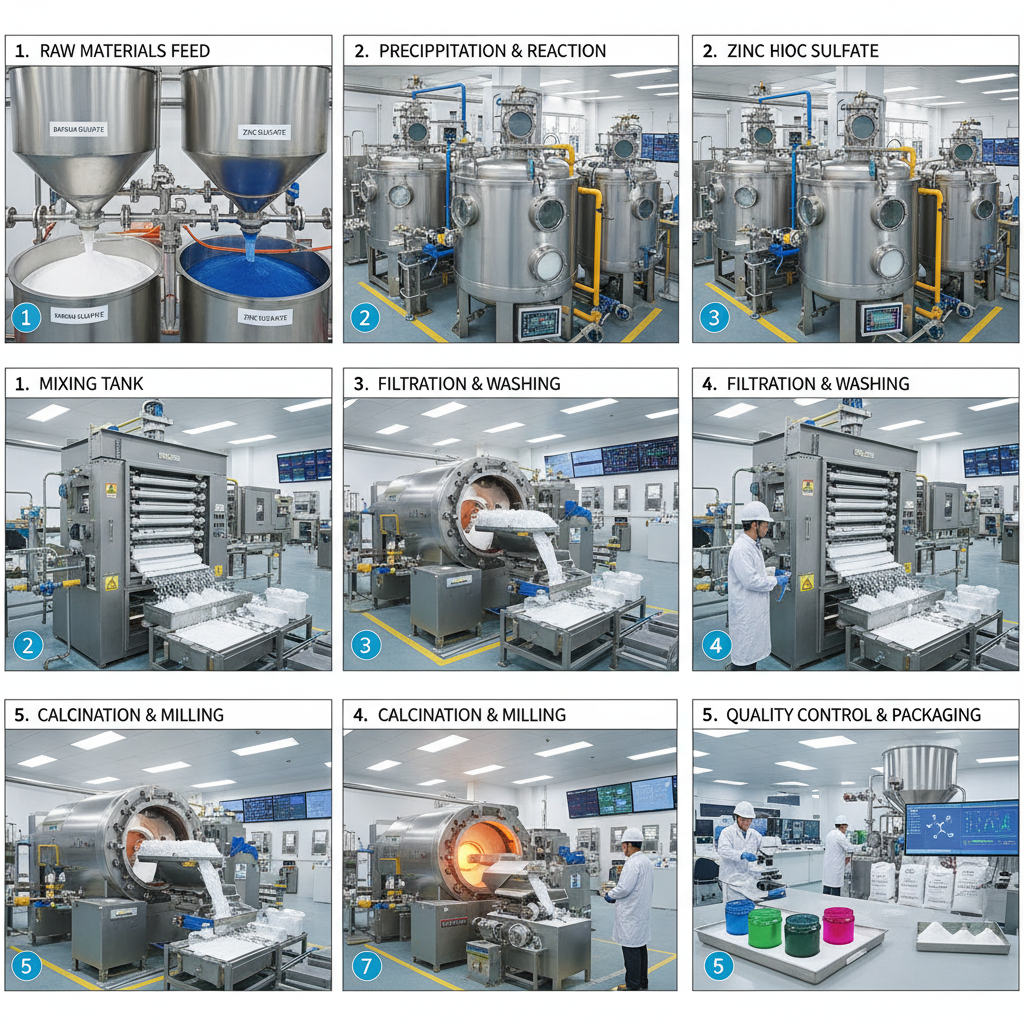
High-quality lithopone is fundamentally a mixture of zinc sulfide (ZnS) and barium sulfate (BaSO4). The precise ratio of these compounds, along with careful control of particle size and morphology, determines the final properties of the product. The manufacturing process typically involves a chemical reaction between zinc sulfate, barium sulfide, and a reducing agent.
The production process is complex and requires stringent quality control measures at each stage. The initial precipitation of zinc sulfide and barium sulfate is followed by washing, filtration, drying, and milling to achieve the desired particle size distribution. Manufacturers employ various techniques to optimize these parameters and ensure consistent product quality.
Advanced manufacturing techniques, such as co-precipitation and hydrothermal synthesis, are increasingly being used to produce high-quality lithopone with improved properties. These methods allow for precise control over particle size, shape, and composition, resulting in superior performance characteristics.
Performance Characteristics of high-quality lithopone
The key performance characteristic of high-quality lithopone is its outstanding opacity and hiding power. This property stems from the difference in refractive indices between zinc sulfide and barium sulfate, which effectively scatters light. This results in excellent coverage and a uniform appearance in coatings and plastics.
Furthermore, high-quality lithopone exhibits good chemical inertness, making it resistant to degradation by acids, alkalis, and organic solvents. This durability is crucial for applications where exposure to harsh environments is expected. It also displays good thermal stability, maintaining its properties at elevated temperatures.
Comparative Performance of high-quality lithopone Production Methods
Diverse Industrial Applications
High-quality lithopone finds widespread use in the paint and coatings industry, providing excellent opacity and brightness to both interior and exterior paints. It’s particularly valuable in applications requiring consistent color and durability.
Beyond paints, it’s a crucial component in the plastics industry, offering a cost-effective way to impart whiteness and opacity to various plastic products, including PVC, polyethylene, and polypropylene. It is used in applications like toys, packaging, and household goods.
Advantages of Using high-quality lithopone
The primary advantage of utilizing high-quality lithopone lies in its cost-effectiveness compared to alternatives like titanium dioxide, while still delivering commendable opacity and brightness. This makes it an attractive option for manufacturers seeking to optimize their production costs without compromising product quality.
Furthermore, its excellent chemical stability and weather resistance contribute to the longevity and performance of finished products. Its versatile compatibility with a wide range of binders and resins makes it easy to incorporate into diverse formulations.
Future Trends and Sustainable Practices
The future of high-quality lithopone production is increasingly focused on sustainability and environmental responsibility. Research is underway to explore alternative raw materials and develop more energy-efficient manufacturing processes. These efforts aim to minimize the environmental impact of lithopone production and align with global sustainability goals.
Another emerging trend is the development of nano-sized lithopone particles with enhanced optical properties. These nanoparticles offer improved dispersibility, opacity, and UV resistance, expanding their applications in specialized coatings and plastics.
The integration of digital technologies, such as process automation and data analytics, will play a crucial role in optimizing production efficiency and quality control. This will enable manufacturers to achieve greater precision, reduce waste, and respond more effectively to changing market demands.
Summary of Key Factors Influencing high-quality lithopone Performance
| Raw Material Purity |
Particle Size Distribution |
ZnS/BaSO4 Ratio |
Manufacturing Process Control |
| 99.5% - 99.9% |
0.2 – 2.0 μm |
70:30 |
Excellent - Automated Control |
| 99.0% - 99.4% |
0.5 – 3.0 μm |
60:40 |
Good - Semi-Automated |
| 98.5% - 99.0% |
1.0 – 4.0 μm |
50:50 |
Moderate - Manual Control |
| 98.0% - 98.5% |
2.0 – 5.0 μm |
40:60 |
Limited - Basic Control |
| 97.5% - 98.0% |
3.0 – 6.0 μm |
30:70 |
Poor - Minimal Control |
| Below 97.5% |
Above 6.0 μm |
Variable |
None - Uncontrolled |
FAQS
While both high-quality lithopone and titanium dioxide serve as white pigments, titanium dioxide generally offers superior hiding power and brightness. However, high-quality lithopone is often more cost-effective and provides good performance in applications where extreme opacity isn’t crucial. It also has a different refractive index, impacting its optical properties and suitability for specific applications. Ultimately the choice depends on the cost, performance, and specific requirements of the application.
The environmental impact of high-quality lithopone depends on the manufacturing process. Modern, sustainable production techniques focus on reducing waste, minimizing energy consumption, and utilizing responsibly sourced raw materials. While the barium sulfide component raises some environmental concerns, advancements in waste management and recycling can mitigate these risks. Choosing manufacturers committed to sustainable practices is key.
High-quality lithopone excels in applications where cost-effectiveness is a priority, and extreme opacity isn't essential. This includes interior paints, paper coatings, certain types of plastics (PVC, polyethylene), and printing inks. It’s also a good option for applications requiring good chemical resistance and durability.
The optimal particle size for high-quality lithopone generally falls within the range of 0.2 to 2.0 micrometers (μm). This range provides the best balance between scattering efficiency (opacity), dispersibility, and gloss. Particles outside this range may lead to reduced performance or processing issues. Careful control of particle size during manufacturing is essential.
The quality of high-quality lithopone is assessed using several key parameters. These include whiteness index, brightness, oil absorption, particle size distribution, and chemical composition. Standardized testing methods, such as those developed by ASTM and ISO, are used to ensure consistency and reliability. It is also assessed by the chemical stability.
While high-quality lithopone exhibits good weather resistance, its performance in exterior applications may be limited compared to titanium dioxide. It can be used in exterior paints and coatings, but it’s often combined with other pigments and additives to enhance its durability and UV resistance. Careful formulation is crucial for optimal long-term performance.
Conclusion
In conclusion, high-quality lithopone remains a valuable and versatile pigment with a significant role across numerous industries. Its unique blend of cost-effectiveness, opacity, chemical stability, and diverse applications make it an important material for manufacturers globally. Understanding its core properties, production processes, and future trends is critical for maximizing its potential.
Looking ahead, the focus on sustainable production practices, coupled with ongoing research and development of advanced lithopone formulations, will be crucial for ensuring its continued relevance and contribution to a more environmentally responsible future. Visit our website at www.cqtitaniumdioxide.com to learn more about our high-quality lithopone products and solutions.