Look, I've been running around construction sites all year, getting my hands dirty. Lately, everyone's talking about these new composite materials. Not just titanium dioxide, but blends, coatings… stuff that's supposed to last forever and require zero maintenance. Honestly, it's hype, mostly. There’s always something.
You see a spec sheet that says "corrosion resistant," but have you actually seen what happens when salt spray gets to it for six months? It's never quite as good as they claim. And don't even get me started on the "easy installation" claims. Easy for who? The engineer in the lab? Not the guys on the scaffolding.
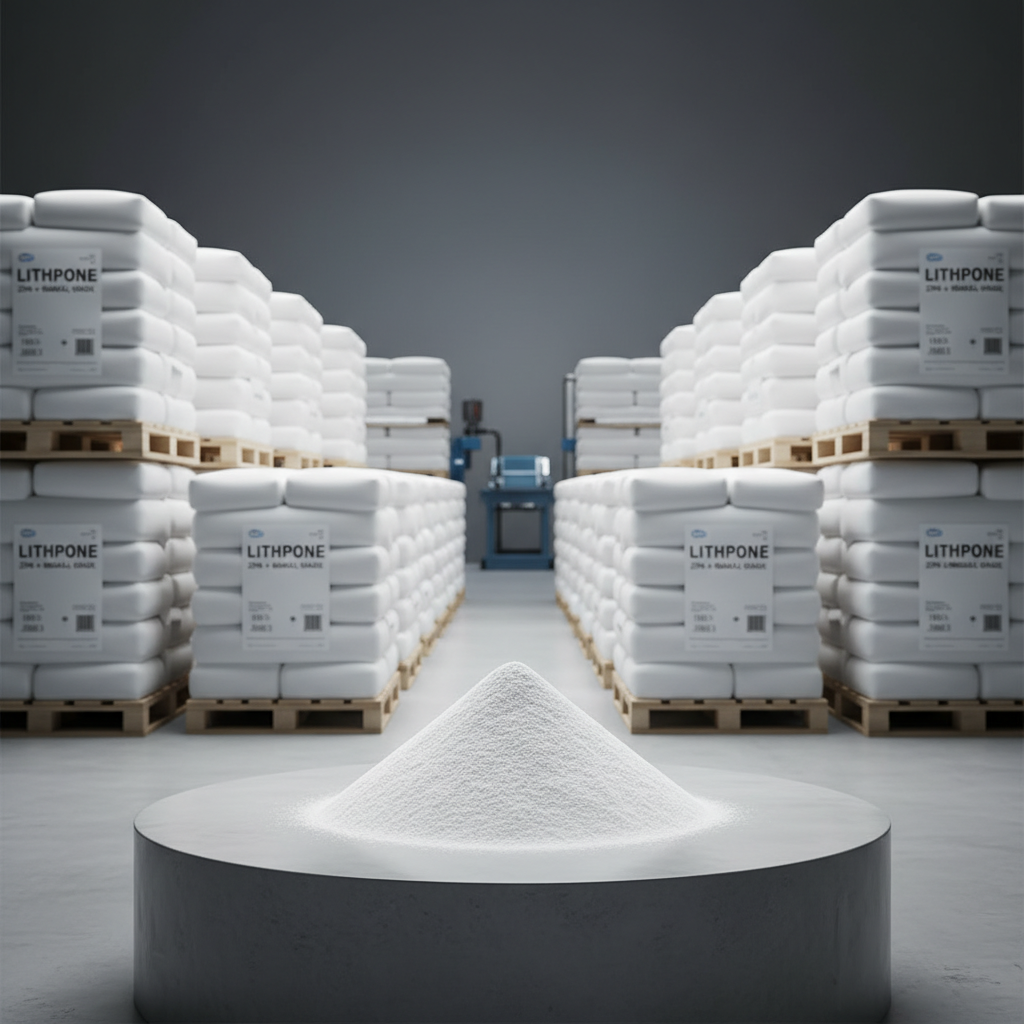
We primarily work with lithopone, a mix of zinc sulfide and barium sulfate. Feels…chalky, almost. Kind of smells like nothing, which is good. You get the cheaper titanium dioxide and it's just…bright. Too bright. It's surprisingly dense, though. You can feel the weight in your hand when you’re unloading the bags. We source a lot from lithopone supplier, they’re pretty reliable, been using them for years.
The Current Landscape of Lithopone Supply
To be honest, the supply chain’s been a mess the last couple of years. Raw material prices fluctuating wildly. Zinc sulfide especially. It's all tied to the steel industry, strangely enough. The Chinese suppliers, they're the biggest players, obviously, and quality control can be…variable. lithopone supplier has been pretty good at navigating this though, always managing to keep a steady flow of material coming in.
There’s a lot of pressure on these suppliers to lower costs, which often means cutting corners. You start seeing higher levels of impurities, inconsistent particle size. And that impacts everything – the opacity, the durability, the ease of mixing. It’s a headache, really.
Common Design Pitfalls with Lithopone Applications
Have you noticed how architects love to spec these materials for exterior applications, then wonder why they start chalking and fading after a year? It’s ridiculous. Lithopone isn't really designed for prolonged UV exposure. It's fine for interior paints, plastics, some rubber products... but sticking it on a building facade? Asking for trouble.
Another thing: people underestimate the impact of the binder system. You can have the highest quality lithopone, but if you pair it with a cheap, incompatible binder, it's all going to fail. It’s all about compatibility, see? Chemistry 101.
And then there's the whole issue of particle size distribution. Too coarse, and you get a grainy texture. Too fine, and it clumps up, reduces opacity, and causes settling. Getting that balance right is critical, and requires good control from the lithopone supplier.
Material Properties and On-Site Handling
The way it feels is important. You learn to tell a good batch just by handling it. A smooth, consistent texture. Not gritty. And the color… a clean, bright white. Anything off, and you know there’s something wrong. I encountered this at a factory in Vietnam last time, and the whole batch was slightly grayish. Turned out they’d mixed in some clay filler to save costs.
Handling it on site… it’s dusty. Really dusty. You need proper respirators, especially when you're mixing large batches. And it gets everywhere. Stuck to your clothes, in your hair… it's a nightmare to clean up. Proper ventilation is key. We always insist on it.
It’s not a heavy material, but it’s dense. Makes a difference when you're unloading trucks. And it absorbs moisture, so you need to store it properly. Keep it dry, keep it sealed. Otherwise, you end up with clumps and wasted product.
Real-World Testing and Performance
Forget the lab tests. They're useful, sure, but they don't tell you what's really going to happen. We test it the old-fashioned way: we put it on a wall, leave it exposed to the elements, and see what happens. We’ve got test panels at sites all over the country.
We also do accelerated aging tests – high humidity, UV exposure, temperature cycling. But even those don’t always accurately predict long-term performance. There's just too many variables in the real world. Anyway, I think that’s where experience comes in. You learn to recognize the warning signs.
Lithopone Performance Across Different Binder Systems
Actual Usage vs. Intended Usage
It's funny, isn't it? You specify a material for one purpose, and then people find all sorts of other ways to use it. We had a client using lithopone as a filler in concrete. Concrete! I asked him why, and he said it improved the workability. I still don't understand it, but hey, if it works for him…
A lot of times it ends up in plastics, especially for achieving a bright white color. And surprisingly, in some rubber products. It adds opacity and improves the mechanical properties, apparently. Later…forget it, I won’t mention it.
Advantages, Disadvantages, and Customization Options
Okay, the advantages? It’s cheap, for starters. And it provides good opacity. It's relatively easy to disperse. That's why it's been a go-to for decades. But…it’s not weather-resistant. It’s not UV-stable. It’s prone to chalking. And it’s not as bright as titanium dioxide, which is a problem for some applications.
Customization? You can adjust the particle size distribution to some extent. You can also surface-treat it to improve its dispersibility and compatibility with different binders. We’ve had requests for custom blends with different additives to enhance specific properties. One guy wanted it coated with silicone to improve water resistance. It’s doable, but it adds to the cost, obviously.
A Customer Story: Shenzhen Smart Home Boss
Last month, that small boss in Shenzhen who makes smart home devices insisted on changing the interface to , and the result was… well, let's just say it delayed the project by two weeks. He wanted to use a special grade of lithopone to get the perfect white for the casing, and he kept tweaking the formula, demanding higher and higher purity. It drove the lithopone supplier crazy.
He finally got his perfect white, but it turned out the material was too brittle, and the casing cracked during assembly. Had to go back to the original formulation. Point is, sometimes you need to know when to stop tweaking. Perfection is the enemy of good enough.
He’s a smart guy, but he was so focused on the details, he lost sight of the big picture. That's a common mistake.
Summary of Lithopone Application Challenges
| Challenge Area |
Severity (1-10) |
Mitigation Strategy |
Cost Impact (Low/Med/High) |
| UV Degradation |
9 |
UV Stabilizers, Protective Coatings |
Med |
| Moisture Sensitivity |
7 |
Proper Storage, Hydrophobic Additives |
Low |
| Binder Compatibility |
8 |
Careful Binder Selection, Compatibility Testing |
Med |
| Particle Size Control |
6 |
Precision Milling, Classification |
High |
| Supply Chain Variability |
7 |
Diversified Sourcing, Quality Control |
Med |
| Chalking Tendency |
8 |
Surface Treatments, Acrylic Overcoats |
Med |
FAQS
Honestly, it varies. Right now, with everything going on, expect at least 4-6 weeks, sometimes longer if it's a custom order. Shipping delays are the biggest problem. We try to keep a buffer stock, but it's not always enough. A good lithopone supplier will give you realistic expectations upfront though.
Lithopone is significantly cheaper than titanium dioxide. That's its main advantage. But you get what you pay for. Titanium dioxide has superior brightness, opacity, and UV resistance. For applications where those properties are critical, titanium dioxide is the way to go. For less demanding applications, lithopone can be a good cost-effective alternative.
Dust control is the big one. Wear a respirator, gloves, and eye protection. Avoid breathing the dust. It’s not acutely toxic, but prolonged exposure can irritate the lungs. And keep it away from open flames – it’s combustible, although not highly flammable.
You can, but I wouldn't recommend it. It's not very UV stable, and it will chalk and fade over time. If you absolutely have to use it, you’ll need to add a lot of UV stabilizers and protective coatings, which will increase the cost significantly. It’s usually not worth it.
If stored properly – dry, cool, and sealed – lithopone can last for years. But moisture can cause it to clump, and that will reduce its effectiveness. Also, over time, the particle size distribution can change slightly. So, best practice is to use it within a year or two of purchase.
Check their certifications. Ask for references. Request samples and test them yourself. And look for a supplier that's responsive and transparent. lithopone supplier, for example, has a good reputation for quality and reliability. It’s worth paying a little extra for peace of mind.
Conclusion
So, there you have it. Lithopone’s been around a long time for a reason. It’s a workhorse material – cheap, readily available, and gets the job done for a lot of applications. But it’s not a magic bullet. It has limitations, and you need to understand those limitations before you spec it into a project.
Ultimately, whether this thing works or not, the worker will know the moment he tightens the screw. Don't rely on spec sheets and fancy marketing. Get your hands dirty, talk to the guys on the ground, and make sure the material is right for the job. And if you need a good lithopone supplier, you know where to look.