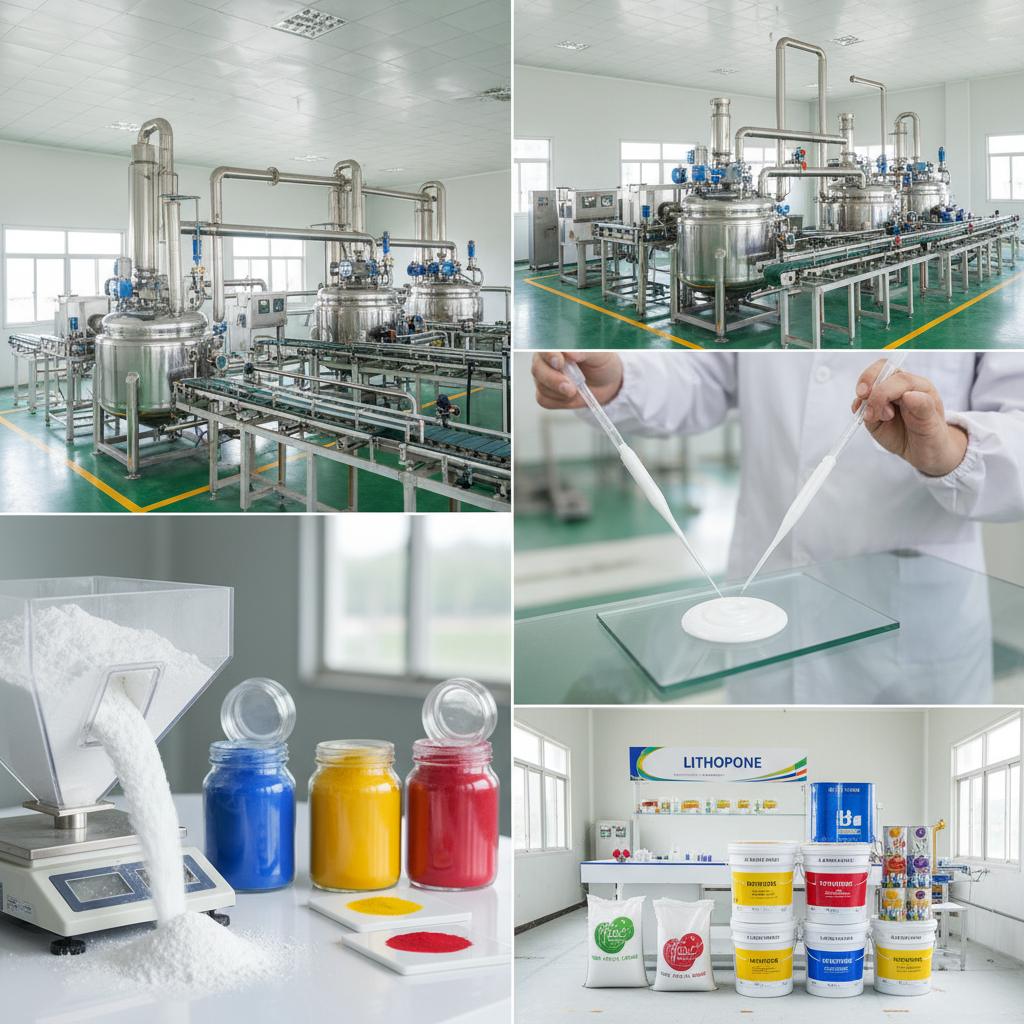
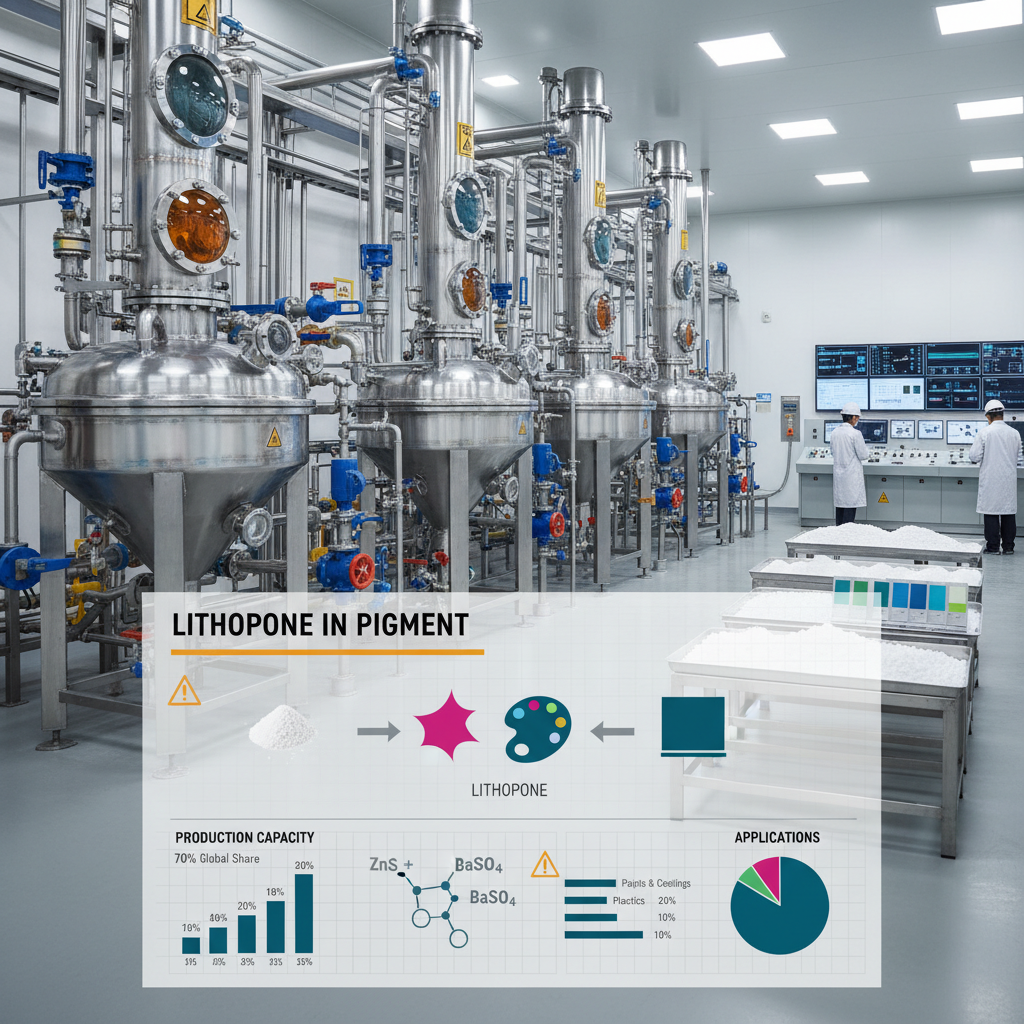
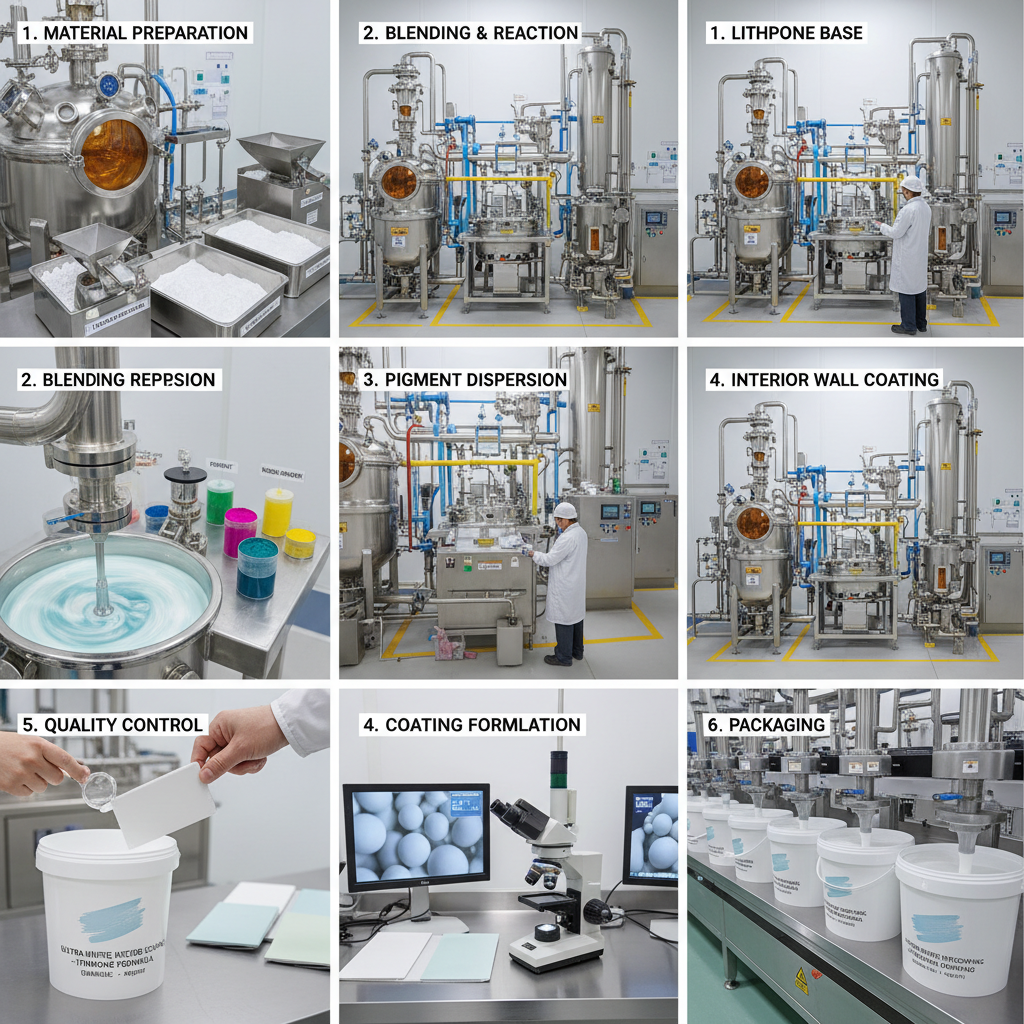
Lithopone, a white pigment historically used as a substitute for more expensive materials like titanium dioxide and zinc oxide, continues to find niche applications in modern industries. Its unique composition – a blend of barium sulfate (barite) and zinc sulfide – provides a specific set of properties making it suitable for applications where cost-effectiveness and opacity are paramount. Understanding the characteristics and applications of lithopone in pigment is crucial for formulators seeking optimized performance within budgetary constraints.
The global demand for pigments remains substantial, driven by the paints, plastics, and paper industries. While titanium dioxide dominates the market, lithopone in pigment offers a valuable alternative in specific sectors, particularly in regions where cost is a significant factor. Furthermore, renewed interest in alternative materials, spurred by supply chain disruptions and a focus on sustainable sourcing, is creating new opportunities for lithopone.
The key benefit of understanding lithopone in pigment lies in its ability to provide a balance between cost, opacity, and specific performance attributes. This makes it a viable solution for a range of applications, from industrial coatings to certain types of plastics, providing manufacturers with greater flexibility in formulation choices.
The Historical Development of lithopone in pigment
Lithopone’s origins trace back to the early 19th century, developed as a more affordable alternative to the then-expensive lead white pigment. Initially, it provided a viable option for artists and industrial applications. The composition evolved over time, optimizing the barium sulfate to zinc sulfide ratio to enhance its optical properties.
Its widespread adoption coincided with the industrial revolution and the growing demand for white pigments in various sectors. Over the decades, lithopone in pigment competed with and complemented other white pigments, including zinc oxide and ultimately, titanium dioxide. While titanium dioxide eventually surpassed it in overall popularity due to its superior brightness and hiding power, lithopone maintains a distinct position where cost is paramount.
Global Relevance and Industry Applications
The relevance of lithopone in pigment is globally distributed, with significant consumption in regions with developing economies where cost sensitivity is high. Countries in Asia, South America, and Africa represent key markets. The pigment finds application across several industries, most notably in paints, coatings, plastics, and paper. According to industry reports, while the overall pigment market is dominated by titanium dioxide, lithopone still accounts for a measurable percentage of the global white pigment demand.
Specifically, within the paint industry, lithopone is frequently incorporated into emulsion paints, distempers, and certain industrial coatings. In plastics, it’s utilized in PVC processing and some polyolefin applications. The paper industry uses it for coating applications, imparting opacity and brightness. This broad spectrum of application contributes to its consistent, albeit niche, demand.
A current challenge lies in addressing environmental concerns surrounding zinc sulfide production. However, innovations in manufacturing processes and sourcing of raw materials are being explored to mitigate these impacts and ensure the continued viability of lithopone in pigment.
Defining lithopone in pigment
Lithopone in pigment is a composite inorganic white pigment chemically consisting of barium sulfate (BaSO₄) and zinc sulfide (ZnS). It’s produced through a precipitation process where zinc sulfide crystals are precipitated within a matrix of barium sulfate. This combination yields a pigment with good opacity and whiteness, though generally less brilliant than titanium dioxide.
Its connection to modern industry stems from its cost-effectiveness and suitability for applications where extreme brightness isn't critical. For example, in certain industrial coatings or as an extender in other pigment formulations, lithopone provides a balance between performance and affordability. It also fills a critical need in regions where access to titanium dioxide is limited or costly.
The pigment's particle size distribution and surface treatment significantly affect its optical properties and dispersion characteristics. Manufacturers carefully control these parameters to tailor the pigment's performance for specific applications. lithopone in pigment continues to be used where a cost-effective white pigment is required.
Key Characteristics of lithopone in pigment
One of the defining characteristics of lithopone in pigment is its moderate opacity. While not as high as titanium dioxide, it provides sufficient hiding power for many applications, particularly in less demanding coatings and plastics. This opacity is a direct result of the refractive index difference between barium sulfate and zinc sulfide.
Another key characteristic is its relatively low cost. Barium sulfate and zinc sulfide are generally more readily available and less expensive to process than titanium dioxide, leading to a lower overall pigment cost. This makes it an attractive option for manufacturers looking to reduce formulation expenses.
Comparative Performance of lithopone in pigment Methods
Global Applications and Use Cases
Lithopone in pigment finds extensive use in the paints and coatings industry, particularly in the production of interior wall paints and distempers where cost is a major consideration. It's also employed in the manufacturing of certain industrial coatings, providing a durable and opaque finish.
In the plastics sector, lithopone is utilized as a white pigment in PVC applications such as pipes, profiles, and films. It imparts opacity and helps to mask any discoloration in the base polymer. Regions with substantial PVC manufacturing, particularly in Asia and South America, represent significant markets for lithopone.
Advantages and Long-Term Value
The primary advantage of lithopone in pigment is its cost-effectiveness. It provides a viable white pigment option at a significantly lower price point than titanium dioxide, making it ideal for applications where high brilliance isn’t essential. This affordability translates to reduced production costs for manufacturers.
From a long-term perspective, the pigment’s inherent stability contributes to the durability of the final product. While it may not offer the same level of UV resistance as titanium dioxide, it provides adequate performance in many interior applications. lithopone in pigment remains a reliable pigment option.
Future Trends and Innovations
Research and development efforts are focused on improving the production process to minimize environmental impact, specifically addressing the sourcing and processing of zinc sulfide. Nanotechnology is being explored to enhance the optical properties and dispersion characteristics of lithopone in pigment.
Sustainability initiatives are driving demand for more eco-friendly pigment alternatives, and lithopone, with its relatively lower environmental footprint compared to some other pigments, is positioned to benefit from this trend. The integration of digital manufacturing techniques could also lead to more precise control over particle size and morphology.
Furthermore, the development of surface treatments and coatings could enhance its durability and UV resistance, expanding its application scope.
Summary of Key Analysis Dimensions of Lithopone in Pigment
| Production Cost |
Optical Brightness |
Environmental Impact |
Application Suitability |
| Low (6/10) |
Moderate (5/10) |
Medium (4/10) – requires careful sourcing |
Industrial coatings, interior paints |
| Very Low (9/10) |
Moderate (5/10) |
Medium (4/10) |
PVC applications, paper coating |
| Low (6/10) |
Moderate (6/10) - with surface treatment |
Medium (5/10) - with process optimization |
Extender pigment in various formulations |
| Moderate (7/10) |
Low (3/10) - requires blending |
Medium (4/10) |
Low-cost paint applications |
| Low (6/10) |
Moderate (5/10) |
Medium (4/10) |
Applications where high opacity is not essential |
| Very Low (8/10) |
Moderate (6/10) - with optimization |
Medium (5/10) |
Mass-produced plastic goods |
FAQS
Lithopone and titanium dioxide are both white pigments, but they differ significantly in their properties and cost. Titanium dioxide boasts superior brightness, opacity, and UV resistance, making it the preferred choice for high-performance applications. However, it is considerably more expensive. Lithopone, composed of barium sulfate and zinc sulfide, offers good opacity at a lower cost, making it suitable for applications where extreme brightness isn't crucial, such as certain paints, plastics, and paper coatings.
The environmental impact of lithopone production is a valid concern, particularly related to zinc sulfide sourcing and barium sulfate mining. However, ongoing research focuses on optimizing production processes to minimize waste and reduce energy consumption. Choosing suppliers committed to responsible sourcing and employing cleaner manufacturing technologies can mitigate the environmental footprint. It generally poses a lower environmental risk compared to some other pigments, but careful consideration is necessary.
Lithopone excels in applications where cost-effectiveness and adequate opacity are paramount. This includes interior paints (emulsion, distemper), PVC processing (pipes, profiles), certain paper coatings, and as an extender pigment in other formulations. It's a strong option where high brightness and UV resistance are not critical performance requirements, offering a balance between cost and functionality.
Particle size significantly influences the optical properties and dispersion characteristics of lithopone. Smaller particle sizes generally lead to higher opacity and better dispersion, improving the overall performance of the pigment. Manufacturers carefully control particle size distribution during production to achieve desired properties. Surface treatment can further modify particle behavior and improve compatibility with different matrices.
The long-term durability of coatings containing lithopone depends on the specific application and environmental conditions. While it offers good stability, it's generally less UV resistant than titanium dioxide. For exterior applications, or those exposed to prolonged sunlight, it's often combined with UV absorbers or used in conjunction with other pigments to enhance durability. For interior applications, lithopone provides acceptable longevity.
Surface treatment is crucial for enhancing lithopone’s performance. Treatments can improve dispersion in various matrices (e.g., paints, plastics), enhance compatibility with binders, and increase resistance to moisture and weathering. Common surface treatments involve coating the pigment particles with inorganic or organic materials, tailoring their surface properties for specific applications and ultimately improving the overall quality and lifespan of the final product.
Conclusion
Lithopone in pigment, despite facing competition from titanium dioxide, maintains a valuable position in the pigment market due to its cost-effectiveness and specific performance characteristics. Its ability to provide adequate opacity at a lower price point makes it a viable option for a wide range of applications, particularly in regions with cost sensitivities. Understanding its strengths and limitations is crucial for formulators seeking to optimize product performance within budgetary constraints.
Looking ahead, continued innovation in manufacturing processes, coupled with a focus on sustainable sourcing, will be key to ensuring the long-term viability of lithopone in pigment. Its role as a cost-effective alternative, particularly in niche applications, ensures its continued relevance in the evolving landscape of the pigment industry. Visit our website: www.cqtitaniumdioxide.com.