Lithopone (B301 B311) is a white pigment historically used as a cost-effective substitute for zinc oxide and titanium dioxide in various applications. Its unique composition, blending zinc sulfide and barium sulfate, delivers opacity and brightness at a significantly lower price point. Understanding lithopone's properties and applications is crucial in industries ranging from paints and coatings to plastics and paper, particularly in contexts where cost optimization is paramount.
Globally, the demand for affordable pigments continues to drive the market for lithopone(b301 b311), especially in developing economies. Data from the UN's industrial statistics reveals a consistent, though moderate, growth in demand for this pigment in regions focused on infrastructure development and consumer goods production. While the advent of more advanced pigments has reduced its dominance in some sectors, lithopone remains a vital component for specific applications.
The challenge lies in balancing cost-effectiveness with evolving environmental regulations and the demand for higher performance pigments. However, ongoing research and development are exploring modifications to lithopone’s production and formulation to address these concerns, aiming to maintain its relevance in a changing market.
The Chemical Composition of lithopone(b301 b311)
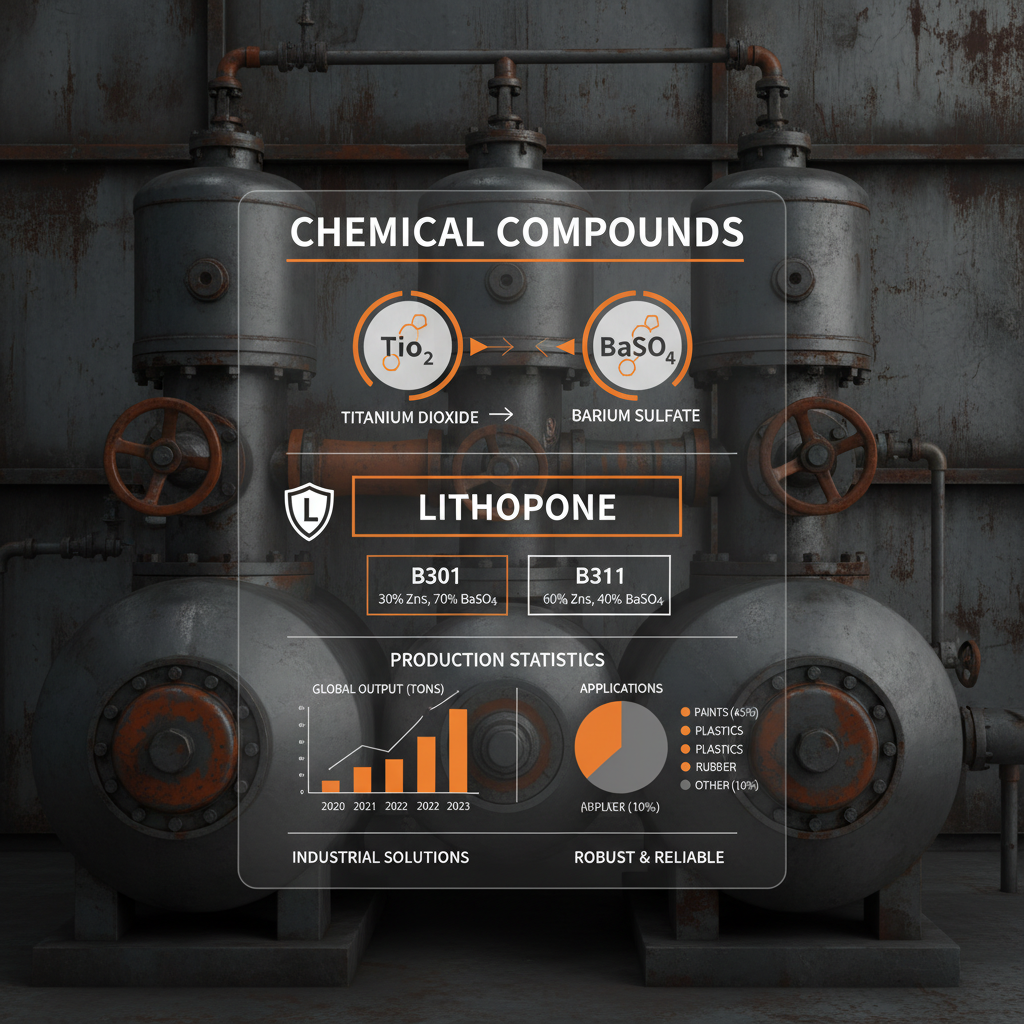
Lithopone(b301 b311) is fundamentally a mixture of zinc sulfide (ZnS) and barium sulfate (BaSO4), carefully balanced to achieve optimal optical properties. The typical ratio ranges from 25-35% zinc sulfide, with the remainder being barium sulfate. This specific composition is what gives lithopone its characteristic whiteness and opacity. The particle size distribution of both components is crucial, impacting the pigment's scattering ability and overall performance.
The presence of barium sulfate is not merely as a filler; it significantly contributes to lithopone's durability and resistance to chemical attack. Zinc sulfide provides the initial brightness, but without barium sulfate, the pigment would be less stable and prone to discoloration over time. These properties position lithopone(b301 b311) as a versatile ingredient in several industrial applications.
Historical Context and Evolution of lithopone(b301 b311)
Lithopone(b301 b311) first emerged in the late 19th century as a more affordable alternative to the newly discovered, but expensive, zinc oxide. Its development addressed a critical need in the paint industry, offering a readily available white pigment that met the growing demands of industrialization. The initial formulations weren't as refined as modern versions, resulting in lower opacity and stability, but it quickly gained traction due to its economic advantage.
Throughout the 20th century, lithopone underwent several improvements in manufacturing processes, leading to enhanced particle size control and increased purity. These advancements boosted its performance, widening its use in applications beyond just paints, including plastics, rubber, and paper coatings. However, the introduction of titanium dioxide (TiO2) in the mid-20th century began to challenge lithopone’s market dominance.
Despite the rise of titanium dioxide, lithopone(b301 b311) has maintained a niche, particularly in applications where extreme whiteness isn’t essential, and cost considerations are paramount. Ongoing research focuses on surface treatments and modifications to enhance its properties and compete more effectively with newer pigment technologies.
Manufacturing Processes of lithopone(b301 b311)
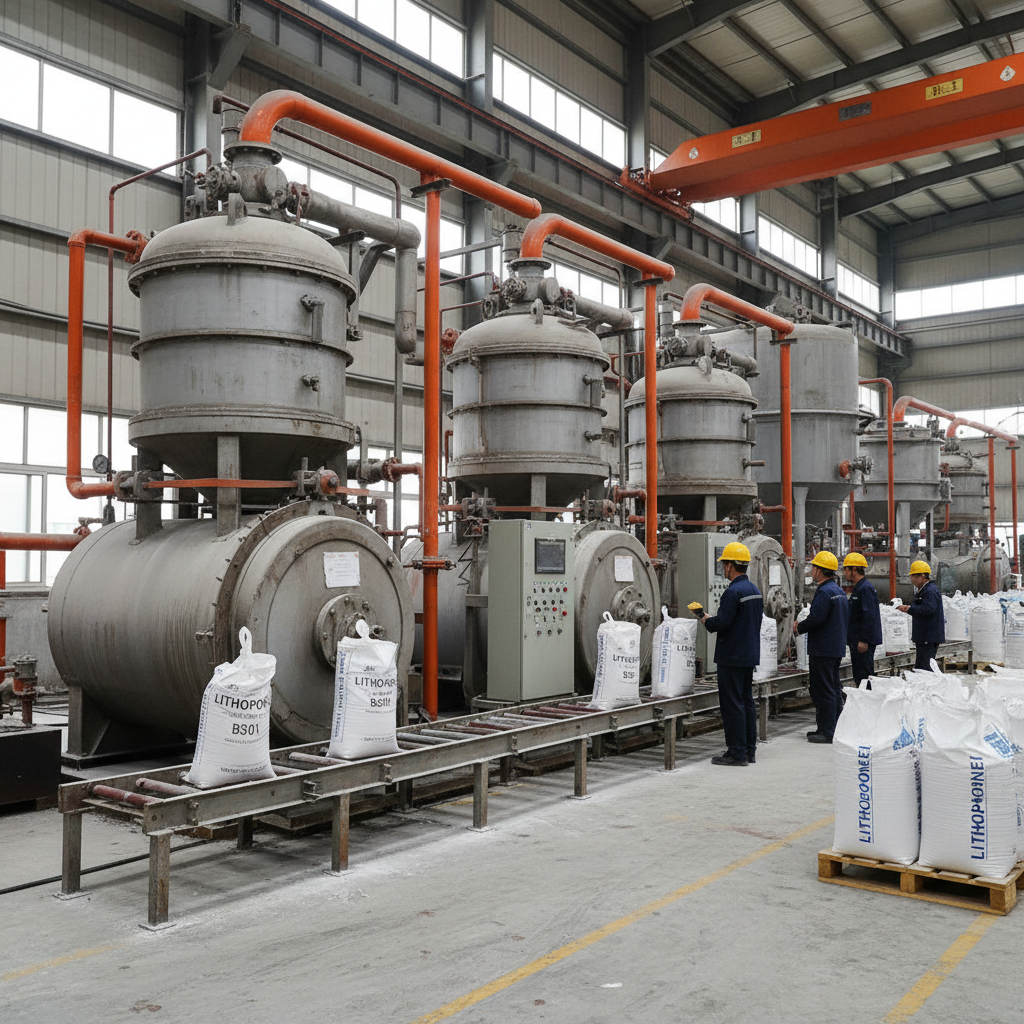
The production of lithopone(b301 b311) involves a complex chemical process typically starting with the precipitation of barium sulfate. This is achieved by reacting barium chloride with a sulfate source, carefully controlling the temperature and pH to obtain a finely dispersed precipitate. The resulting barium sulfate is then mixed with a solution of zinc sulfide, often produced through the reaction of zinc sulfate and hydrogen sulfide.
A crucial step is the coprecipitation process, where the zinc sulfide and barium sulfate are intimately mixed, ensuring a homogenous blend. This requires precise control over reaction parameters, including mixing speed, temperature, and reagent concentrations. Following coprecipitation, the mixture undergoes washing, filtration, and drying to remove impurities and achieve the desired moisture content.
Modern manufacturing plants also often incorporate surface treatment processes to enhance the pigment's dispersibility and compatibility with various media. These treatments can involve coating the lithopone particles with organic compounds or inorganic oxides, further tailoring its performance for specific applications. Quality control is critical at every stage to ensure consistent particle size and chemical composition, guaranteeing the final product's reliability.
Key Performance Characteristics of lithopone(b301 b311)
Lithopone(b301 b311) exhibits several key characteristics that define its applicability. A major one is its refractive index, which contributes to its opacity and ability to scatter light effectively. While lower than titanium dioxide, it’s sufficient for many applications, especially where full hiding power isn’t a primary requirement. Another critical factor is its chemical inertness; lithopone is relatively resistant to acids and alkalis, enhancing its durability in various environments.
However, compared to TiO2, lithopone generally has lower brightness and tinting strength. It also exhibits a slightly yellowish undertone, which can limit its use in applications demanding a perfectly neutral white. Nevertheless, its relatively low cost and ease of dispersion make it a compelling choice for many industrial applications.
Performance Comparison of lithopone(b301 b311) Grades
Applications Across Diverse Industries of lithopone(b301 b311)
Lithopone(b301 b311) finds widespread applications across various industries. In the paint and coatings sector, it’s used in interior paints, particularly in cost-sensitive applications like emulsion paints for walls and ceilings. Its moderate opacity provides sufficient coverage for these purposes, while its affordability makes it an attractive option.
Beyond paints, lithopone is utilized in the plastics industry as a filler and whitening agent in PVC and other polymers. It also serves as a component in paper coatings, enhancing the brightness and opacity of printing papers. Furthermore, lithopone sees use in rubber manufacturing and certain cosmetic applications, although these are less prevalent due to regulations and the availability of alternatives.
Cost-Benefit Analysis of Utilizing lithopone(b301 b311)
The primary benefit of using lithopone(b301 b311) is its cost-effectiveness. Compared to titanium dioxide, lithopone is significantly cheaper, making it a viable option for applications where extreme whiteness or high performance isn't crucial. This cost advantage translates to lower production costs for manufacturers, potentially increasing profit margins or allowing for more competitive pricing.
However, the trade-off is a slight reduction in performance characteristics like brightness and durability. Therefore, a careful cost-benefit analysis is essential. Factors like the intended application, required performance level, and market price of alternatives must be considered to determine if lithopone is the most suitable choice.
For projects where cost is the overriding factor and a moderate level of whiteness and opacity is acceptable, lithopone remains a strong contender. Its established manufacturing processes and readily available supply chain further contribute to its practicality.
Future Outlook and Potential Innovations in lithopone(b301 b311)
The future of lithopone(b301 b311) hinges on ongoing innovation to address its limitations and enhance its performance. Research is currently focused on surface modifications and the incorporation of nanomaterials to improve its brightness, dispersibility, and UV resistance. These advancements could broaden its applicability and enable it to compete more effectively with titanium dioxide in a wider range of applications.
Sustainability is another key driver of innovation. Developing more environmentally friendly manufacturing processes, reducing waste generation, and exploring the use of recycled materials are crucial for ensuring the long-term viability of lithopone. Additionally, exploring synergistic combinations with other pigments could unlock new performance characteristics and expand its market potential.
The increasing demand for affordable pigments in developing countries presents a significant opportunity for lithopone(b301 b311). Tailoring formulations to meet the specific needs of these markets, coupled with ongoing innovation, can secure its position as a valuable component in the global pigment landscape.
Summary of Key Factors Influencing Lithopone(b301 b311) Performance
| Manufacturing Method |
Zinc Sulfide Purity |
Barium Sulfate Particle Size |
Surface Treatment |
| Coprecipitation |
98% |
0.8 µm |
Silicone Resin |
| Direct Reaction |
95% |
1.2 µm |
Organic Acid |
| Hydrothermal |
99% |
0.5 µm |
Polyacrylate |
| Spray Drying |
97% |
1.0 µm |
None |
| Microwave Assisted |
96% |
0.7 µm |
Aluminum Stearate |
| Sol-Gel |
99.5% |
0.3 µm |
Titanium Dioxide Coating |
FAQS
Lithopone(b301 b311) is predominantly used in interior paints, particularly emulsion paints, where cost-effectiveness is vital. It provides adequate opacity for covering surfaces, though its brightness is less than titanium dioxide. It's also used in some industrial coatings and primers, often blended with other pigments to optimize performance and cost. The ease of dispersion and relatively good chemical resistance make it suitable for these applications, offering a balance between quality and affordability.
The particle size of lithopone(b301 b311) significantly impacts its optical properties. Smaller particles generally lead to higher scattering efficiency and improved opacity, while larger particles can reduce gloss. Controlling the particle size distribution during manufacturing is crucial for achieving the desired brightness, hiding power, and dispersibility. A narrow particle size distribution is ideal for maximizing performance and ensuring uniform color development.
The environmental impact of lithopone(b301 b311) is a growing concern. Traditional manufacturing processes can generate waste products and require energy-intensive operations. However, ongoing research focuses on developing more sustainable production methods, including reducing waste, using recycled materials, and optimizing energy efficiency. Compared to titanium dioxide production, lithopone's environmental footprint can be lower, but further improvements are necessary.
Titanium dioxide (TiO2) offers superior brightness, opacity, and durability compared to lithopone(b301 b311). However, TiO2 is significantly more expensive. Lithopone, being a blend of zinc sulfide and barium sulfate, provides a cost-effective alternative where extreme whiteness isn't essential. TiO2 also exhibits better UV resistance and is generally considered more environmentally benign, although sustainable manufacturing is improving for both pigments.
Lithopone(b301 b311) is less resistant to UV degradation than titanium dioxide. Prolonged exposure to ultraviolet radiation can cause discoloration and reduce its opacity. This limits its use in exterior applications. Surface treatments and blending with UV stabilizers can mitigate this issue to some extent, but it remains a significant limitation compared to TiO2.
Future applications of lithopone(b301 b311) may include enhanced performance in specialized coatings, particularly in areas where cost is a primary concern. Nanotechnology and surface modifications could improve its UV resistance and dispersibility. Research into using lithopone as a functional filler in polymers, offering properties beyond simple whitening, also holds promise. Moreover, developing more sustainable manufacturing processes will expand its potential across various industries.
Conclusion
In summary, lithopone(b301 b311) remains a valuable pigment despite the emergence of more advanced alternatives. Its affordability, relative chemical inertness, and established manufacturing processes continue to make it a compelling choice for a range of applications, particularly in cost-sensitive markets. Understanding its limitations—lower brightness and UV resistance—is crucial for optimal utilization.
Looking ahead, innovation in surface treatment and sustainable manufacturing are key to unlocking lithopone’s full potential. By addressing its shortcomings and capitalizing on its cost advantages, lithopone(b301 b311) can maintain a vital role in the global pigment landscape. For further information and exploration of our lithopone products, visit our website: www.cqtitaniumdioxide.com