

ஏப் . 27, 2026 10:26 மீண்டும் பட்டியலில்
The Safety of Titanium Dioxide in Large-Scale Industrial Handling and Processing
The global industrial landscape of 2026 continues to rely on high-performance minerals to drive innovation in coatings, plastics, and construction. However, as production scales reach new heights, the conversation around the safety of titanium dioxide has matured from a compliance-driven checklist into a sophisticated system of engineering and risk management. For international manufacturers and trade professionals, ensuring a safe handling environment is not just a regulatory obligation—it is the foundation of operational reliability and worker well-being. By focusing on advanced containment and the inherent properties of the material, the modern factory ensures that this essential white pigment remains a cornerstone of safe global production.
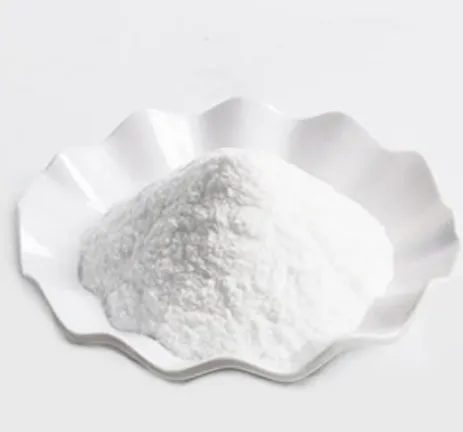
Navigating Regulatory Clarity and the Safety of Titanium Dioxide
In recent years, the legal and regulatory status of this mineral has undergone significant refinement, providing a clearer roadmap for industrial users. As of 2026, major global bodies have reaffirmed that when managed correctly, the safety of titanium dioxide is well-established for large-scale applications. The previous period of regulatory uncertainty in regions like the European Union has largely been resolved through high-court rulings that emphasize the importance of distinguishing between the substance itself and the physical form it takes during processing.
The consensus across international safety agencies—including the FDA in the United States and various health authorities in Asia—remains that the material is safe when integrated into finished products. The focus for industrial safety has shifted toward "inhalation management" during the early stages of production. By treating the pigment as a valuable industrial resource that requires precise handling, companies have moved away from outdated "hazard" labels and toward a more nuanced "exposure control" model. This shift has provided greater legal certainty for titanium dioxide powder suppliers and manufacturers, allowing them to focus on the technical excellence of their products while maintaining the highest occupational health standards.
Engineering Excellence: Containment of the Titanium Dioxide Chemical
The primary challenge in any large-scale facility is the management of fine particles. As a titanium dioxide chemical, the substance is characterized by its extreme fineness, which is exactly what gives it its world-class opacity and brightness. However, these same properties mean that the material can easily become airborne if not properly contained. Modern 2026 factories have solved this through "closed-loop" engineering.
In high-throughput environments, the titanium dioxide chemical is moved through vacuum-sealed pneumatic conveying systems. These systems ensure that the pigment travels from the bulk bag to the mixing tank without ever coming into contact with the ambient air of the factory floor. Patented "snap-fit" connectors and airtight valve systems have replaced traditional clamps, eliminating the leaks that used to cause "white dust" accumulation in older plants. By keeping the material inside the process and out of the environment, manufacturers not only protect their workers but also reduce material waste, ensuring that every gram of pigment contributes to the final product's quality.
Best Practices for the Manual Handling of Titanium Dioxide Powder
While automation handles the bulk of the work, there are still stages where manual intervention is required, such as during sampling or the initial opening of bags. The handling of titanium dioxide powder in these scenarios is governed by a strict hierarchy of controls. Modern "glove-box" emptying stations allow operators to open and discharge bags within a fully contained environment, preventing any dust from escaping into the operator's breathing zone.
Furthermore, the 2026 industrial standard for personal protective equipment (PPE) has seen significant upgrades. Workers in the vicinity of titanium dioxide powder utilize high-efficiency particulate air (HEPA) filtration masks and anti-static, non-permeable coveralls. These garments are designed to prevent the pigment from clinging to clothing, which avoids the "transfer" of dust to non-production areas. Combined with rigorous "wet-method" cleaning protocols—where floors are cleaned using specialized vacuums rather than dry sweeping—the modern factory maintains a pristine environment that safeguards everyone from the floor technician to the visiting client.
Understanding Why Titanium Dioxide Is a Stable Choice for Industrial Growth
In a world increasingly concerned with the reactivity of industrial chemicals, it is important to remember that titanium dioxide is an exceptionally stable and inert mineral. Unlike many other industrial additives, it does not burn, it is not explosive, and it does not react with the vast majority of other chemicals used in manufacturing. This inherent stability makes it one of the safest materials to store and transport across global supply chains.
Because titanium dioxide is non-flammable, it does not require the specialized explosion-proof storage rooms that are necessary for many solvents or organic pigments. This reduces the complexity and the cost of the manufacturing infrastructure. Furthermore, its chemical inertness means that it does not degrade over time, even in varying climates. For a wholesale titanium dioxide manufacturer, this stability is a key selling point, as it guarantees that the material will arrive at a customer's facility in the same high-performance state it left the factory, regardless of the shipping duration or the environmental conditions during transit.
The Everyday Context: Titanium Dioxide Commonly Present in Consumer Environments
The discussion around industrial safety is often balanced by the fact that the mineral is titanium dioxide commonly present in a vast array of consumer-facing products that we use with total confidence every day. From the bright white coatings on pharmaceutical tablets to the UV-protecting films on food packaging, the material’s safety profile is a fundamental part of modern life. In these finished forms, the pigment is "bound" within a matrix—whether it be a polymer, a resin, or a tablet coating—meaning it can no longer become airborne or be inhaled.
This "matrix-bound" safety is why titanium dioxide commonly present in home paints and plastic toys is considered a gold standard for consumer protection. The industrial safety protocols used in 2026 are simply a rigorous extension of this underlying safety profile, ensuring that the people who build these products are as protected as the people who use them. By maintaining this high bar for safety throughout the entire lifecycle of the pigment—from the raw mineral sands to the final consumer good—the industry reinforces its role as a responsible and essential pillar of global manufacturing.
-
Where Titanium Dioxide Comes From: From Ore to Industrial Pigment
செய்திApr.27,2026
-
The Safety of Titanium Dioxide in Large-Scale Industrial Handling and Processing
செய்திApr.27,2026
-
Micronized Titanium Dioxide: Revolutionizing Fine-Film Industrial Coatings
செய்திApr.27,2026
-
High-Gloss Durability: Rutile Titanium Dioxide Pigment in Marine Applications
செய்திApr.27,2026
-
Choosing Between Anatase and Rutile Type Titanium Dioxide for Powder Coatings
செய்திApr.27,2026
-
Achieving Pure White Aesthetics with Titanium Dioxide White Concrete Pigment
செய்திApr.27,2026