

ஏப் . 27, 2026 10:24 மீண்டும் பட்டியலில்
Micronized Titanium Dioxide: Revolutionizing Fine-Film Industrial Coatings
The landscape of modern industrial finishing is undergoing a profound transformation, driven by the demand for coatings that are thinner, smoother, and more resilient than ever before. In the world of high-precision manufacturing—ranging from the ultra-thin layers on consumer electronics to the sophisticated protective films on high-speed rail—the traditional approach to pigmentation is no longer sufficient. This is where micronized titanium dioxide has stepped in as a revolutionary force. By refining the particle size to a microscopic scale, the industry has unlocked a level of optical performance and surface integrity that was previously unreachable, redefining what is possible in fine-film applications.
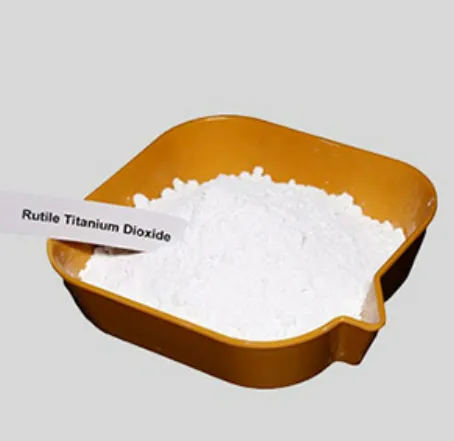
The Precision of Micronized Titanium Dioxide in Modern Electronics
As our personal devices become smaller and more powerful, the coatings that protect them must follow suit. In the production of smartphones, laptops, and wearable technology, every micrometer of thickness matters. Standard pigments can often create a textured or "grainy" surface when applied in ultra-thin layers, which not only affects the aesthetic appeal but can also interfere with the haptic feedback and the assembly of precision components. The introduction of micronized titanium dioxide has solved this dilemma by providing a pigment that integrates seamlessly into advanced resin systems.
Because these particles are so finely milled, they allow for a perfectly level, monolithic film that is incredibly thin yet provides complete opacity. This "high-coverage, low-build" characteristic is the hallmark of best quality titanium dioxide in the electronics sector. It ensures that the white or pastel finishes on modern gadgets remain crisp and uniform, without adding unnecessary bulk to the device. This application highlights a shift in the industry: we are no longer just coloring a surface; we are engineering a functional interface where the pigment acts as a structural stabilizer at the molecular level.
Enhancing Clarity and Gloss with Anatase Titanium Dioxide in Coatings
While the industrial world often looks to the ruggedness of certain crystal structures, the fine-film sector frequently discovers unique advantages in alternative forms. The strategic use of anatase titanium dioxide in coatings is a perfect example of this. Anatase is celebrated for its exceptional brightness and its ability to produce a "cool" white tone that is highly sought after in premium decorative and protective films. In a micronized state, these characteristics are amplified, allowing for a level of gloss and clarity that is breathtaking.
In the world of high-end consumer packaging and luxury goods, the visual "depth" of a coating is a key indicator of quality. Utilizing anatase titanium dioxide in coatings allows for a finish that looks deep and luminous, rather than flat and chalky. Because the micronized particles scatter light with such precision, they eliminate the "milky" appearance that can sometimes plague thin-film applications. This ensures that the branding and graphics on a product stand out with maximum contrast, proving that the optical efficiency of the pigment is the primary driver of consumer perception in the luxury market.
The Durability of Fine-Film Titanium Dioxide Products in Aerospace
The aerospace industry represents the absolute peak of coating performance. An aircraft's skin must endure extreme temperature shifts, intense UV bombardment at high altitudes, and the abrasive force of high-speed travel—all while keeping weight to an absolute minimum. To achieve this, engineers rely on specialized titanium dioxide products that can provide maximum protection in the thinnest possible layers.
By using micronized titanium dioxide, aerospace coating formulators can create a shield that is both lightweight and incredibly tough. The fine particles create a dense, tightly packed matrix that is nearly impermeable to moisture and corrosive agents. This density is critical for preventing the onset of corrosion on aluminum airframes. Furthermore, the high solar reflectance of these titanium dioxide products helps to manage the thermal load on the aircraft, reflecting heat away from the cabin and reducing the energy required for climate control. This application demonstrates that even in the most demanding environments, the move toward finer, more engineered pigments is a move toward greater safety and efficiency.
Visual Consistency and the Mastery of Titanium Dioxide Pigment
For any global brand, consistency is the ultimate goal. Whether a product is manufactured in a facility in Asia or an assembly plant in South America, the color and finish must be identical. Achieving this level of uniformity across different batches and different regions requires a titanium dioxide pigment that is processed to exacting standards. Micronization provides the predictability that the global market demands.
When a titanium dioxide pigment is micronized, its surface area is vastly increased, which improves its dispersibility in the liquid coating. This means that the pigment doesn't settle or clump during shipping or storage, ensuring that the final application is always streak-free and perfectly toned. This reliability is why leading manufacturers insist on the best quality titanium dioxide for their signature products. It removes the "guesswork" from the production line, allowing for a seamless transition from the design phase to the final retail product. In an era where visual brand identity is a company's most valuable asset, the pigment serves as the guardian of that identity.
Titanium Dioxide Pigment: Driving Innovation in Sustainable and Smart Fine-Film Coatings
As we look toward the future, the role of micronized titanium dioxide is expanding into the realm of "smart" coatings. These are films that do more than just protect or beautify; they respond to their environment. Some modern fine-film coatings are now designed to be antimicrobial or to actively break down pollutants in the air. The increased surface area of micronized particles makes them the ideal catalyst for these high-tech functions.
Furthermore, the drive for sustainability is pushing the industry toward water-borne and UV-curable systems that use less solvent. These new systems require pigments that can be easily integrated without the need for heavy chemical surfactants. High-performance titanium dioxide products are being engineered specifically for these eco-friendly platforms, ensuring that the transition to "green" manufacturing does not come at the expense of finish quality or durability. This intersection of nanotechnology and environmental science is where the next generation of industrial coatings is being born, with micronized minerals leading the way.
-
Where Titanium Dioxide Comes From: From Ore to Industrial Pigment
செய்திApr.27,2026
-
The Safety of Titanium Dioxide in Large-Scale Industrial Handling and Processing
செய்திApr.27,2026
-
Micronized Titanium Dioxide: Revolutionizing Fine-Film Industrial Coatings
செய்திApr.27,2026
-
High-Gloss Durability: Rutile Titanium Dioxide Pigment in Marine Applications
செய்திApr.27,2026
-
Choosing Between Anatase and Rutile Type Titanium Dioxide for Powder Coatings
செய்திApr.27,2026
-
Achieving Pure White Aesthetics with Titanium Dioxide White Concrete Pigment
செய்திApr.27,2026