

ஏப் . 17, 2026 10:24 மீண்டும் பட்டியலில்
The Role of Coated Titanium Dioxide in High-Performance Exterior Coatings
The development of modern urban landscapes and industrial infrastructure relies heavily on the durability and aesthetic resilience of exterior surfaces. Whether it is the soaring facade of a skyscraper or the protective layer on high-speed transit systems, the choice of materials determines how well these structures withstand the relentless assault of environmental stressors. At the heart of this material science lies the strategic use of titanium dioxide, a component that has transcended its traditional role as a simple whitener to become a cornerstone of high-performance architectural protection.
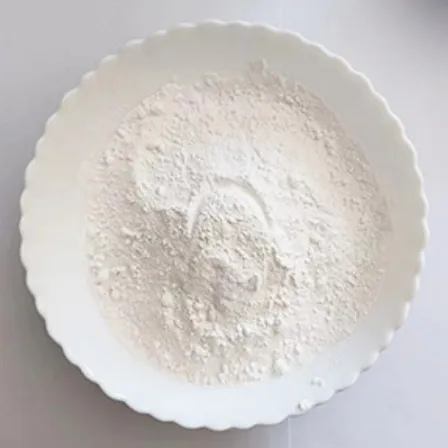
The Evolution of Weather Resistance through Coated Titanium Dioxide
In the realm of exterior coatings, the primary challenge is maintaining structural integrity against ultraviolet radiation, moisture, and fluctuating temperatures. Standard pigments often fail under prolonged exposure, leading to chalking, fading, and the eventual breakdown of the protective polymer film. This is where coated titanium dioxide proves its worth as a specialized solution. Unlike raw alternatives, the coated variety features a sophisticated inorganic or organic surface treatment—often involving silica or alumina—that acts as a barrier between the reactive pigment core and the surrounding paint resin.
This stabilization is critical for high-performance coatings. By neutralizing the photocatalytic activity that occurs when sunlight hits the pigment, the coating ensures that the binder remains intact for decades rather than years. This protective mechanism allows architects and facility managers to specify coatings that maintain their gloss and color retention even in the harshest tropical or high-altitude environments. The transition from a basic additive to a high-tech engineered particle represents a significant leap in how we approach sustainable building maintenance.
Enhancing Visual Longevity with Rutile Titanium Dioxide
When discussing the brilliance and opacity of exterior paints, rutile titanium dioxide is the industry standard for a reason. Its unique crystal structure provides a higher refractive index than other forms, meaning it can scatter light more efficiently. In practical application, this translates to "hiding power"—the ability of a coating to completely cover the substrate with fewer layers. However, in a high-performance context, opacity is only half the battle; the real value lies in how that opacity behaves over time.
By utilizing a high-quality titanium dioxide pigment, manufacturers can create coatings that do not yellow or become brittle. In exterior applications, the purity of the white tone serves as a baseline for all other colors. If the white base degrades, the entire color palette of a building’s exterior shifts, leading to an inconsistent and weathered appearance. The integration of advanced rutile structures ensures that the visual intent of the designer remains preserved against the bleaching effects of the sun, providing a consistent "freshly painted" look that lasts for the duration of the coating's lifecycle.
The Chemical Synergy of Titanium Dioxide Chemical in Modern Resins
The efficacy of a coating is not just about the pigment itself, but how it interacts with the complex chemistry of modern water-borne or solvent-based resins. As a titanium dioxide chemical, this material must be engineered for optimal dispersion. If the particles clump together, the coating becomes porous and weak, allowing water to penetrate and reach the underlying metal or concrete.
High-performance exterior coatings require a seamless, monolithic film to prevent corrosion and carbonation. Advanced surface treatments on the pigment particles ensure that they distribute evenly throughout the liquid phase, creating a dense, reinforced matrix once cured. This chemical synergy is what allows for the creation of "self-cleaning" surfaces. Many modern exterior coatings are now designed so that rainwater washes away dirt and pollutants. This phenomenon is largely supported by the way the pigment modifies the surface tension of the coating, ensuring that the exterior remains pristine with minimal manual intervention.
Sustainable Architecture and the Use of Titanium Dioxide for Thermal Management
Beyond protection and aesthetics, the use of titanium dioxide has become a vital tool in the global push for energy efficiency. High-performance exterior coatings are increasingly tasked with thermal management, specifically the reduction of "Urban Heat Islands." Because of its exceptional light-scattering properties, this pigment reflects a significant portion of solar energy away from the building surface.
When a building stays cooler on the outside, less heat is transferred to the interior, directly reducing the energy required for cooling systems. This application moves the material from the category of "decorative" to "functional and sustainable." In regions with intense sunlight, the application of a titanium-rich coating can significantly lower surface temperatures, extending the life of the building's cooling equipment and contributing to a lower overall carbon footprint for the property. This dual role of protector and thermal regulator makes it an indispensable asset for green building certifications and modern environmental standards.
Protecting Industrial Assets with Titanium Dioxide Pigment Technology
In industrial settings, such as oil refineries, coastal bridges, or chemical processing plants, the demands on a coating are even more extreme. Here, the titanium dioxide pigment serves as the first line of defense against chemical vapors, salt spray, and abrasive wind-blown sand. The high-performance nature of the coating depends on the pigment's ability to remain inert.
A well-formulated coating using specialized coated titanium dioxide creates a shield that is nearly impermeable to oxygen and moisture. This is essential for preventing rust on steel structures. In these heavy-duty applications, the focus shifts from pure aesthetics to the prevention of catastrophic structural failure. The reliability of the pigment ensures that the protective barrier does not develop micro-cracks, which are often the starting point for deep-seated corrosion. By investing in superior pigment technology, industrial operators can extend the intervals between maintenance cycles, reducing downtime and labor costs significantly.
-
Why Rutile Titanium Dioxide is the Preferred Choice for Automotive Finishes
செய்திApr.17,2026
-
Utilizing Anatase Titanium Dioxide for Inks and Specialized Printing Media
செய்திApr.17,2026
-
The Science of Reflection: How Titanium Dioxide White Pigment Defines Modern Paints
செய்திApr.17,2026
-
The Role of Coated Titanium Dioxide in High-Performance Exterior Coatings
செய்திApr.17,2026
-
Enhancing Structural Longevity: Titanium Dioxide for Concrete and Masonry
செய்திApr.17,2026
-
Comparing the Optical Efficiency of Rutile and Anatase Titanium Dioxide
செய்திApr.17,2026