

maj . 08, 2026 11:36 Tillbaka till listan
The Stability of Anatase Titanium Dioxide (TiO2) in Paper and Textile Production
The delicate nature of high-quality paper and the vibrant flexibility of modern textiles represent two industries where the sensory experience of the consumer is paramount. In these sectors, the "touch" and "visual softness" of a product are just as important as its durability. While many industrial applications favor the rugged, dense nature of other mineral structures, the world of fiber-based manufacturing has found its perfect partner in anatase titanium dioxide (tio2). Known for its unique combination of brilliant whiteness, low abrasiveness, and chemical stability, this specific crystal form has become the cornerstone for manufacturers who aim to balance high-end aesthetics with the preservation of their delicate production machinery.
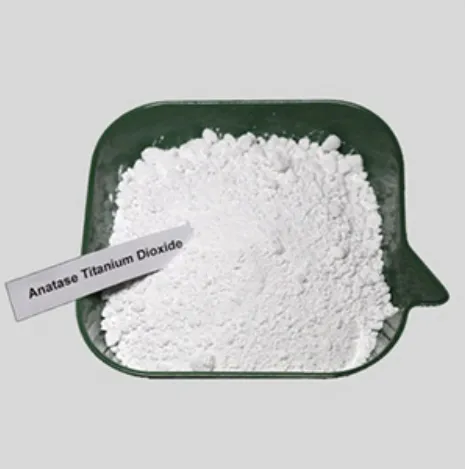
The Gentle Brilliance of Anatase Titanium Dioxide (TiO2) in Premium Paper
When we hold a high-quality art book, a crisp corporate brochure, or a piece of elegant stationery, we are interacting with the optical efficiency of the anatase crystal. In the paper industry, the primary use of titanium dioxide is to provide opacity and brightness without adding excessive weight or stiffness to the sheet. Because anatase possesses a slightly "bluer" and cooler white undertone compared to other forms, it creates a visual "snap" that makes printed text easier to read and colors appear more vivid.
However, the true value of anatase titanium dioxide (tio2) in paper production lies in its physical softness. Paper is manufactured at incredible speeds, with pulp traveling over delicate wire meshes and through precision rollers. If a pigment is too hard or abrasive, it can act like sandpaper, wearing down these expensive components and leading to frequent maintenance shutdowns. The anatase structure is inherently less abrasive, allowing paper mills to achieve the desired level of "whiteness" while significantly extending the life of their equipment. This creates a more stable production environment where the quality of the paper remains consistent from the beginning of the roll to the very end.
Enhancing Fiber Integrity and the Use of Titanium Dioxide in Modern Textiles
In the textile industry, the challenge of pigmentation is even more complex. Synthetic fibers like polyester, nylon, and rayon are naturally translucent and have a synthetic "plastic" shine that can be unappealing to the eye. To solve this, manufacturers integrate anatase titanium dioxide (tio2) directly into the polymer melt before it is spun into yarn. This process, known as "delustering," allows for the creation of fabrics that range from "semi-dull" to "full-dull," mimicking the natural, matte appearance of silk or cotton.
The stability of the pigment within the fiber is critical. Because textiles are subject to constant stretching, washing, and exposure to light, the pigment must remain locked within the fiber matrix. The use of titanium dioxide in its anatase form is preferred here because its particle size can be controlled with extreme precision. This ensures that the fibers maintain their tensile strength and do not become brittle. Furthermore, the pigment provides a foundational layer of UV protection, preventing the synthetic polymers from yellowing or degrading when the garment is worn outdoors. This ensures that a white summer dress or a high-performance athletic shirt stays bright and strong throughout its lifecycle, reflecting the manufacturer's commitment to quality and longevity.
Why Titanium Dioxide for Color Consistency Defines the Fashion and Print Industries
Color is the universal language of fashion and branding. Whether it is a specific shade of "luxury cream" in a designer catalog or a "vibrant teal" in a sportswear collection, the foundation of that color is almost always a white pigment. The reliability of titanium dioxide for color consistency is what allows global brands to maintain their identity across different materials and different continents.
By using a high-purity anatase base, dye houses and ink manufacturers can ensure that their colors remain "true." In textiles, if the white base is inconsistent, the final dyed fabric will show "metamerism"—a phenomenon where the color looks different under different lighting conditions. Using titanium dioxide for color stability eliminates this risk, providing a neutral, highly reflective background that allows organic dyes to show their full brilliance. In the paper world, this same stability ensures that the "white space" on a page does not distract from the high-resolution images of a luxury magazine, maintaining a professional and high-end aesthetic that consumers have come to expect.
The Invisible Presence: Titanium Dioxide Commonly Present in Everyday Goods
Most consumers are unaware of the sophisticated chemistry that goes into the products they use daily. However, the mineral is titanium dioxide commonly present in a vast array of household and professional items. In the home, it is found in the high-opacity tissues and towels that feel soft yet strong. In the office, it is in the high-brightness copier paper that prevents "show-through" when printing on both sides. In the closet, it is in the soft-touch microfibers and the crisp white linens that define modern comfort.
The fact that this material is titanium dioxide commonly present in so many sensitive applications is a testament to its safety and stability. Because it is chemically inert, it does not react with the skin or the environment, making it the ideal choice for products that come into close contact with humans. For the global supply chain, this ubiquity represents a massive and steady demand. Manufacturers who can provide high-purity, stable anatase grades are the silent engines behind the comfort and visual clarity of our modern lives, ensuring that the "white" in our world remains pure and dependable.
Strategic Partnerships with Global Anatase Titanium Dioxide Producers
For large-scale paper mills and textile giants, the success of their production line depends on the reliability of their anatase titanium dioxide producers. Because these industries operate on thin margins and high volumes, any variation in the pigment's quality can lead to massive losses in wasted material and machine downtime. Leading producers have invested in specialized "wet-process" manufacturing techniques that ensure the pigment is free from large, gritty particles that could ruin a delicate silk fiber or a thin sheet of Bible paper.
These anatase titanium dioxide producers act as technical consultants to their clients, helping them optimize their "slurry" formulations for better dispersion and retention. As the global market moves toward more sustainable manufacturing, these producers are also leading the way in developing "low-water" and "low-energy" processing routes. By partnering with a producer that understands the specific mechanical and optical needs of the fiber industries, manufacturers can ensure that they remain competitive in a 2026 market that values both performance and environmental responsibility.
-
The Role of High Purity Titanium Dioxide in Polymer Durability
NyheterMay.14,2026
-
Optimizing Industrial Coatings with Rutile Titanium Dioxide
NyheterMay.14,2026
-
Improving Brightness in Paper Industry with Anatase Grade TiO2
NyheterMay.14,2026
-
Enhancing Opacity in Premium Inks with Titanium Dioxide Pigment
NyheterMay.14,2026
-
Chemical Stability of Titanium Dioxide in Ceramic Glaze Applications
NyheterMay.14,2026
-
Advanced UV Protection: Titanium Dioxide for Construction Materials
NyheterMay.14,2026