

maj . 14, 2026 09:32 Tillbaka till listan
Chemical Stability of Titanium Dioxide in Ceramic Glaze Applications
The art and science of ceramic production have relied on mineral additives for millennia, but the modern industrial era has introduced a level of chemical precision that transforms clay and glaze into high-performance materials. At the forefront of this technical evolution is the strategic integration of titanium dioxide for ceramics. In the high-temperature environment of a kiln, where raw materials undergo radical phase changes, the chemical stability of the additives determines the success of the final finish. Titanium dioxide serves as a vital component in this process, acting not merely as a colorant but as a functional agent that dictates the opacity, crystalline structure, and acid resistance of the ceramic glaze.
Analyzing the Fundamental Titanium Dioxide Chemical Properties in Molten Glass
To understand how a glaze behaves at temperatures exceeding 1,200°C, one must first examine the inherent titanium dioxide chemical properties. Unlike many organic pigments that would incinerate at such temperatures, TiO2 is a refractory oxide with a melting point of approximately 1,843°C. This thermal robustness allows it to remain active within the molten glass flux as the kiln reaches peak heat. Its high refractive index is the primary driver for its use, but its chemical interaction with silica and alumina is what truly defines its role in ceramic engineering.
In the molten state, titanium dioxide chemical properties allow it to act as a glass modifier. It influences the viscosity of the glaze, often making the melt more fluid, which helps in achieving a smooth, defect-free surface upon cooling. Furthermore, titanium dioxide is known for its ability to promote phase separation. As the temperature drops, the TiO2 molecules tend to cluster, creating microscopic crystals that scatter light. This transition from a clear melt to an opaque, white, or variegated finish is a direct result of the mineral's chemical behavior during the cooling cycle. For industrial manufacturers, managing this rate of crystallization is essential for maintaining consistency across large production batches of floor tiles or sanitary ware.
The Structural Impact of Integrating Titanium Dioxide in Ceramics
The physical and aesthetic outcomes of a firing cycle are heavily influenced by the concentration and grade of titanium dioxide in ceramics. When used in relatively small amounts (typically under 1%), it often serves as a catalyst for other pigments, enhancing the depth and brilliance of colors. However, when the concentration is increased, the role of titanium dioxide in ceramics shifts toward opacification and matting. The pigment particles do not simply sit within the glaze; they interact with the fluxing agents to form new mineral phases, such as titanite or sphene, which give the ceramic surface its characteristic satin or matte texture.
Beyond aesthetics, the presence of titanium dioxide in ceramics significantly improves the mechanical and chemical durability of the surface. Glazes formulated with TiO2 exhibit a higher resistance to abrasion and "cutlery marking," a common issue in the dinnerware industry where metal utensils leave dark streaks on soft glazes. Chemically, the titanium-rich layer acts as a barrier against acidic or alkaline substances, preventing the leaching of other glaze components and ensuring that the ceramic remains food-safe and easy to clean over a long service life. This durability is why TiO2 is considered an essential ingredient for ceramics used in heavy-duty environments, such as laboratory countertops and commercial kitchens.
Optimizing Glaze Formulations with Premium TiO2 Powder
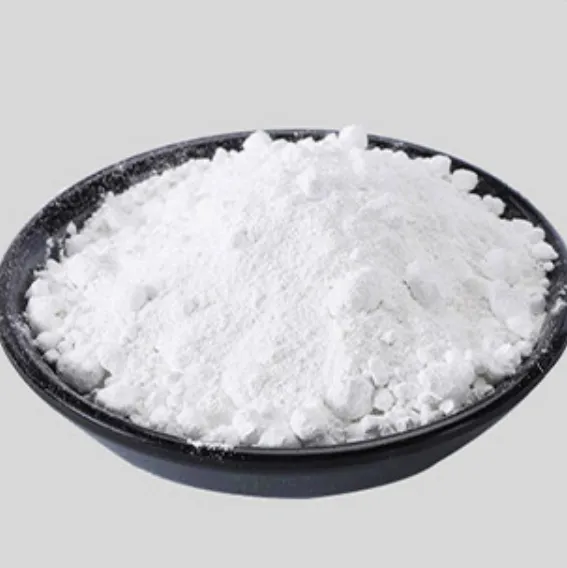
The successful execution of a complex glaze recipe depends on the purity and particle size of the TiO2 powder used in the raw mix. In the ceramics industry, consistency is the primary challenge; even a slight variation in the trace element content of the pigment can result in an unexpected yellowing of the glaze. High-quality TiO2 powder is processed to remove impurities like iron and chromium, which are known to react with titanium at high temperatures to produce strong, often unwanted, yellow or tan tints.
Optimization of the TiO2 powder involves ensuring a fine, uniform particle size to facilitate rapid and complete dissolution within the glaze melt. Larger aggregates can lead to "specking" or uneven opacity, which is unacceptable for premium porcelain or decorative art pieces. By utilizing micronized powders, ceramicists can achieve a more homogenous glass phase. Furthermore, the high surface area of fine powders allows for more efficient chemical reactions during the short window of peak firing temperature. This efficiency is particularly critical in fast-fire industrial kilns, where the entire heating and cooling cycle may take less than an hour, leaving very little room for slow-acting chemical processes to reach equilibrium.
The Strategic Value of Titanium Dioxide for Industrial Use in Large-Scale Production
In the broader context of the global market, the demand for titanium dioxide for industrial use in the ceramics sector is driven by the need for cost-effective, high-performance materials. While other opacifiers like zirconium silicate are commonly used, titanium dioxide offers a much higher refractive index, meaning that lower loading levels are often required to achieve the same level of "hide" or coverage. This efficiency is a major factor in the economic planning of large-scale tile and sanitary ware factories.
The versatility of titanium dioxide for industrial use extends to the production of specialized technical ceramics, such as insulators and catalysts. In these applications, the electrical and thermal properties of TiO2 are as important as its optical ones. For instance, in the production of high-voltage insulators, the chemical stability of titanium ensures that the ceramic can withstand extreme electrical stress and environmental weathering without degrading. The ability of the chemical industry to supply standardized, high-volume quantities of TiO2 allows the ceramics sector to innovate and scale, moving from traditional pottery to advanced material science that supports modern infrastructure and technology.
The Enduring Chemical Significance of Titanium Dioxide
In conclusion, the chemical stability of titanium dioxide is the foundation upon which many of the world's most durable and beautiful ceramic products are built. From the initial dispersion of TiO2 powder in the glaze slip to the complex mineralogical changes that occur in the heat of the kiln, every stage of the process relies on the unique titanium dioxide chemical properties. By understanding and optimizing the role of titanium dioxide in ceramics, manufacturers can produce surfaces that are not only visually stunning but also technically superior.
As the industry moves toward more sustainable and efficient production methods, the reliance on titanium dioxide for industrial use will only increase. Its ability to provide maximum opacity with minimal material usage, combined with its profound impact on the chemical and mechanical durability of the glaze, makes it an irreplaceable asset. In the ever-evolving world of material science, titanium dioxide remains a constant—a reliable, stable, and essential guardian of the ceramic surface, ensuring that the beauty of today's architecture and design remains preserved for future generations.
-
The Role of High Purity Titanium Dioxide in Polymer Durability
NyheterMay.14,2026
-
Optimizing Industrial Coatings with Rutile Titanium Dioxide
NyheterMay.14,2026
-
Improving Brightness in Paper Industry with Anatase Grade TiO2
NyheterMay.14,2026
-
Enhancing Opacity in Premium Inks with Titanium Dioxide Pigment
NyheterMay.14,2026
-
Chemical Stability of Titanium Dioxide in Ceramic Glaze Applications
NyheterMay.14,2026
-
Advanced UV Protection: Titanium Dioxide for Construction Materials
NyheterMay.14,2026