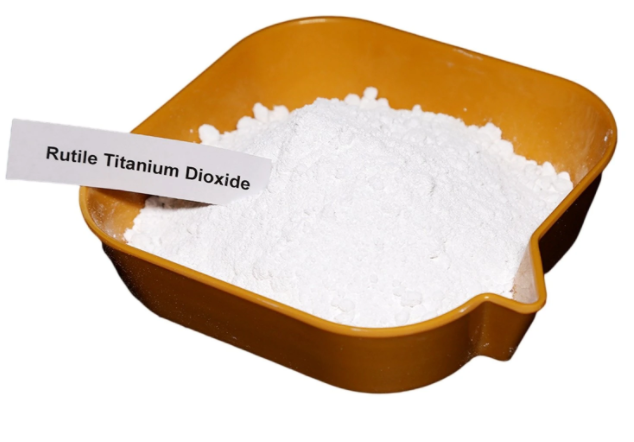


Industrial Grade Anatase Titanium Dioxide from tio2 suppliers
Selecting the right white pigment is a critical decision for manufacturers in the coatings, plastics, and ink sectors, where opacity and brilliance directly determine the end-product's commercial value. Anatase titanium dioxide serves as a fundamental inorganic salt, prized for its high refractive index and ability to scatter visible light across the 380-700 nm wavelength. For procurement managers, the challenge lies in balancing purity and dispersibility to ensure a seamless finish without compromising the structural integrity of the medium. By focusing on industrial-grade purity and specific surface area, companies can optimize their formulations for maximum hiding power while maintaining cost-efficiency.

Understanding the Technical Role of TiO2 in Optical Performance
The effectiveness of titanium dioxide (TiO2) in industrial applications is primarily driven by its exceptional capacity to scatter light. Because it does not absorb visible light, it manifests as a pure white powder, making it the gold standard for providing "hiding power" or opacity in architectural coatings and automotive finishes. The interaction between the particle size and the wavelength of light is what creates the vivid whiteness required for high-quality printing inks and plastic sectioning.
Technical evaluation of these materials goes beyond simple color. Engineers typically analyze several key parameters to determine suitability:
- Oil Absorption: Determines the amount of binder required to wet the pigment particles.
- Whiteness and Purity: A purity level of 98% ensures minimal contaminants, preventing unexpected chemical reactions in sensitive formulations.
- Specific Surface Area: Directly influences how the powder disperses within a liquid medium, affecting the final gloss and smooth texture of the coating.
- pH Value: Crucial for maintaining the stability of the emulsion in water-based paints.

Industrial Applications and Material Compatibility
Anatase titanium dioxide is widely utilized across various heavy industries due to its chemical stability and high coverage. In the coatings and paint industry, it is indispensable for creating a barrier that protects surfaces while providing a bright, aesthetic finish. Its strong cold resistance and high dispersibility make it an ideal candidate for outdoor architectural paints that must withstand temperature fluctuations without cracking or yellowing.
Beyond paints, this material is integrated into:
- Plastics and Polymers: Used in plastic sectioning to provide a clean, opaque white appearance and UV protection.
- Printing Inks: Enhances the contrast and brightness of printed materials, ensuring that colors remain vivid over a white base.
- Rubber and Tires: Provides structural reinforcement and color consistency in rubberized products.
- Ceramics: Used as a glazing agent to produce high-brightness white surfaces in sanitary ware and floor tiles.
Supplier Evaluation and Procurement Logistics
When sourcing from tio2 suppliers, procurement teams must look beyond the price per ton and evaluate the supplier's total production capacity and export reliability. A stable supply chain is essential for large-scale manufacturing, where a shortage of pigment can halt entire production lines. Evaluating the lead time based on order volume—ranging from small 1,000kg batches to massive quantities exceeding 25,000kg—allows companies to synchronize their inventory with actual production demand.
Furthermore, customization capabilities are a significant value-add. The ability to adjust packaging (such as the standard 25kg/bag) or provide customized branding and logos helps distributors streamline their own downstream logistics. Trustworthy partners provide clear lead-time frameworks, typically ranging from 5 to 15 days depending on the volume, ensuring that the materials arrive in time for scheduled manufacturing cycles.
Technical Specifications and Procurement Metrics
| Metric/Parameter | Industrial Standard | Impact on Quality | Recommended Usage |
|---|---|---|---|
| Purity Level | 98% (Standard) | High (Affects Color) | Coatings & Plastics |
| Appearance | White Powder | Medium (Visual) | Printing Inks |
| CAS No. | 13463-67-7 | Essential (Regulatory) | Global Export |
| Packaging | 25kg/bag | Logistical (Handling) | Bulk Manufacturing |
| Lead Time | 5 - 15 Days | Operational (Planning) | Inventory Management |
Quality Control and Storage Best Practices
To maintain the high purity and dispersibility of Anatase titanium dioxide, strict quality control and storage protocols must be implemented. The most critical factor is moisture prevention. Since TiO2 is a fine powder, direct contact with moisture can lead to clumping (agglomeration), which severely impairs the product's ability to disperse in coatings and leads to streaks or "fish-eyes" in the finished paint film.
Industry-standard storage requires a cool, dry environment with moisture-proof packaging. When receiving shipments, it is recommended to verify the batch purity and pH value against the provided technical data sheet. For those utilizing automated mixing systems, ensuring the powder is free from moisture-induced lumps is the first step toward achieving a consistent, high-opacity finish. Proper storage not only preserves the chemical integrity of the TiO2 but also extends the shelf life of the final formulated product.
Future Trends in Inorganic White Pigments
The market for titanium dioxide is evolving toward higher efficiency and lower environmental impact. There is an increasing demand for pigments that offer superior coverage with lower dosages, thereby reducing the total material cost and the weight of the final product. This trend is particularly evident in the automotive and aerospace industries, where weight reduction is a primary engineering goal.
Moreover, the shift toward water-borne coatings is forcing a re-evaluation of pigment surface treatments to improve hydrophilicity and dispersion in aqueous environments. As global regulations on chemical manufacturing tighten, the industry is seeing a move toward more sustainable production processes. Buyers are now prioritizing suppliers who can demonstrate consistent quality across large volumes—such as those capable of 100,000 tons annual output—while adhering to international industrial standards.
Frequently Asked Questions on Titanium Dioxide Procurement
Can you provide customized packaging and logos for bulk orders?
Yes, customized packing and logo services are available upon request. If you have specific branding or packaging needs for your local market, please contact us to discuss the details.
What is the minimum order quantity (MOQ) for industrial grade TiO2?
The standard MOQ is usually 1,000kg. While smaller quantities can be arranged, larger volumes are more cost-effective due to the high cost of sea transportation for smaller shipments.
What is the typical lead time for shipping?
The lead time is generally within 15 days after the deposit is received and all accessory details are confirmed.
How should titanium dioxide be stored to avoid degradation?
The product must be kept away from direct contact with moisture. We recommend storing it in a dry, well-ventilated warehouse in its original sealed packaging.
What are the primary applications of the Anatase grade TiO2?
Anatase titanium dioxide is primarily used in coatings, printing inks, plastics, and other industrial applications where high whiteness and opacity are required.
Which parameters determine the heat resistance of the powder?
Heat resistance and overall performance are evaluated through oil absorption, whiteness, purity, electron microscope average particle size, specific surface area, and pH value.
Technical References and Industry Sources
- PubChem - Titanium Dioxide Chemical Properties
- ScienceDirect - TiO2 Material Science and Applications
- ISO Standards for Inorganic Chemical Pigments
- Encyclopaedia Britannica - Titanium Dioxide Overview
For professionals seeking a reliable partner in the chemical raw materials sector, choosing a supplier with proven production scale and global export experience is key. Whether you are formulating high-performance automotive paints or mass-producing industrial plastics, the quality of your white pigment defines the quality of your brand.
Recommended Industry Guides