

พ.ค. . 14, 2026 09:49 กลับไปที่รายการ
The Role of High Purity Titanium Dioxide in Polymer Durability
The global polymer industry has reached a stage where material longevity and environmental resistance are no longer optional features but fundamental requirements. As polymers replace traditional materials in automotive, construction, and aerospace sectors, the demand for chemical additives that can safeguard these macromolecules has intensified. Central to this protective strategy is the integration of high purity titanium dioxide, a specialized white pigment that does far more than provide color. Its role in polymer durability involves a complex interplay of light physics, thermal stability, and chemical inertness, ensuring that plastic products remain functional and aesthetically pleasing over decades of use.
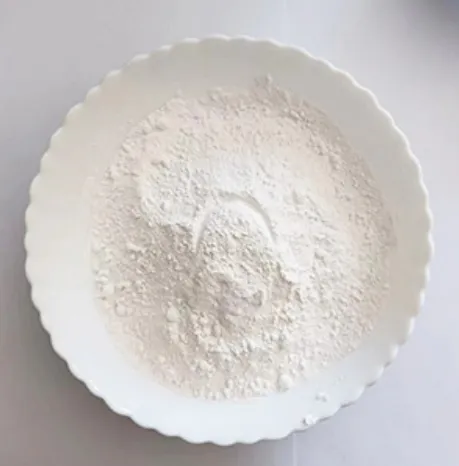
Understanding the Necessity of High Purity Titanium Dioxide in Engineering
When synthetic polymers are exposed to the elements, particularly solar radiation, they undergo a process known as photo-degradation. Ultraviolet (UV) rays possess enough energy to break the molecular bonds of the polymer chain, leading to brittleness, cracking, and a loss of mechanical strength. The inclusion of high purity titanium dioxide serves as the first line of defense against this invisible threat. Unlike lower-grade pigments, high-purity variants are processed to remove trace metallic impurities—such as iron or manganese—that can ironically act as catalysts for degradation.
The optimization of polymer durability begins at the molecular level. By utilizing high purity titanium dioxide, manufacturers ensure that the pigment particles themselves do not initiate secondary chemical reactions within the polymer matrix. This is critical for high-performance engineering plastics used in critical infrastructure. The high purity levels allow for a more stable interface between the inorganic pigment and the organic polymer, resulting in a composite material that maintains its structural integrity even under the combined stress of heat and light.
Enhancing UV Shielding and Longevity with Titanium Dioxide in Plastics
The effective application of titanium dioxide in plastics is largely dictated by its ability to act as a UV screener. Because TiO2 has an exceptionally high refractive index, it scatters and absorbs UV light before it can penetrate deep into the plastic substrate. This "shadowing" effect is what prevents the yellowing and surface chalking commonly seen in unprotected materials. When discussing the technical aspects of these formulations, engineers often refer to the TiO2 CAS number (13463-67-7) to specify the exact chemical entity required for regulatory compliance and material safety data sheets.
Beyond simple protection, the presence of titanium dioxide in plastics influences the overall lifecycle of the product. In the packaging industry, for instance, TiO2-loaded films protect the contents from light-induced spoilage while simultaneously maintaining the flexibility of the film itself. In more rigid applications, such as PVC window profiles or outdoor furniture, the pigment ensures that the material does not become prone to impact failure. By meticulously controlling the loading levels and the dispersion quality, the plastics industry can produce goods that defy the natural aging process, thereby reducing waste and promoting sustainability through extended product life.
Optimizing Material Synthesis with Titanium Dioxide for Polymer Applications
The process of incorporating titanium dioxide for polymer systems requires a deep understanding of rheology and surface chemistry. It is not enough to simply mix the powder into a resin; the pigment must be engineered to survive the high-shear environments of extruders and injection molding machines. High performance titanium dioxide is typically treated with various organic and inorganic surface coatings—such as silica, alumina, or polyols—to improve its compatibility with different resin types, from polyolefins to engineering thermoplastics.
When a manufacturer selects a specific grade of titanium dioxide for polymer modification, they are looking for a material that minimizes "die build-up" and "lacing" during high-temperature processing. Lower quality pigments often contain volatile components that can cause gas bubbles or surface defects in the final plastic part. In contrast, high performance titanium dioxide is vacuum-dried and purified to ensure that it remains stable at temperatures exceeding 300°C. This thermal stability is essential for the production of thin-walled parts and high-speed extrusion lines where any inconsistency can lead to massive production losses and weakened final products.
The Technical Significance of the TiO2 CAS Number in Quality Control
In the highly regulated world of industrial chemicals, the TiO2 CAS number serves as a vital identifier for global trade and safety standardization. Under the identifier 13463-67-7, this substance is scrutinized for its particle size distribution and crystalline structure—specifically whether it exists in the rutile or anatase form. For polymer durability, the rutile form is almost exclusively preferred due to its superior weatherability and higher refractive index compared to anatase.
The use of the TiO2 CAS number in technical documentation ensures that downstream processors are receiving the exact mineralogy required for their specific durability needs. In sectors like medical devices or food-contact plastics, the purity standards associated with this chemical identifier become even more stringent. Ensuring that the high purity titanium dioxide meets specific pharmacopeia or food-safety standards is a prerequisite for its use in these sensitive applications. This level of traceability and chemical precision is what allows global supply chains to maintain consistent quality across different manufacturing sites.
Driving Innovation with High Performance Titanium Dioxide Solutions
As the industry moves toward more complex multi-layer structures and thinner composites, the role of high performance titanium dioxide continues to expand. Modern polymers are often required to be fire-retardant, anti-microbial, and UV-stable all at once. Achieving these multi-functional properties requires a pigment that does not interfere with other additives. The ultra-low moisture absorption and excellent dispersion characteristics of high performance titanium dioxide make it the ideal carrier or companion for these complex additive packages.
Furthermore, the drive for "cool plastics"—materials that reflect infrared heat to keep outdoor surfaces comfortable—relies heavily on the specialized engineering of TiO2 particles. By optimizing the particle size to specifically target infrared reflection, high performance titanium dioxide helps reduce the "heat island effect" in urban environments and lowers the energy consumption of air conditioning systems in buildings clad with plastic siding. This innovation demonstrates that the pigment is no longer just a colorant but a functional component that addresses global environmental challenges.
นี่คือบทความสุดท้าย
-
The Role of High Purity Titanium Dioxide in Polymer Durability
ข่าวMay.14,2026
-
Optimizing Industrial Coatings with Rutile Titanium Dioxide
ข่าวMay.14,2026
-
Improving Brightness in Paper Industry with Anatase Grade TiO2
ข่าวMay.14,2026
-
Enhancing Opacity in Premium Inks with Titanium Dioxide Pigment
ข่าวMay.14,2026
-
Chemical Stability of Titanium Dioxide in Ceramic Glaze Applications
ข่าวMay.14,2026
-
Advanced UV Protection: Titanium Dioxide for Construction Materials
ข่าวMay.14,2026