

apr . 08, 2026 15:30 Tillbaka till listan
The Vital Contribution Of Titanium Dioxide To The Global Ink Manufacturing Industry
In the vibrant world of visual communication, the quality of a printed image is often judged by its clarity, depth, and brilliance. Whether it is the bold branding on a snack package, the crisp text in a high-end fashion magazine, or the intricate details on a decorative laminate, the medium of ink carries the heavy burden of professional representation. To achieve the necessary level of opacity and whiteness required for these diverse tasks, the industry relies almost exclusively on one powerhouse mineral. The strategic use of titanium dioxide for ink has transformed modern printing, providing a foundational brightness that allows all other colors to pop and remain legible against any background.
The application of this mineral within the ink sector is a study in precision and aesthetic demand. Unlike heavy industrial coatings, ink requires a pigment that is incredibly fine, easily dispersible, and capable of performing in very thin layers. This is where high-purity titanium dioxide powder becomes the essential raw material for ink chemists. By integrating this powder into various vehicle systems—be they solvent-based, water-based, or UV-cured—manufacturers can create "hiding power" that was once thought impossible in the printing world. This capability is what allows a white logo to be printed directly onto a dark metallic can or a transparent plastic film without the base color bleeding through.
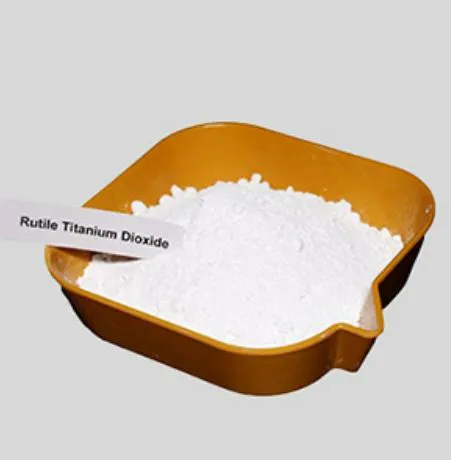
Achieving Superior Opacity With Anatase Titanium Dioxide For Inks
While there are several crystalline forms of this mineral, the choice often falls upon anatase titanium dioxide for inks when specific optical and physical characteristics are required. Anatase is prized in the printing world for its unique blue-toned whiteness and its relatively soft abrasive profile. In high-speed printing processes like flexography or gravure, the hardness of the pigment can significantly impact the lifespan of the printing plates and cylinders. Because anatase is less abrasive than other forms, it helps maintain the integrity of the expensive printing equipment, leading to longer production runs and less downtime for maintenance.
Furthermore, the light-scattering efficiency of anatase titanium dioxide is perfectly suited for the thin-film applications typical of the packaging industry. When a consumer picks up a product, the "whiteness" of the packaging often subconsciously signals cleanliness and quality. By using anatase-grade pigments, ink manufacturers can produce a brilliant, neutral white that serves as the perfect "primer" layer on flexible packaging. This is especially critical in the food and beverage sector, where the packaging must look pristine under harsh supermarket lighting. The pigment ensures that the white areas of the design remain vivid and do not take on a yellowish or gray cast over time.
The Strategic Importance Of Sourcing High-Quality Anatase Titanium Dioxide
The global nature of the printing supply chain means that ink factories must be highly selective about their mineral sources. The shift toward high-performance digital and screen printing has increased the demand for anatase titanium dioxide that features exceptional consistency in particle size. For a large-scale ink producer, a slight change in the pigment's behavior can lead to clumping in the ink fountains or streaks on the final printed substrate. This is why many international brands have established long-term partnerships with dedicated mineral processors who can guarantee a standardized product that integrates seamlessly into complex chemical formulations.
In the context of the modern market, the versatility of titanium dioxide powder allows it to be used across a spectrum of ink types, from traditional offset lithography to modern inkjet systems. In digital printing, the requirements are even more stringent; the pigment must stay in suspension without settling, yet provide instant opacity upon contact with the paper or plastic. This balance of fluid dynamics and optical performance is what makes the pigment so valuable. It allows for the high-speed production of everything from personalized direct mail to large-format outdoor banners, ensuring that the message is delivered with maximum visual impact regardless of the printing technology used.
Navigating The Economic Landscape Of Titanium Dioxide Pigment Price In Ink Production
For the procurement teams at major ink houses, monitoring the titanium dioxide pigment price is a daily necessity. The market for this essential white pigment is influenced by various global factors, including the availability of high-grade ores, environmental regulations at the refinery level, and the shifting costs of international logistics. However, because titanium dioxide is a "non-substitutable" component in the production of high-quality white ink, manufacturers must find ways to optimize their usage through advanced grinding and dispersion techniques.
When the titanium dioxide pigment price fluctuates, it often drives a wave of innovation within the industry. Ink chemists work to develop more concentrated formulas that use less pigment while delivering the same level of opacity. This constant push for efficiency benefits the entire printing ecosystem, as it leads to the development of "low-build" inks that dry faster and use less energy during the curing process. For the end-user—the brands and consumers—this translates to high-quality printed materials that remain cost-effective even as global raw material markets remain volatile. The pigment is not just a cost center; it is a value driver that defines the quality tier of the finished ink product.
Enhancing Brand Integrity Through Consistent Titanium Dioxide For Ink Applications
The ultimate goal of any ink manufacturer is to protect the brand identity of their clients. A brand’s specific "white" or the vibrancy of its corporate colors depends entirely on the stability of the base pigment. By utilizing premium titanium dioxide for ink, printers can ensure that a logo printed in London looks identical to one printed in Shanghai or New York. This global consistency is the backbone of international marketing, and it relies on the chemical stability of the titanium dioxide molecule, which does not react with the environment or yellow when exposed to the light found in retail spaces.
As we look toward the future, the ink industry is increasingly moving toward more sustainable, bio-based carriers. Even as the liquids change, the reliance on titanium dioxide powder remains steadfast due to its unparalleled safety profile and its ability to reflect light across the entire visible spectrum. From the barcodes that track our shipments to the elegant labels on a bottle of wine, this white pigment is the silent partner of the ink industry. It provides the canvas upon which the rest of the world’s colors are displayed, ensuring that every printed word and image is presented with the clarity and professional brilliance that the modern world demands.
-
Why Rutile Titanium Dioxide is the Preferred Choice for Automotive Finishes
NyheterApr.17,2026
-
Utilizing Anatase Titanium Dioxide for Inks and Specialized Printing Media
NyheterApr.17,2026
-
The Science of Reflection: How Titanium Dioxide White Pigment Defines Modern Paints
NyheterApr.17,2026
-
The Role of Coated Titanium Dioxide in High-Performance Exterior Coatings
NyheterApr.17,2026
-
Enhancing Structural Longevity: Titanium Dioxide for Concrete and Masonry
NyheterApr.17,2026
-
Comparing the Optical Efficiency of Rutile and Anatase Titanium Dioxide
NyheterApr.17,2026