

maj . 25, 2026 10:43 Tillbaka till listan
The Evolution of Industrial Protection: Anti-Corrosion Properties of Titanium Dioxide in Heavy-Duty Coatings
The relentless battle against metal degradation remains one of the most significant economic and engineering challenges in modern infrastructure. From offshore wind farms to petrochemical refineries, the integrity of steel structures is constantly under siege by moisture, chloride ions, and ultraviolet radiation. Within this context, the development of high-performance barrier systems has shifted its focus toward advanced mineral chemistry. Among the most critical components in these formulations is titanium dioxide anti-corrosion technology, which has transitioned from being a mere pigment to a functional cornerstone of material longevity.
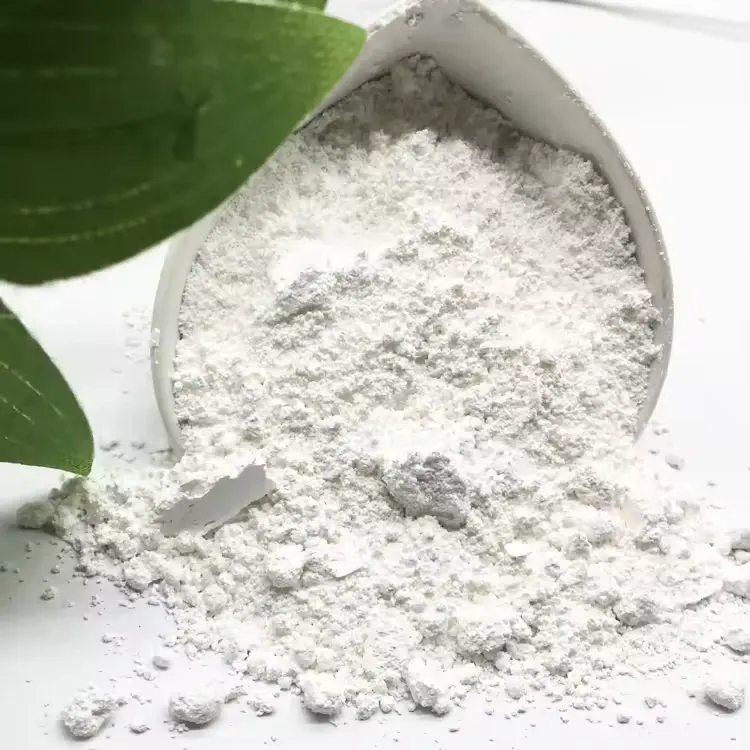
The Structural Superiority of Rutile Titanium Dioxide
To understand why certain coatings outperform others in extreme environments, one must look at the crystalline morphology of the primary white pigment used. Rutile titanium dioxide is the preferred choice for heavy-duty applications due to its high refractive index and inherent stability. Unlike its anatase counterpart, the rutile structure is more densely packed, providing superior scattering power and chemical inertness.
In a heavy-duty coating, the rutile form acts as more than just a colorant. It serves as a formidable physical barrier within the polymer matrix. When properly dispersed, these particles fill the microscopic voids in the resin, creating a tortuous path that prevents the diffusion of water and oxygen to the metal substrate. This "packing effect" is essential for long-term protection, as it significantly delays the onset of electrochemical reactions that lead to rust and pitting.
Mechanisms of Titanium Dioxide for Paint Longevity
When formulating protective layers, engineers prioritize titanium dioxide for paint systems that can withstand the dual threats of chemical oxidation and mechanical wear. The anti-corrosive power of TiO2 is primarily attributed to its ability to reinforce the mechanical properties of the dried film. By increasing the cross-linking density and reducing the permeability of the coating, titanium dioxide helps maintain a high electrical resistance across the film, which is a fundamental requirement for preventing galvanic corrosion.
Furthermore, the photo-stability of the coating is paramount. Traditional coatings often fail because the binder degrades under sunlight, leading to "chalking." This process exposes the substrate to the elements. High-grade titanium dioxide is often treated with inorganic surface coatings, such as silica or alumina, to suppress its photocatalytic activity. This ensures that the binder remains intact, preserving the thickness and protective integrity of the heavy-duty system over decades rather than years.
Innovations in Titanium Dioxide Coating Materials
The landscape of industrial maintenance has been transformed by the emergence of titanium dioxide coating materials that integrate nanotechnology and surface modification. Modern heavy-duty coatings are no longer passive barriers; they are active defense systems. For instance, nano-sized TiO2 is being explored for its ability to create superhydrophobic surfaces. By altering the surface energy of the coating, these materials can repel water droplets before they even have a chance to penetrate the film.
Additionally, the synergy between titanium dioxide and other anti-corrosive pigments, such as zinc dust or phosphate inhibitors, has become a standard in the industry. In these composite systems, TiO2 provides the structural skeleton and UV shielding, while the secondary pigments provide sacrificial or passivating protection. This multi-layered approach is what allows modern bridges and ships to operate in saltwater environments with minimal maintenance intervals.
Diversified Titanium Dioxide Uses in Harsh Environments
While we often associate this mineral with architectural paints, the specialized titanium dioxide uses in the heavy-duty sector are far more demanding. In the aerospace industry, TiO2 is utilized in coatings that must endure extreme temperature fluctuations and high-velocity friction. The thermal stability of the mineral ensures that the coating does not crack or delaminate when moving from freezing high altitudes to the heat of a runway.
In the marine sector, the focus is on preventing the "under-film" corrosion that occurs when seawater seeps through microscopic cracks. Here, titanium dioxide acts as a stabilizer that prevents the coating from becoming brittle. By maintaining the flexibility of the epoxy or polyurethane binder, the TiO2-fortified coating can expand and contract with the metal substrate, ensuring that the protective seal remains unbroken despite physical stress or vibration.
Titanium Dioxide: The Indispensable Guardian
The anti-corrosion properties of titanium dioxide in heavy-duty coatings represent a perfect marriage of chemistry and structural engineering. By providing UV protection, mechanical reinforcement, and a physical barrier against moisture, TiO2 ensures that our most vital steel structures remain safe and functional. Whether it is the rutile titanium dioxide providing the core stability or the innovative titanium dioxide coating materials pushing the boundaries of what is possible, this mineral remains the most trusted name in industrial protection.
As the world continues to build in increasingly challenging environments, the reliance on high-performance titanium dioxide for paint and protective systems will only grow. It is, quite literally, the white knight of the industrial world—standing guard against the invisible, persistent force of corrosion.
-
The Radiance of Modern Mobility: The Impact of Micro Powder TiO2 on Automotive Paint Gloss
NyheterMay.26,2026
-
The Evolution of Industrial Protection: Anti-Corrosion Properties of Titanium Dioxide in Heavy-Duty Coatings
NyheterMay.25,2026
-
Sourcing Sustainable Titanium Dioxide for Green Building Materials
NyheterMay.25,2026
-
Rutile vs. Anatase: Choosing the Right Titanium Dioxide for Plastics
NyheterMay.22,2026
-
Optimizing Masterbatch Production with High-Performance TiO2 Pigment
NyheterMay.22,2026
-
The Role of High Purity Titanium Dioxide in Polymer Durability
NyheterMay.14,2026