

dec . 17, 2025 11:27 Tillbaka till listan
Demand for titanium dioxide dye is rising
In the realm of industrial materials, few substances boast the versatility and widespread utility of titanium dioxide. Commonly encountered as the brilliant white pigment in countless products, its true value extends far beyond simple coloration. Today's advanced manufacturing leverages specialized forms such as titanium dioxide dye sensitizers, buff titanium dioxide for unique finishes, and surface-engineered coated titanium dioxide. These variations showcase the material's adaptability, transforming it from a mere filler into a critical performance component. The expertise required to produce these specialized grades distinguishes leading manufacturers, who combine deep chemical knowledge with precise engineering to meet the sophisticated demands of modern industry. For an enterprise, mastering this spectrum from base pigment to high-tech additive signifies a commitment to innovation and quality that resonates across global supply chains.
Harnessing Light with Titanium Dioxide Dye for Sustainable Energy
The term titanium dioxide dye refers not to a colorant but to a sophisticated technology central to renewable energy. In dye-sensitized solar cells, a specialized dye absorbs sunlight and injects electrons into a layer of titanium dioxide nanoparticles, initiating the generation of electrical current. This process transforms the titanium dioxide from a passive material into an active component in energy conversion. The dyes, often based on ruthenium polypyridine complexes, are meticulously designed to have a strong affinity for the titanium dioxide surface and optimal light-absorption properties. This innovative application highlights how fundamental material science, when paired with chemical ingenuity, can create sustainable solutions. Manufacturers operating at this frontier are not just pigment suppliers but enablers of green technology, contributing to a sector where performance is measured in energy efficiency and environmental impact.
Achieving Consistent Quality with Titanium Dioxide
In many industrial applications, consistency is as crucial as performance. titanium dioxide speaks to a segment of the market where specific, often softer or non-primary color tones are required. While not a technical term, it represents the capability to produce titanium dioxide grades that deliver predictable, uniform color effects in final products. This consistency is achieved through meticulous control over the pigment's core properties:
- Particle Size and Distribution:Fine, uniform particles ensure smooth application and even coloration.
- Inherent Whiteness and Brightness:A high-purity base provides excellent opacity and a clean starting point for tinting.
- Surface Chemistry:The nature of the pigment's surface affects how it interacts with binders and other colorants, influencing the final hue and stability.
Enhancing Performance through Coated Titanium Dioxide Technology
The journey from a raw titanium dioxide powder to a high-performance industrial ingredient often involves a critical enhancement step: surface coating. Coated titanium dioxide undergoes a treatment where thin, uniform layers of inorganic oxides like silica, alumina, or zirconia are applied to the individual pigment particles. This process is fundamental to upgrading the pigment's functionality, as the coating acts as a protective barrier and performance modifier. The benefits of this technology are transformative, directly addressing key application challenges:
- Durability:The coating shields the reactive titanium dioxide core from UV light and environmental elements, dramatically improving the weatherability and anti-chalking properties of exterior paints and plastics.
- Dispersibility:Treated particles resist clumping and disperse more easily in various media (water, oils, resins), leading to smoother application, higher gloss, and reduced waste.
- Compatibility:Coatings can be tailored to improve the pigment's interaction with different polymer systems or matrices, ensuring stable and long-lasting integration.
The Broad Industrial Reach of Engineered Titanium Dioxide
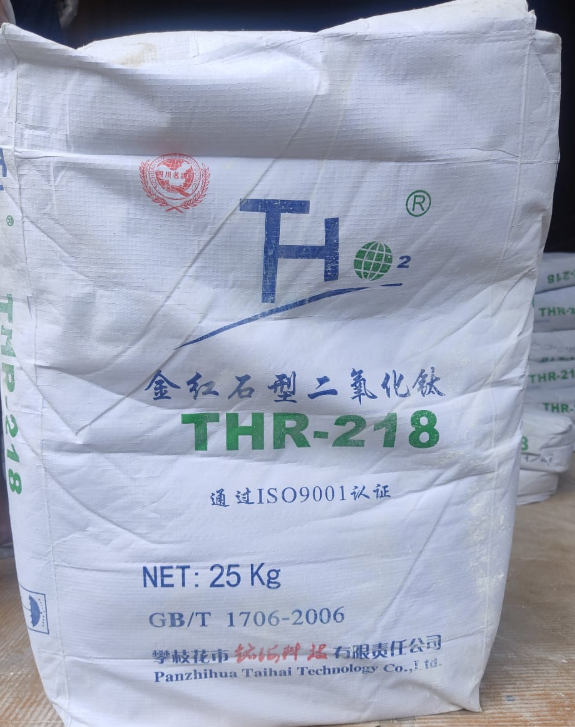
The application of titanium dioxide is a testament to its indispensable role across the global economy. Its primary function as a white pigment and opacifier is rooted in its exceptionally high refractive index, which provides unmatched hiding power and brightness. With good whiteness, brightness and gloss, the product is excellent in opacity, achromaticity and dispersity, and is outstanding in weather resistance and anti-pulverization abilities. Products are widely used in coatings, plastics, paper, printing ink, chemical fiber, rubber, cosmetics and other industrial product production. This wide applicability is segmented across major industries:
- Coatings and Paints:The largest consumer sector, utilizing over half of global production for everything from architectural paints to automotive finishes.
- Plastics and Polymers:Essential for providing opacity, UV protection, and structural benefits in products from packaging to automotive parts.
- Paper and Inks:Used as a coating and filler to create brighter, more opaque paper and high-quality printing inks.
FAQS about titanium dioxide dye
What is the difference between a titanium dioxide dye and a regular dye
A titanium dioxide dye is a specialized photosensitive compound used to coat titanium dioxide nanoparticles in solar cells, where its function is to absorb light and transfer electrons. A regular dye, in contrast, is used primarily for coloring materials by absorbing specific wavelengths of light and does not facilitate electron transfer in the same way.
How does the affect the performance of coated titanium dioxide in paints
The coating on coated titanium dioxide is crucial for performance. It enhances weather resistance by protecting the pigment core from UV degradation, improves dispersibility for easier mixing and smoother application, and can boost the durability and gloss retention of the final paint film, ensuring long-lasting color and protection.
Can buff titanium dioxide be used in outdoor applications
Yes, buff titanium dioxide can be formulated for outdoor use, but its longevity depends heavily on the grade. For exterior applications, it is essential to use a coated titanium dioxide grade specifically engineered with silica, alumina, or zirconia coatings to provide the necessary UV resistance and weatherability to prevent fading and chalking.
Is coated titanium dioxide safe for use in consumer products like cosmetics
Yes, high-purity, specially graded titanium dioxide is widely regarded as safe and is extensively used in consumer products such as cosmetics, sunscreens, and toothpaste. It serves as a pigment and effective UV blocker. Its safety is affirmed by its use in these sensitive applications, where it is valued for its inertness and non-toxic properties.
What makes one manufacturer's titanium dioxide different from another's
Beyond the basic chemistry, manufacturers differentiate their coated titanium dioxide and other grades through the consistency of particle size, the sophistication and proprietary nature of surface treatments, the level of technical support offered, and the ability to produce reliable, application-specific solutions. These factors, driven by R&D investment and process control, determine the final performance in the customer's product.
We invite you to experience the difference that true technical collaboration can make. Visit our company to see our dedicated production capabilities, meet our expert team, and discuss how our focused portfolio and application knowledge can drive your product's performance forward. Contact us today—let's build the future of your materials together.
-
Why Rutile Titanium Dioxide is the Preferred Choice for Automotive Finishes
NyheterApr.17,2026
-
Utilizing Anatase Titanium Dioxide for Inks and Specialized Printing Media
NyheterApr.17,2026
-
The Science of Reflection: How Titanium Dioxide White Pigment Defines Modern Paints
NyheterApr.17,2026
-
The Role of Coated Titanium Dioxide in High-Performance Exterior Coatings
NyheterApr.17,2026
-
Enhancing Structural Longevity: Titanium Dioxide for Concrete and Masonry
NyheterApr.17,2026
-
Comparing the Optical Efficiency of Rutile and Anatase Titanium Dioxide
NyheterApr.17,2026