

Mar . 28, 2026 01:45 Back to list
Find Reliable OEM Titanium White Factories For High Quality Pigments
OEM Titanium White Factories: A Comprehensive Guide
Finding reliable OEM titanium white factories is crucial for businesses seeking high-quality titanium dioxide pigment for various applications. Titanium dioxide (TiO2) is a widely used white pigment prized for its brightness, opacity, and stability. This article will explore key considerations when selecting an OEM factory, the benefits of sourcing directly, and what sets reputable manufacturers apart. We'll also cover quality control measures and the importance of understanding your specific TiO2 needs.
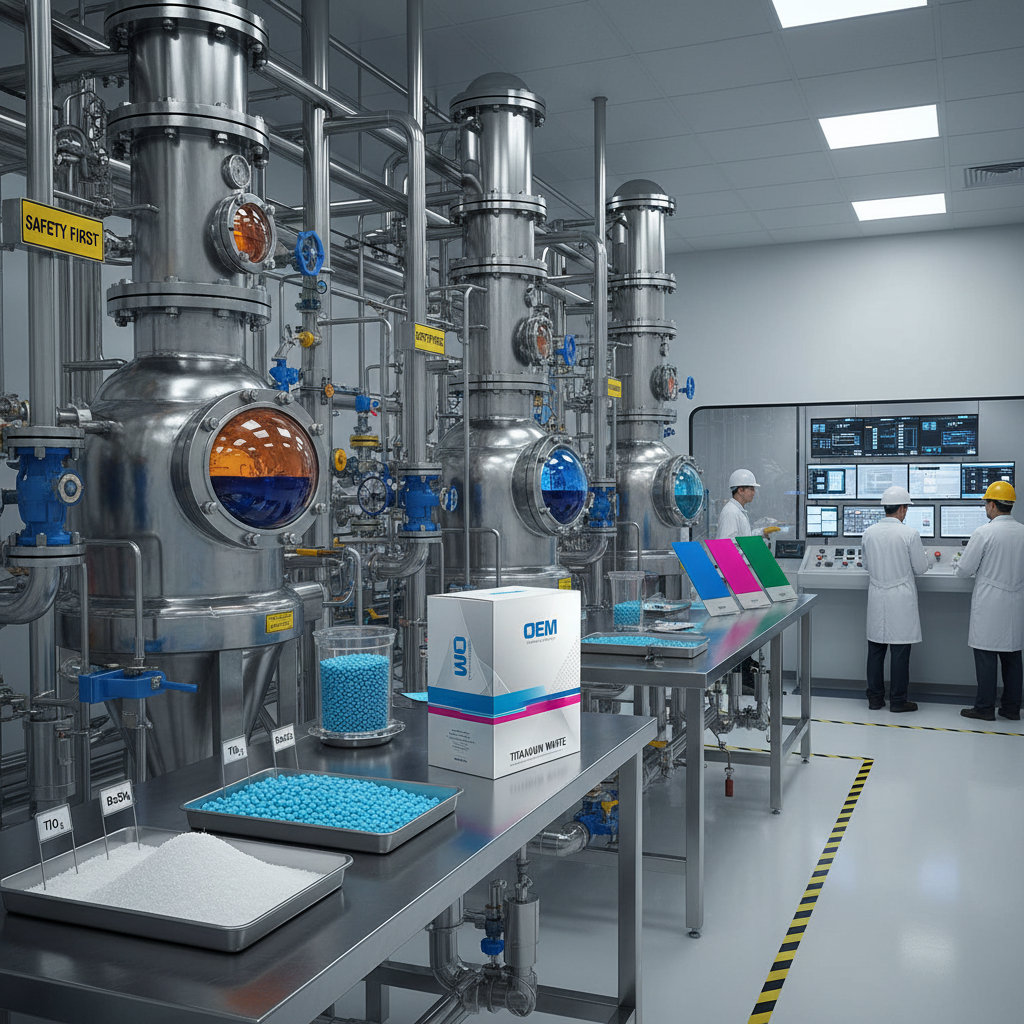
Why Choose an OEM Titanium White Factory?
Opting for an OEM (Original Equipment Manufacturer) titanium white factory offers several advantages. Primarily, it provides greater control over product specifications, ensuring the TiO2 meets your exact requirements regarding particle size, surface treatment, and purity. Direct sourcing eliminates intermediary markups, potentially lowering your costs. Furthermore, OEM factories often offer customization options, allowing you to tailor the product to your specific application – whether it's paints, coatings, plastics, paper, or cosmetics. Building a direct relationship with a factory can also lead to faster turnaround times and improved communication.
Key Benefits of OEM Sourcing: Cost savings, product customization, quality control, faster lead times, and direct communication.
Key Factors to Consider When Selecting an OEM Titanium White Factory
Choosing the right factory requires careful evaluation. First, assess their production capacity to ensure they can meet your volume requirements. Second, verify their quality control processes, including testing procedures and certifications (such as ISO 9001). Third, inquire about their experience and expertise in producing titanium dioxide for your specific application. Fourth, consider their geographical location and logistical capabilities. Finally, assess their communication skills and responsiveness. A proactive and transparent factory is a strong indicator of reliability. CQ Titanium Dioxide prioritizes these factors to deliver consistent quality and customer satisfaction.
Essential Evaluation Criteria:
• Production Capacity
• Quality Control Systems (ISO 9001 certification)
• Application-Specific Experience
• Logistics and Location
OEM Titanium White Factories: Rutile vs. Anatase TiO2
Titanium dioxide exists in several crystalline forms, with rutile and anatase being the most commercially important. Rutile TiO2 offers superior opacity and weather resistance, making it ideal for exterior paints, coatings, and plastics. Anatase TiO2 exhibits greater photocatalytic activity and is often used in applications such as self-cleaning surfaces, air purification, and UV absorbers. The best choice depends on your specific application requirements. Reputable titanium white factories will offer both rutile and anatase grades, along with technical support to help you select the optimal product.
Quality Control Measures in Titanium White Production
Rigorous quality control is paramount in titanium white manufacturing. This includes meticulous testing of raw materials, in-process monitoring of particle size and distribution, and final product analysis for purity, whiteness, and tinting strength. Advanced analytical techniques, such as X-ray diffraction (XRD) and scanning electron microscopy (SEM), are used to characterize the TiO2 pigment. Leading OEM factories maintain comprehensive quality management systems and provide certificates of analysis (COA) with each batch.
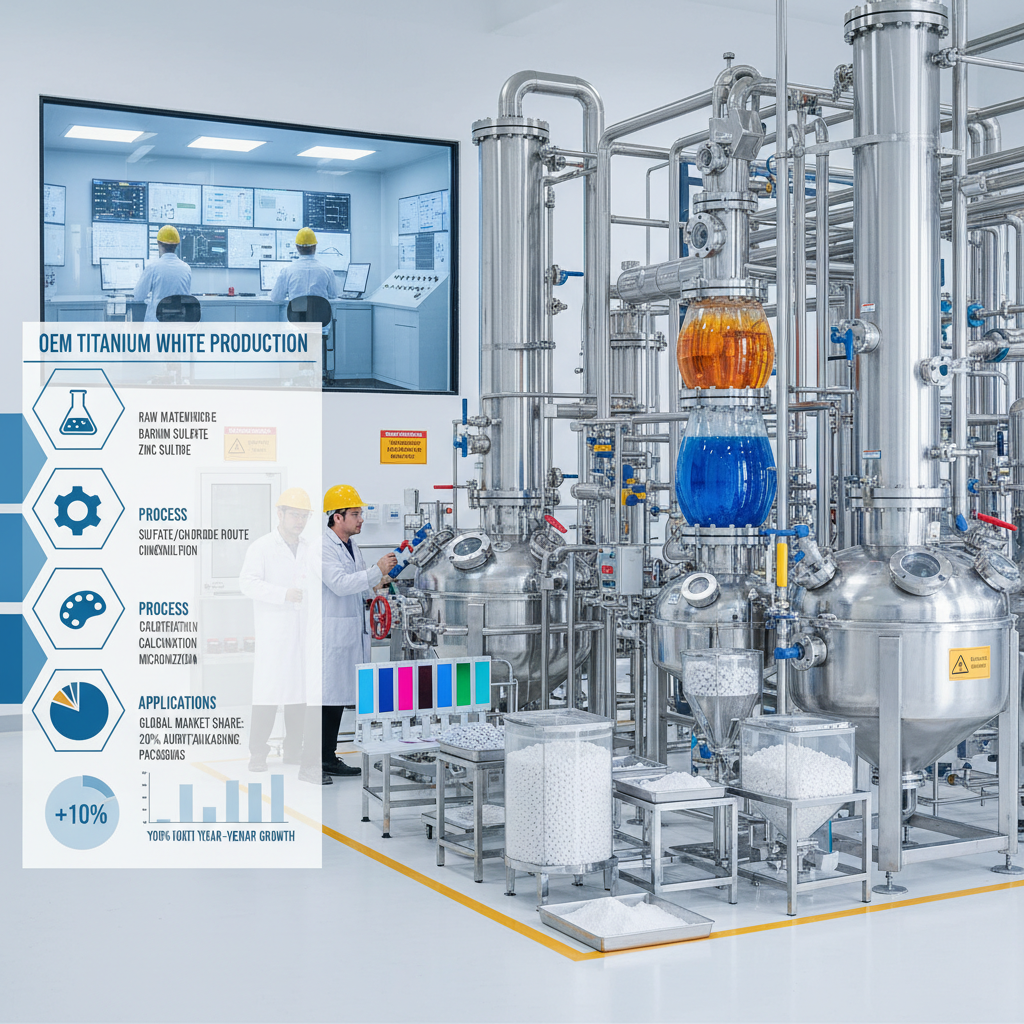
Choosing the Right TiO2 Grade for Your Application
The ideal TiO2 grade depends heavily on your specific application. For example, paints and coatings typically require rutile TiO2 with a specific surface treatment to enhance dispersibility and durability. Plastics may benefit from TiO2 grades with optimized particle size distribution for improved opacity and mechanical properties. Understanding your application requirements and collaborating with a knowledgeable titanium white factory is crucial for achieving optimal results.
Conclusion: Partnering with a Reliable OEM Titanium White Factory
Selecting the right OEM titanium white factory is a critical decision that impacts product quality, cost-effectiveness, and long-term success. By carefully considering the factors outlined in this article and partnering with a reputable manufacturer, you can ensure a consistent supply of high-quality TiO2 pigment that meets your precise needs.
Frequently Asked Questions (FAQs)
What is the minimum order quantity (MOQ) for OEM titanium white?
The minimum order quantity (MOQ) varies depending on the factory and the specific TiO2 grade. Generally, OEM factories require a larger MOQ compared to standard distributors, as they are geared towards bulk production. However, some factories are willing to negotiate MOQs based on the customer’s requirements and long-term partnership potential. It’s crucial to discuss your volume needs upfront to determine if the factory can accommodate your order.
What surface treatments are available for TiO2?
Titanium dioxide particles are often surface-treated to enhance their performance in specific applications. Common surface treatments include silica, alumina, zirconia, and organic coatings. These treatments improve dispersibility, weather resistance, gloss control, and compatibility with different matrices. The choice of surface treatment depends on the intended application and the desired properties of the final product.
How long does it typically take to receive a custom TiO2 order?
Lead times for custom TiO2 orders can vary depending on the complexity of the specifications, the order volume, and the factory’s production schedule. Typically, it takes between 4-8 weeks from order confirmation to delivery. It’s essential to factor in time for raw material sourcing, production, quality control, and shipping. Clear communication with the factory and proactive planning can help minimize lead times.
-
Why Rutile Titanium Dioxide is the Preferred Choice for Automotive Finishes
NewsApr.17,2026
-
Utilizing Anatase Titanium Dioxide for Inks and Specialized Printing Media
NewsApr.17,2026
-
The Science of Reflection: How Titanium Dioxide White Pigment Defines Modern Paints
NewsApr.17,2026
-
The Role of Coated Titanium Dioxide in High-Performance Exterior Coatings
NewsApr.17,2026
-
Enhancing Structural Longevity: Titanium Dioxide for Concrete and Masonry
NewsApr.17,2026
-
Comparing the Optical Efficiency of Rutile and Anatase Titanium Dioxide
NewsApr.17,2026