

Feb . 28, 2026 01:45 Back to list
Comprehensive Pigment Lithopone Pricelist Suppliers Guide For Optimal Sourcing
Pigment Lithopone Pricelist Suppliers: A Comprehensive Guide
Lithopone, a cost-effective white pigment, plays a crucial role in various industries like paints, plastics, and paper. Finding reliable pigment lithopone suppliers with competitive pricelists is key to optimizing your production costs. This article delves into the factors influencing lithopone prices, key suppliers, and what to look for when sourcing this essential pigment. We’ll explore market trends and provide insights to help you make informed decisions.

Understanding Lithopone: Composition and Applications
Lithopone is a mixture of zinc sulfide (ZnS) and barium sulfate (BaSO₄), offering good opacity and whiteness. It's widely used as a substitute for titanium dioxide in applications where lower cost is a priority. Common applications include interior paints, printing inks, plastics, rubber, and paper coatings. The ratio of zinc sulfide to barium sulfate impacts the pigment’s properties – higher zinc sulfide content usually results in increased opacity but also higher cost. Sourcing from a reputable lithopone supplier ensures consistent quality and proper composition for your specific application.
Key Highlights: Lithopone offers good opacity and whiteness at a lower cost than titanium dioxide. It's a versatile pigment used in paints, plastics, and paper coatings.
Factors Influencing Pigment Lithopone Price
Several factors affect the price of lithopone. Raw material costs (zinc and barium compounds) are a major driver. Manufacturing processes, including purity control and particle size distribution, also impact pricing. Transportation costs, import duties (if applicable), and supplier location play a role. Market demand and supply dynamics – influenced by global economic conditions and the demand for titanium dioxide – can also cause price fluctuations. Finally, the quantity ordered and payment terms can significantly influence the final price. Understanding these factors helps you negotiate effectively with lithopone pricelist suppliers.
Price Influencing Factors:
• Raw Material Costs (Zinc & Barium)
• Manufacturing Processes & Quality Control
• Transportation & Import Duties
• Market Demand & Supply
Pigment Lithopone Pricelist Comparison: Leading Suppliers
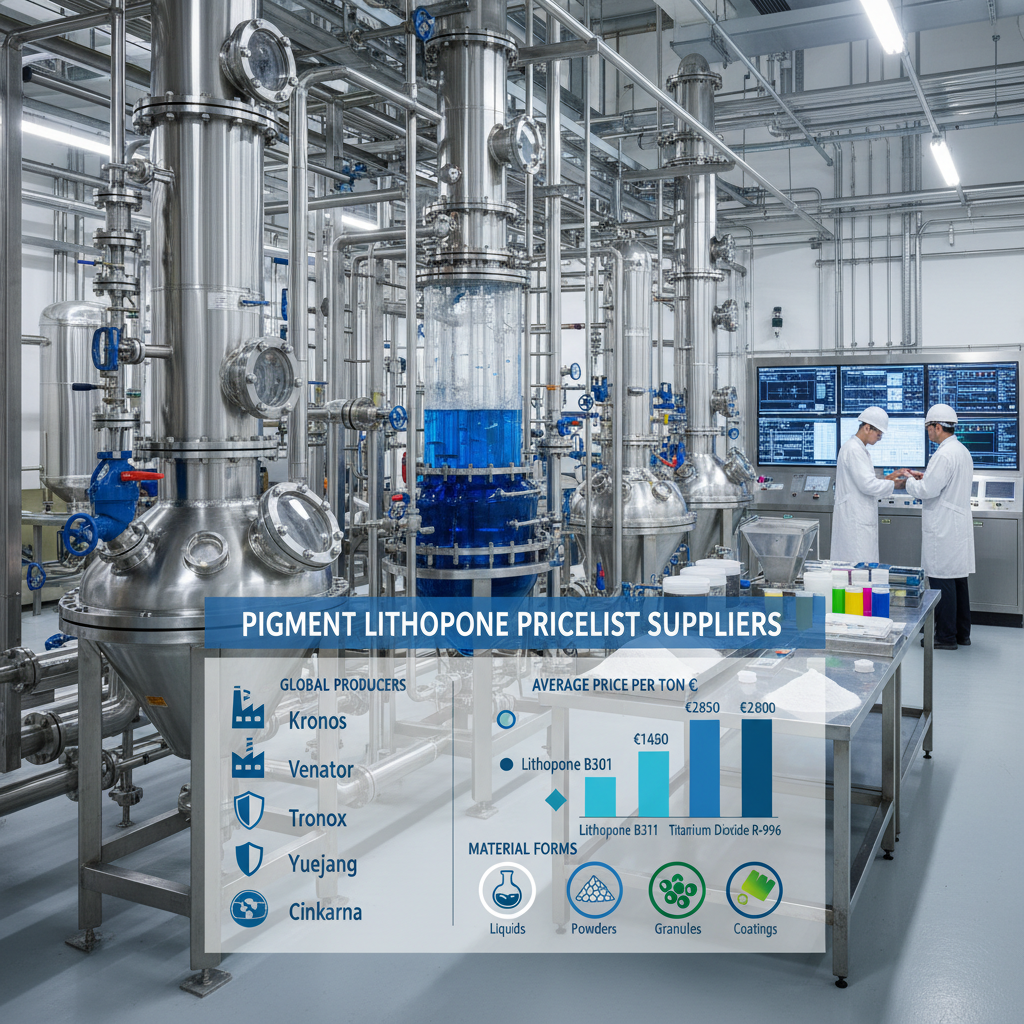
Comparing pricelists from different suppliers is vital. Here’s a simplified comparison (prices are approximate and can vary):
Key Considerations When Choosing a Supplier
Beyond price, several factors are crucial. Assess the supplier’s reputation and quality control processes. Request samples to verify the pigment's specifications (whiteness, particle size, purity). Check their production capacity and lead times to ensure they can meet your demand. Inquire about their certifications (ISO 9001, etc.). Evaluate their shipping capabilities and ensure they can deliver reliably to your location. Choosing a reliable supplier is an investment in consistent product quality and smooth operations.
Evaluating Lithopone Quality and Specifications
Key specifications to assess include whiteness (measured using a reflectance meter), particle size distribution (affecting dispersibility and opacity), oil absorption, and heavy metal content. Ensure the lithopone meets your application’s specific requirements. A good supplier will provide a detailed technical data sheet with this information. Consistency in these specifications is paramount for reliable results in your formulations. Regular quality checks on incoming shipments are also recommended.
Conclusion: Sourcing Lithopone Strategically
Finding the right pigment lithopone supplier requires careful consideration of price, quality, and reliability. By understanding the factors influencing price and diligently evaluating potential suppliers, you can secure a consistent supply of high-quality lithopone at a competitive cost. Prioritize building a long-term relationship with a reputable supplier to ensure continued success in your production processes.
Frequently Asked Questions (FAQs)
What is the typical lead time for lithopone orders?
Lead times vary depending on the supplier, order quantity, and shipping destination. Generally, expect a lead time of 2-4 weeks for standard orders. Larger orders or those requiring custom specifications may have longer lead times. Confirm the lead time with the supplier before placing your order to ensure it aligns with your production schedule. Factors such as port congestion and customs clearance can also impact delivery times.
What are the payment terms typically offered by lithopone suppliers?
Common payment terms include Letter of Credit (L/C), Telegraphic Transfer (T/T), and sometimes, for established customers, Net 30 or Net 60. Suppliers often require a deposit (typically 30-50%) upfront, with the balance due upon shipment or after inspection. Negotiating favorable payment terms can improve your cash flow. Discuss these terms with the supplier during the quotation process.
Can lithopone be used outdoors?
While lithopone can be used in outdoor applications, its durability and resistance to weathering are lower than titanium dioxide. Prolonged exposure to UV radiation and moisture can cause it to degrade, leading to chalking and loss of opacity. For outdoor applications requiring long-term performance, titanium dioxide is generally the preferred choice. If using lithopone outdoors, consider incorporating UV stabilizers and protective coatings.
-
Why Rutile Titanium Dioxide is the Preferred Choice for Automotive Finishes
NewsApr.17,2026
-
Utilizing Anatase Titanium Dioxide for Inks and Specialized Printing Media
NewsApr.17,2026
-
The Science of Reflection: How Titanium Dioxide White Pigment Defines Modern Paints
NewsApr.17,2026
-
The Role of Coated Titanium Dioxide in High-Performance Exterior Coatings
NewsApr.17,2026
-
Enhancing Structural Longevity: Titanium Dioxide for Concrete and Masonry
NewsApr.17,2026
-
Comparing the Optical Efficiency of Rutile and Anatase Titanium Dioxide
NewsApr.17,2026