

mai . 25, 2026 10:41 Înapoi la listă
Sourcing Sustainable Titanium Dioxide for Green Building Materials
The global shift toward environmental responsibility has fundamentally transformed the construction industry, placing a premium on the provenance and lifecycle impact of every component. In the realm of high-performance architectural coatings and structural components, the role of titanium dioxide for building materials has evolved from a simple pigment choice to a central pillar of green engineering. As architects and developers seek to minimize the carbon footprint of urban infrastructure, the demand for transparency in the supply chain has led to a new standard of excellence. Achieving true sustainability in building design requires a deep dive into how this essential mineral is manufactured, utilized, and eventually reclaimed within a circular economy.
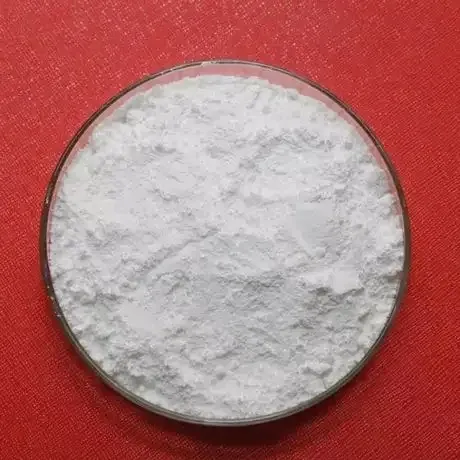
Redefining the Standard for Titanium Dioxide Eco-Friendly Production
The environmental impact of traditional mineral processing has historically been a point of concern for sustainability officers. However, the emergence of titanium dioxide eco-friendly manufacturing processes is changing the narrative. Historically, the sulfate and chloride routes required significant energy and generated various byproducts. Modern "green" production facilities have integrated closed-loop systems that capture and recycle chlorine and sulfuric acid, drastically reducing waste. By implementing advanced filtration and carbon-capture technologies, leading manufacturers are now producing pigments with a significantly lower global warming potential (GWP).
Beyond the factory gates, the concept of titanium dioxide eco-friendly applications extends to the very air we breathe. One of the most groundbreaking developments in building science is the use of photocatalytic titanium dioxide. When applied to external facades or integrated into concrete, these specialized particles use sunlight to break down nitrogen oxides (NOx) and volatile organic compounds (VOCs) in the atmosphere. This transformational technology turns a building’s surface into an active air-purification system, directly contributing to the reduction of urban smog and enhancing the environmental value of the structure.
The Long-Term Value and Titanium Dioxide Sustainable Lifecycle
Sustainability is often measured by the longevity of a material, and in this regard, titanium dioxide sustainable attributes are unmatched. A building material that fails prematurely is inherently unsustainable, regardless of its initial carbon footprint, because the energy and resources required for replacement are doubled. Titanium dioxide provides a robust defense against the primary drivers of material degradation: ultraviolet (UV) radiation and moisture. By reflecting a high percentage of solar energy, it prevents the underlying polymer structures in paints, sealants, and cladding from becoming brittle and failing.
Furthermore, the titanium dioxide sustainable advantage is evident in the "Cool Roof" movement. High-opacity white coatings formulated with premium rutile grades reflect a massive portion of the sun's infrared heat. This thermal management reduces the "Urban Heat Island" effect and lowers the internal cooling demands of a building by a significant margin. By decreasing the reliance on air conditioning, the integration of these pigments directly translates into lower operational carbon emissions over the decades-long lifespan of a commercial or residential complex.
Strategic Integration of Titanium Dioxide for Building Materials
The versatility of titanium dioxide for building materials allows it to be more than just a surface treatment; it is a structural enhancer. In the world of high-performance concrete and fiber-cement siding, the addition of TiO2 provides both aesthetic uniformity and improved surface density. This density prevents the ingress of pollutants and salts that can cause internal corrosion of reinforcing steel. When a building remains pristine without the need for frequent chemical cleaning or repainting, the cumulative environmental savings are substantial.
In interior environments, the selection of titanium dioxide for building materials focuses on indoor air quality (IAQ). Modern sustainable formulations prioritize low-VOC and zero-VOC paints that utilize high-purity pigments to achieve full coverage in fewer coats. This efficiency reduces the total volume of material consumed during a project. Additionally, the high refractive index of the pigment maximizes natural light reflection within a space, often referred to as "light harvesting." By bouncing sunlight deeper into a room, developers can reduce the need for artificial lighting during the day, further aligning the building with LEED and BREEAM certification standards.
Navigating the Multi-Faceted Titanium Dioxide Benefits
The technical profile of TiO2 offers a unique intersection of chemistry and physics that provides a wide array of titanium dioxide benefits. Beyond the obvious optical properties of brightness and opacity, the chemical stability of the mineral is a key asset in harsh environments. Whether a building is located in a salt-mist coastal region or a high-pollution industrial zone, titanium dioxide remains chemically inert, resisting the yellowing and chalking that plague inferior substitutes. This ensures that the architectural vision remains intact for generations, preserving the cultural and economic value of the property.
Another of the significant titanium dioxide benefits is its role in self-cleaning surfaces. Hydrophilic surfaces treated with photocatalytic TiO2 allow rainwater to spread evenly across the facade, washing away dirt and organic growth rather than allowing it to streak. This "bio-mimicry" approach reduces the need for pressurized water cleaning and harsh detergents, protecting the local water table from runoff contamination. For large-scale glass skyscrapers and complex geometric structures, this functionality represents a massive reduction in maintenance costs and environmental disruption.
Partnership and Transparency with Titanium Dioxide Chemical Suppliers
As the industry moves toward "Environmental Product Declarations" (EPDs), the relationship with titanium dioxide chemical suppliers has become more collaborative. Green building certification bodies now require detailed data on the "cradle-to-gate" impact of raw materials. Responsible titanium dioxide chemical suppliers are responding by providing comprehensive lifecycle assessments (LCAs) that document energy usage, water consumption, and the ethical sourcing of ilmenite ore. This transparency allows architects to make informed decisions that align with their clients' ESG (Environmental, Social, and Governance) goals.
Selecting the right titanium dioxide chemical suppliers also involves looking for innovation in packaging and logistics. Sustainable sourcing is not just about the powder itself, but the entire delivery mechanism. Suppliers who offer bulk handling solutions to eliminate single-use bags or those who utilize low-emission transport fleets are increasingly favored in the green building sector. By fostering long-term partnerships with suppliers who prioritize research and development into bio-based coatings and more efficient dispersion technologies, the construction industry can continue to push the boundaries of what is possible in sustainable urban development.
-
The Radiance of Modern Mobility: The Impact of Micro Powder TiO2 on Automotive Paint Gloss
ȘtiriMay.26,2026
-
The Evolution of Industrial Protection: Anti-Corrosion Properties of Titanium Dioxide in Heavy-Duty Coatings
ȘtiriMay.25,2026
-
Sourcing Sustainable Titanium Dioxide for Green Building Materials
ȘtiriMay.25,2026
-
Rutile vs. Anatase: Choosing the Right Titanium Dioxide for Plastics
ȘtiriMay.22,2026
-
Optimizing Masterbatch Production with High-Performance TiO2 Pigment
ȘtiriMay.22,2026
-
The Role of High Purity Titanium Dioxide in Polymer Durability
ȘtiriMay.14,2026