

Fev . 13, 2026 09:50 De volta à lista
Mastering High-Performance Printing: Titanium Dioxide for Ink Opacity and Dispersion
In the high-speed world of modern printing, the quality of an image is only as good as the chemistry behind the ink. Whether it is the bold branding on a flexible plastic pouch or the crisp text on a luxury cosmetic box, the visual impact depends on a pigment that can provide absolute coverage and seamless flow. This is where the specialized application of titanium dioxide for ink becomes the defining factor for success.
As a premier titanium dioxide product, TiO₂ is not merely a colorant; it is a functional mineral that dictates the light-scattering efficiency and rheological behavior of the ink. For manufacturers like Hebei Caiqing New Material Technology Co., LTD, which has been a staple in the chemical industry since 2005, the challenge lies in engineering a titanium dioxide powder that meets the rigorous demands of gravure, flexographic, and digital printing systems.
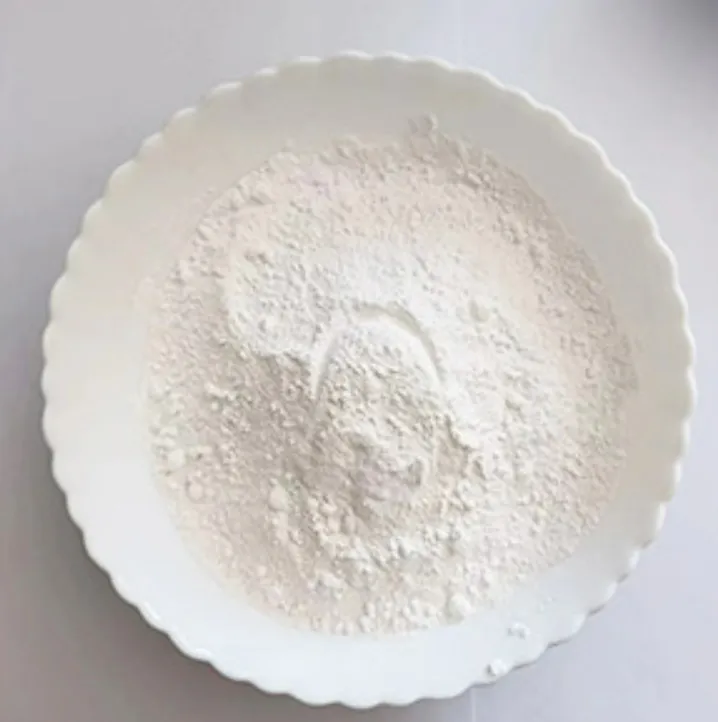
The Science of Opacity: Why Titanium Dioxide for Ink is Indispensable
Opacity is the measure of an ink's ability to hide the substrate it is printed on. In the packaging industry, where transparent films or dark recycled cardboards are common, achieving high opacity with a thin layer of ink is a significant technical hurdle. Titanium dioxide for ink solves this by leveraging its incredibly high refractive index.
When light enters an ink film, it encounters the suspended particles of titanium dioxide powder. These particles bend and reflect the light so intensely that the light cannot reach the substrate below. Instead, it is bounced back to the viewer's eye, resulting in a brilliant, opaque white. The efficiency of this process is governed by the particle size. For inks, the particles must be precisely controlled—usually smaller than those used in architectural paints—to ensure that the ink film remains smooth and glossy while still providing the necessary "hiding power." Without the specific optical properties of a high-grade titanium dioxide product, white inks would appear translucent, requiring multiple passes that would slow down production and increase costs.
Comparing the Roles of Anatase Titanium Dioxide for Inks and Rutile Grades
While the rutile form of TiO₂ is often praised for its weather resistance, anatase titanium dioxide for inks holds a unique and prestigious position, particularly in the packaging and textile printing sectors. Anatase is naturally "softer" on the Mohs scale of mineral hardness than rutile. This lower abrasiveness is a critical advantage for high-speed printing presses.
Using anatase titanium dioxide for inks significantly reduces the wear and tear on expensive doctor blades and engraved cylinders used in gravure printing. Furthermore, anatase provides a distinctively "cleaner" and "bluer" white undertone. This is highly prized by brand owners who demand a "snow-white" appearance for their packaging, as opposed to the slightly yellow-grayish undertone sometimes associated with rutile. For indoor applications, such as magazine paper coatings or food packaging that isn't exposed to prolonged sunlight, anatase tio2 titanium dioxide offers the perfect balance of aesthetic brilliance and mechanical protection for the printing equipment.
Achieving Perfection in Dispersion with Anatase TiO2 Titanium Dioxide
Dispersion is the process of evenly distributing the titanium dioxide powder into the liquid resin or solvent of the ink. It is arguably the most difficult aspect of ink formulation. If the particles clump together, or "agglomerate," the ink will result in a grainy texture, clogged nozzles in inkjet printers, and a dramatic loss of opacity.
High-quality anatase tio2 titanium dioxide is subjected to sophisticated surface treatments by the manufacturer to ensure it is "easily dispersible." These treatments involve coating the pigment particles with thin layers of organic or inorganic compounds that make the particles more compatible with the ink's vehicle.
In water-based inks, which are becoming the global standard in 2026 due to environmental regulations, the dispersion of titanium dioxide for ink requires even more precision. The pigment must be engineered to stay suspended without settling at the bottom of the container.
Economic and Environmental Value of a High-Quality Titanium Dioxide Product
The choice of a titanium dioxide product has a direct impact on the bottom line of a printing house. In 2026, the focus is on "efficiency per gram." A high-performance titanium dioxide powder allows for a higher pigment loading without increasing the viscosity of the ink beyond workable limits. This means the printer can achieve the desired opacity with a thinner layer of ink, which speeds up the drying process and reduces energy consumption.
Moreover, the sustainability of the printing process is enhanced when using a superior anatase titanium dioxide for inks. Because high-quality pigments provide better coverage, less ink is wasted during the "make-ready" phase of printing. For global exporters, sourcing from a reliable partner that offers 100,000 tons of annual output ensures that supply chain disruptions are minimized. This stability is essential for maintaining the competitive pricing and "personalized customized services" that modern international trade demands. Whether the destination is Southeast Asia, the Middle East, or Russia, the consistency of the pigment ensures that a brand’s color remains identical across different regions and substrates.
Future Trends: Digital Printing and Specialized Titanium Dioxide Powder
As digital inkjet printing continues to displace traditional methods, the requirements for titanium dioxide for ink are becoming even more stringent. Digital inks require ultra-fine particle sizes to prevent the clogging of microscopic printhead nozzles. This has led to the development of "nano-grade" anatase tio2 titanium dioxide, which offers the same brilliant whiteness but with a particle size small enough to flow through digital systems without sedimentation.
Hebei Caiqing New Material Technology Co., LTD remains at the forefront of this evolution by attaching great importance to the technological research and development of these pigments. By focusing on the "diverse international market," the industry is seeing a move toward pigments that are not only white but also functional—such as those that offer antimicrobial properties or enhanced heat-shielding for sensitive pharmaceutical packaging. The unremitting pursuit of high-quality titanium dioxide product manufacturing ensures that as printing technology advances, the pigments powering it will be ready to meet the challenge.
-
Why Rutile Titanium Dioxide is the Preferred Choice for Automotive Finishes
NotíciasApr.17,2026
-
Utilizing Anatase Titanium Dioxide for Inks and Specialized Printing Media
NotíciasApr.17,2026
-
The Science of Reflection: How Titanium Dioxide White Pigment Defines Modern Paints
NotíciasApr.17,2026
-
The Role of Coated Titanium Dioxide in High-Performance Exterior Coatings
NotíciasApr.17,2026
-
Enhancing Structural Longevity: Titanium Dioxide for Concrete and Masonry
NotíciasApr.17,2026
-
Comparing the Optical Efficiency of Rutile and Anatase Titanium Dioxide
NotíciasApr.17,2026