

Dez . 12, 2025 20:10 De volta à lista
Improving Product Whiteness with R 996 Titanium Dioxide
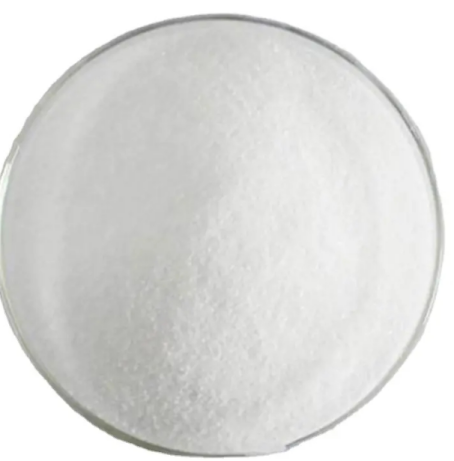
Product whiteness is a critical quality metric across industries—from paper and plastics to coatings and rubber—shaping consumer perception, brand identity, and market competitiveness. Achieving consistent, long-lasting whiteness requires a high-performance pigment like R 996 Titanium Dioxide (also known as titanium dioxide R 996 or R996 TiO2), an industrial-grade rutile variant engineered for exceptional brightness, opacity, and color stability. Unlike standard titanium dioxide, R 996 Titanium Dioxide delivers unmatched whiteness enhancement while maintaining compatibility with diverse manufacturing processes, making it a go-to choice for businesses aiming to elevate product quality. Hebei Caiqing Material Technology Co., Ltd., a leading titanium dioxide supplier since 2005 (with an annual output of 100,000 tons), provides reliable R 996 Titanium Dioxide and complementary products (including rutile CR-930 and anatase BA01-01 series) to wholesalers serving global markets. For wholesalers, partnering with Caiqing means accessing pigment solutions tailored to whiteness needs—backed by the company’s export reach (to Southeast Asia, Africa, the Middle East, etc.) and commitment to dispersibility, coverage, and cold resistance.
Elevating Whiteness in Paper Products with R 996 Titanium Dioxide
- Delivering Bright, Uniform Paper Whiteness: Paper products (e.g., printing paper, tissue, packaging boards) rely on consistent whiteness to enhance print clarity and visual appeal. R 996 Titanium Dioxide has a high refractive index and fine particle size, ensuring it disperses evenly in paper pulp to create a bright, uniform base. Unlike lower-grade pigments that cause uneven whiteness or yellowing over time, titanium dioxide R 996 maintains its brightness, even in paper exposed to light or humidity. A wholesaler supplying paper manufacturers in India reported that Caiqing’s R996 TiO2 helped their clients achieve a 15% increase in whiteness index (CIE L* value), making their paper suitable for high-end printing and packaging. Wholesalers should highlight this whiteness boost, as it directly differentiates paper products in competitive markets.
- Reducing Pigment Usage for Cost Efficiency: R 996 Titanium Dioxide offers exceptional hiding power, meaning less pigment is needed to achieve target whiteness—lowering raw material costs for paper producers. Caiqing’s R 996 Titanium Dioxide is optimized for dispersibility, ensuring every particle contributes to whiteness without clumping or waste. A wholesaler serving Southeast Asian tissue manufacturers noted that using titanium dioxide R 996 reduced pigment usage by 20% compared to standard variants, cutting production expenses while maintaining quality.
Enhancing Whiteness in Plastics with Titanium Dioxide R 996
|
Plastic Application |
Key Role of Titanium Dioxide R 996 |
Advantage Over Standard Titanium Dioxide |
Caiqing Product Fit |
|
White Plastic Containers |
Creates bright, opaque whiteness; resists yellowing |
No discoloration in heat (microwaves/dishwashers) |
R 996 Titanium Dioxide |
|
Medical-Grade Plastics |
Delivers pure, non-toxic whiteness; meets safety standards |
Compliance with FDA/EU regulations; no heavy metal impurities |
R 996 Titanium Dioxide |
|
Plastic Toys |
Ensures vibrant, long-lasting white; resists fading |
High lightfastness; no color leaching in water |
R 996 Titanium Dioxide |
Boosting Whiteness in Industrial Coatings with R996 TiO2
- Creating Bright, Durable Coating Whiteness: Industrial coatings (e.g., white appliance coatings, architectural paints, automotive primers) need whiteness that withstands harsh conditions—from UV radiation to chemical exposure. R996 TiO2 forms a tough, bright film in coatings, blocking underlying colors and maintaining whiteness even in outdoor or high-wear environments. Unlike pigments that chalk or fade, R 996 Titanium Dioxide retains its brightness, ensuring coatings look fresh for years. A wholesaler supplying coating manufacturers in Africa reported that Caiqing’s titanium dioxide R 996 helped their clients create coatings with a 10% higher whiteness retention rate after 5 years of outdoor exposure. Wholesalers can frame this as a “long-term value add,” appealing to clients focused on durable, high-quality coatings.
- Improving Coating Opacity for Hidden Coverage: Coatings applied to dark or colored surfaces (e.g., metal substrates, old paint) need high opacity to hide underlying tones and showcase pure whiteness. R996 TiO2delivers exceptional hiding power, allowing coatings to achieve full coverage in 1–2 coats instead of 3–4. This speeds up application, reduces material waste, and lowers labor costs for coating projects. A wholesaler serving Middle Eastern architectural coating clients noted that using R 996 Titanium Dioxide cut coating layers by 50%, making large-scale projects like building exteriors more efficient.
Ensuring Whiteness Consistency in Rubber Products with R 996 Titanium Dioxide
- Maintaining White Rubber Integrity: Rubber products (e.g., white tires, medical gloves, industrial seals) require whiteness that resists yellowing from heat, ozone, or chemical contact. R 996 Titanium Dioxide has excellent chemical stability and UV resistance, protecting rubber from discoloration while enhancing its whiteness. Unlike standard pigments that break down in rubber processing (e.g., vulcanization), titanium dioxide R 996 retains its properties, ensuring consistent whiteness across production batches. A wholesaler supplying rubber manufacturers in Russia reported that Caiqing’s R996 TiO2 helped their clients produce white rubber with 80% less yellowing after vulcanization, meeting strict quality standards for medical and automotive applications.
- Enhancing Rubber Durability Without Compromising Whiteness: Some whiteness-enhancing pigments weaken rubber’s physical properties (e.g., tensile strength, elasticity). R 996 Titanium Dioxide is engineered to reinforce rubber while boosting whiteness—its particle structure bonds with rubber molecules to improve durability without sacrificing brightness. A wholesaler serving Southeast Asian tire manufacturers noted that white tires made with R 996 Titanium Dioxide had 10% better wear resistance, making them suitable for high-performance applications.
R 996 Titanium Dioxide FAQS
Is R 996 Titanium Dioxide Compatible with All Manufacturing Processes?
Yes—R 996 Titanium Dioxide (titanium dioxide R 996) is compatible with diverse manufacturing processes, including paper pulping, plastic extrusion/injection molding, coating mixing, and rubber vulcanization. Its excellent dispersibility (enhanced by Caiqing’s surface treatment) ensures it integrates seamlessly into raw materials without clumping or process disruptions. A wholesaler supplying multi-industry clients in Africa reported that R996 TiO2 worked across paper, plastic, and coating lines, eliminating the need to stock multiple pigments. Wholesalers should confirm this versatility, as it simplifies inventory for clients with varied production needs.
Can R996 TiO2 Be Used in Food-Contact Products?
Absolutely—Caiqing’s R996 TiO2 meets global food-contact safety standards (e.g., FDA, EU 10/2011) when supplied as a food-grade variant. It is non-toxic, free from heavy metals, and stable in food-contact plastics (e.g., white containers, utensils) and coatings (e.g., food packaging paints). A wholesaler serving Southeast Asian food-packaging clients noted that R 996 Titanium Dioxide helped their products pass strict safety audits, opening up export opportunities to Europe and North America.
How Much R 996 Titanium Dioxide Is Needed to Achieve Target Whiteness?
The dosage of R 996 Titanium Dioxide varies by industry and product: for paper, 1–3% by weight of pulp; for plastics, 0.5–2% by weight of resin; for coatings, 5–10% by weight of the formulation. Caiqing’s titanium dioxide R 996 offers high efficiency, so clients often use 10–20% less than standard pigments to reach target whiteness. A wholesaler supplying Indian plastic manufacturers reported that R996 TiO2 let their clients cut pigment usage by 15% while maintaining a whiteness index of 95+ (CIE L*).
Does R 996 Titanium Dioxide Cause Yellowing in Outdoor Products?
No—R 996 Titanium Dioxide is a rutile-based pigment with excellent UV resistance, preventing yellowing in outdoor products like plastic furniture, architectural coatings, or paper signage. Unlike anatase titanium dioxide, which degrades under UV exposure, R996 TiO2 retains its whiteness and stability. A wholesaler serving Middle Eastern outdoor coating clients noted that products with Caiqing’s R 996 Titanium Dioxide showed no significant yellowing after 3 years of desert sun exposure.
Is R 996 Titanium Dioxide Suitable for High-Temperature Processing?
Yes—R 996 Titanium Dioxide withstands high temperatures (up to 250°C), making it ideal for high-heat processes like plastic injection molding (PP/PE processing) and rubber vulcanization. It retains its whiteness and dispersibility even at elevated temperatures, ensuring no discoloration or performance loss. A wholesaler supplying Russian rubber manufacturers reported that titanium dioxide R 996 maintained its properties during vulcanization (180–200°C), producing consistent white rubber products.
-
Why Rutile Titanium Dioxide is the Preferred Choice for Automotive Finishes
NotíciasApr.17,2026
-
Utilizing Anatase Titanium Dioxide for Inks and Specialized Printing Media
NotíciasApr.17,2026
-
The Science of Reflection: How Titanium Dioxide White Pigment Defines Modern Paints
NotíciasApr.17,2026
-
The Role of Coated Titanium Dioxide in High-Performance Exterior Coatings
NotíciasApr.17,2026
-
Enhancing Structural Longevity: Titanium Dioxide for Concrete and Masonry
NotíciasApr.17,2026
-
Comparing the Optical Efficiency of Rutile and Anatase Titanium Dioxide
NotíciasApr.17,2026