

May . 14, 2026 09:48 Back to list
Optimizing Industrial Coatings with Rutile Titanium Dioxide
The global coatings industry is undergoing a significant transformation driven by the demand for higher durability, better aesthetic appeal, and enhanced functional properties. At the heart of this evolution lies the strategic use of white pigments, specifically the integration of rutile titanium dioxide to achieve superior results. As manufacturers strive to develop formulations that withstand harsh environmental conditions while maintaining pristine visual characteristics, understanding the optimization of these coating systems becomes a mechanical necessity for any high-level industrial production.
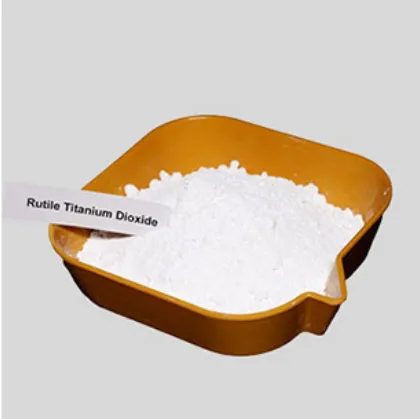
The Superiority of Rutile Titanium Dioxide in Modern Formulations
When examining the chemical structure and performance capabilities of various white pigments, rutile titanium dioxide stands out as the most stable and effective crystalline form for industrial use. Unlike its anatase counterpart, the rutile structure is more densely packed, which directly translates to a higher refractive index. This physical property is crucial because it determines how effectively the pigment can scatter light, thereby providing the necessary opacity and brightness required for professional-grade finishes.
In the context of industrial applications, utilizing rutile titanium dioxide ensures that the coating maintains its integrity even when exposed to intense solar radiation. The dense crystal lattice is less photo-chemically active than other forms, meaning it does not catalyze the degradation of the polymer binder as readily. This stability is the primary reason why specialized manufacturers prioritize this specific grade for outdoor machinery, automotive finishes, and architectural frameworks. By optimizing the concentration and dispersion of this pigment, formulators can produce coatings that resist chalking and retain their gloss for significantly longer periods.
Advancing Durability with Titanium Dioxide for Coatings
The selection of titanium dioxide for coatings is not merely a matter of choosing a whitening agent; it is an exercise in engineering the long-term resilience of a surface. Industrial environments often subject surfaces to chemical fumes, moisture, and mechanical stress. A well-optimized coating must act as a barrier, and the quality of the TiO2 used plays a pivotal role in the density of that barrier.
When titanium dioxide for coatings is correctly integrated into a liquid or powder system, it provides more than just color. It contributes to the rheological properties of the coating, influencing how the material flows during application and how it levels out to form a smooth, defect-free film. Optimization involves achieving a perfect balance between the pigment and the resin system. If the pigment volume concentration is too high, the coating may become brittle; if it is too low, the protective qualities and opacity will suffer. Professional formulators focus on the surface treatment of the particles—often using alumina or silica coatings—to ensure that the pigment remains evenly suspended and does not settle or clump during storage or application.
Achieving Precision with High Performance Titanium Dioxide Powder
To meet the rigorous standards of modern industry, the use of high performance titanium dioxide powder has become the benchmark for quality. This grade of material is characterized by its exceptional purity and controlled particle size distribution. In industrial coating processes, the consistency of the powder determines the consistency of the final product. A narrow particle size distribution ensures that light scattering is maximized across the visible spectrum, resulting in a cleaner, more vibrant white that serves as the perfect base for tinting.
High performance titanium dioxide powder is designed to disperse rapidly into various binder systems, whether they are water-borne, solvent-borne, or UV-cured. The optimization process here focuses on the "wetting" of the powder. Effective wetting ensures that each individual pigment particle is encapsulated by the resin, preventing air pockets and ensuring a cohesive film. This is particularly important in high-speed industrial coating lines where application windows are narrow and there is no room for inconsistent coverage or "fish-eyes" caused by poorly dispersed pigment clusters. By leveraging these high-grade powders, companies can reduce material waste and improve the throughput of their coating operations.
The Strategic Selection of Titanium Dioxide Coating Materials
The landscape of industrial manufacturing requires a holistic approach to material selection, particularly when dealing with titanium dioxide coating materials. These materials are chosen based on their specific compatibility with the intended substrate, whether it be metal, plastic, or composite materials. The goal is to create a symbiotic relationship between the substrate, the primer, and the topcoat, where the titanium dioxide serves as the functional anchor of the entire system.
Optimizing the use of titanium dioxide coating materials involves a deep understanding of the end-use environment. For instance, in marine or coastal environments, the anti-corrosive properties of the coating system are paramount. Here, the rutile pigment works in tandem with specialized additives to block the ingress of chloride ions and oxygen. In the aerospace sector, where weight is a critical factor, the high refractive index of premium TiO2 allows for thinner coating layers that still provide total opacity, effectively reducing the overall weight of the aircraft without compromising protection. This strategic optimization allows manufacturers to tailor their products to specific niche markets, ensuring that the performance characteristics meet or exceed industry-wide certifications and standards.
-
The Role of High Purity Titanium Dioxide in Polymer Durability
NewsMay.14,2026
-
Optimizing Industrial Coatings with Rutile Titanium Dioxide
NewsMay.14,2026
-
Improving Brightness in Paper Industry with Anatase Grade TiO2
NewsMay.14,2026
-
Enhancing Opacity in Premium Inks with Titanium Dioxide Pigment
NewsMay.14,2026
-
Chemical Stability of Titanium Dioxide in Ceramic Glaze Applications
NewsMay.14,2026
-
Advanced UV Protection: Titanium Dioxide for Construction Materials
NewsMay.14,2026