

Phone:
+86 13131671519
When procurement managers analyze the titanium dioxide rutile price, they are often navigating a complex intersection of raw material volatility and specific performance requirements. For industries relying on high-opacity white pigments, the cost is rarely just about the price per ton, but rather the value derived from the pigment's refractive index and weatherability. Understanding the drivers behind these fluctuations is essential for maintaining stable production costs in the coatings and plastics sectors.
The financial impact of choosing a rutile grade over an anatase grade is significant, particularly when considering the long-term durability of the finished product. In the context of Barium Sulfate, Hot Products, Lithopone, Other Pigment, Titanium Dioxide, the rutile variant stands out due to its superior stability and resistance to UV degradation. For manufacturers, this means fewer product failures and lower warranty claims, which offsets the initial investment in higher-grade materials.
This analysis examines the technical and economic factors that influence the titanium dioxide rutile price, providing a framework for buyers to evaluate specifications against market costs. By focusing on parameters such as oil absorption and crystal size, professionals can optimize their formulations without compromising on quality or budget.


Rutile titanium dioxide (TiO2) is the most common form of the pigment used in the chemical industry due to its high refractive index and exceptional stability. Unlike its anatase counterpart, the rutile crystal structure is more compact, which prevents it from absorbing UV radiation as readily, thereby protecting the polymer or binder in which it is dispersed. This intrinsic property makes it the gold standard for exterior applications where weather resistance is non-negotiable.
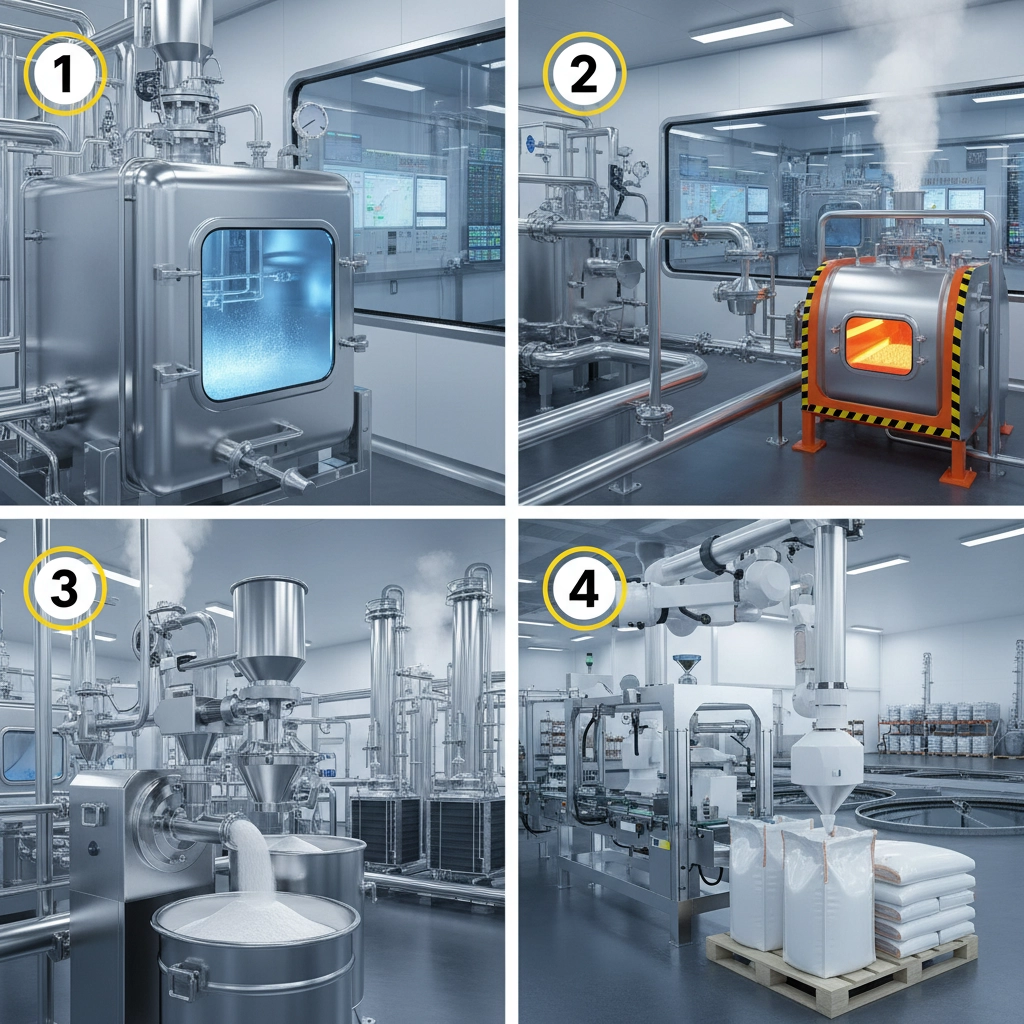
From a manufacturing perspective, producing rutile TiO2 involves complex sulfate or chloride processes that require precise temperature control and catalyst management. The resulting product, such as the R5566 specification, often features inorganic surface treatments (like Al2O3·nH2O) and organic coatings to improve dispersibility and reduce the activity of the particle surface, ensuring that the pigment does not react negatively with other additives in a formula.
Several critical technical metrics directly influence the pricing and performance of rutile TiO2. First, the TiO2 content (typically ≥93%) determines the pigment's efficiency; higher purity generally correlates with better whiteness and shading power. Second, the rutile content (≥99.5%) is a benchmark for stability, as any anatase contamination can lead to "chalking" in outdoor coatings, reducing the lifespan of the paint.
For procurement professionals, the most critical value is often the balance between oil absorption (18-22g/100g) and crystal size (0.3 microns), as these dictate how much binder is required to achieve a smooth, high-gloss finish without sacrificing viscosity.
Additionally, the PH value (6.5-8.5) and specific gravity (approximately 4.0) are essential for compatibility checks with various resins. When these parameters are tightly controlled, the pigment exhibits strong hydrophilic properties and easy dispersibility, reducing the energy required during the grinding phase of production and lowering the overall operational cost for the end-user.
The value proposition of rutile TiO2 lies in its "shading power," which allows manufacturers to achieve complete opacity with a thinner layer of paint. This efficiency directly reduces the volume of material required per square meter of coverage. When analyzing the cost, one must look at the total cost of ownership rather than the unit price, as a lower-quality pigment often requires higher loading levels to achieve the same visual result.
High-performance rutile grades provide a significant ROI by extending the maintenance cycle of industrial assets; superior weather resistance means that coatings last longer under harsh conditions, drastically reducing the long-term cost of repainting.
Furthermore, the use of advanced surface treatments reduces the risk of pigment agglomeration. When pigments disperse uniformly, the resulting coating has a more consistent color (measured by L values in white PVC-P), eliminating the need for costly batch corrections or rework. This stability is particularly valuable in the production of high-end architectural coatings and automotive paints.
Evaluating the performance of different TiO2 grades requires a data-driven approach. By comparing typical properties, such as the TiO2 content and oil absorption, buyers can determine which grade fits their specific application. For instance, a grade with lower oil absorption is generally preferred for high-solid coatings to maintain a workable viscosity.
The following data represents typical performance benchmarks for a standard high-grade rutile pigment (such as R5566) compared to lower-tier alternatives in terms of key quality indicators. These metrics illustrate why a specific rutile grade maintains a price premium based on its chemical purity and physical properties.
Rutile titanium dioxide is indispensable in architectural and industrial coatings where durability is the primary requirement. In these environments, the pigment must withstand constant exposure to UV radiation and moisture. The combination of an Al2O3·nH2O inorganic treatment and organic surface modification allows the pigment to remain stable within the resin matrix, preventing the degradation of the coating's structural integrity over time.
Beyond paints, this material is critical in the production of plastics and rubber. In plastics, the high refractive index provides the necessary opacity for white masterbatches, while its thermal stability ensures that the pigment does not yellow during the high-temperature extrusion process. This versatility makes it a core component for any manufacturer producing high-durability consumer goods or industrial parts.
The evolution of the inorganic salt manufacturing industry is currently focused on increasing the efficiency of the TiO2 production process while reducing the environmental footprint. We are seeing a shift toward more precise surface engineering, where the organic and inorganic coatings are tailored to specific resin types, allowing for even lower loading levels without a loss in opacity.
Another plausible direction is the integration of rutile TiO2 with other functional fillers, such as Barium Sulfate or Lithopone, to create hybrid pigment systems. These systems can optimize the cost-to-performance ratio by using TiO2 for primary opacity and cheaper fillers for bulk and spacing, which prevents the "over-pigmenting" that can lead to brittle coatings.
As global standards like ISO591 continue to evolve, the industry is likely to place more emphasis on the consistency of crystal size and the reduction of trace heavy metals. For companies like Hebei Caiqing New Material Technology Co., LTD, the focus remains on scaling production—reaching capacities such as 100,000 tons annually—to ensure that the market has a stable supply of high-consistency rutile grades.
Procuring rutile TiO2 involves balancing lead times, minimum order quantities (MOQ), and rigorous quality testing. A common risk in the supply chain is the receipt of "off-spec" batches where the oil absorption or pH value deviates from the technical data sheet, which can ruin an entire batch of paint or plastic. Establishing a partnership with a manufacturer who controls the production process is the most effective way to mitigate this risk.
Quality control should focus on verifying the rutile content and the effectiveness of the surface treatment. Using a standard export packing method and ensuring the product is kept away from moisture are essential for maintaining the material's properties during transit and storage. For bulk orders, usually starting at 1000kg, sea transportation costs must be factored into the total landed cost.
The following table provides a decision matrix for buyers choosing between different pigment options based on their specific application needs and budget constraints.
| Application | Recommended Grade | Key Requirement | Value Driver |
|---|---|---|---|
| Exterior Paint | Rutile (R5566) | UV Resistance | Long-term Durability |
| Interior Walls | Anatase/Rutile | High Whiteness | Cost Efficiency |
| Plastic Masterbatch | Rutile Grade | Thermal Stability | Dispersion Quality |
| Rubber Parts | Specialty Rutile | Chemical Inertness | Material Strength |
| Paper Coating | Anatase Grade | Brightness | Surface Smoothness |
| Industrial Primer | Lithopone/Rutile | Corrosion Control | Coverage Rate |
The price is primarily driven by the cost of raw ore and the complexity of the production process, specifically the surface treatment (inorganic and organic coatings). Higher purity levels (TiO2 content ≥93%) and precise crystal size control (0.3 microns) increase the value. Additionally, energy costs and global shipping logistics for bulk orders (MOQ 1000kg) play a significant role in the final landed cost for the buyer.
Rutile TiO2 has a higher refractive index and superior UV stability compared to anatase. This makes rutile the preferred choice for outdoor applications where resistance to "chalking" and fading is required. Anatase is typically used in indoor applications or specific fibers where high brightness is needed but UV exposure is minimal. Rutile grades offer better weather resistance and higher shading power.
Oil absorption (typically 18-22g/100g for R5566) measures the amount of liquid absorbed by the pigment particles. This value is critical because it determines how much binder or resin is needed to wet the pigment. Low oil absorption allows for higher pigment loading without excessively increasing the viscosity of the paint or plastic, which is essential for maintaining a smooth application and a high-gloss finish.
Yes, it is widely used in rubber to provide whiteness and opacity. Because of its high thermal stability and chemical inertness, it does not interfere with the vulcanization process. Its strong weather resistance also helps prevent the rubber from degrading when exposed to sunlight, making it ideal for tires, seals, and other automotive rubber components.
You should verify if the supplier is a direct manufacturer to ensure competitive pricing and quality consistency. Check for a documented technical data sheet (TDS) that specifies TiO2 content, rutile percentage, and surface treatments. A reliable supplier, such as one with an annual output of 100,000 tons, can provide the stability and volume needed for industrial-scale production while offering customized packing and logo services.
The product must be kept in a cool, dry environment and protected from direct contact with moisture. Moisture can cause the powder to clump, which negatively affects its dispersibility in the final formulation. When handling the material, operators should wear gloves and safety glasses to avoid skin and eye irritation, following standard safety precautions for inorganic chemical powders.
Navigating the complexities of the titanium dioxide rutile price requires a deep understanding of the relationship between chemical specifications and end-product performance. By prioritizing metrics such as rutile content, oil absorption, and surface treatment, manufacturers can ensure they are investing in a pigment that provides genuine long-term value through enhanced durability and opacity. The transition from simple cost-saving to value-optimization is key to maintaining a competitive edge in the global coatings and plastics markets.
For companies seeking a stable supply of high-performance pigments, partnering with an experienced manufacturer ensures both technical consistency and cost-effectiveness. Whether you are optimizing an existing formula or developing a new product line, obtaining precise technical guidance is essential. You can explore a wide range of rutile and anatase solutions by visiting https://www.cqtitaniumdioxide.com to find the grade that best meets your industrial requirements.