

Feb . 25, 2026 11:00 Kembali kepada senarai
High-Performance Titanium Dioxide in Architectural and Industrial Coatings
The global coatings landscape in 2026 is defined by a relentless drive toward durability, aesthetic precision, and environmental responsibility. At the heart of this evolution lies a single, indispensable mineral: titanium dioxide (TiO₂). As the most effective white pigment available to modern chemistry, its role in architectural and industrial sectors has transitioned from a simple opacifying agent to a sophisticated functional additive.
Architectural finishes and industrial topcoats rely on the unique light-scattering properties of a high-quality titanium dioxide pigment to ensure that surfaces not only look vibrant but remain protected against the rigors of time and weather. For manufacturers and formulators, the strategic selection of titanium dioxide in coatings is the primary factor in determining the performance lifecycle of the finished product.
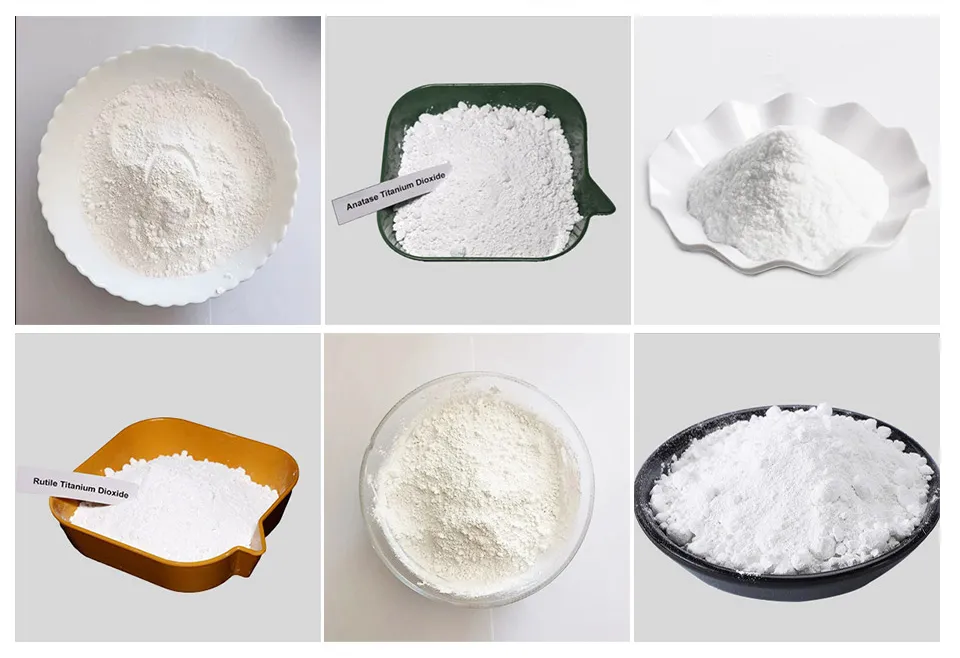
Technical Excellence of Titanium Dioxide in Coatings for Modern Infrastructure
In the architectural sector, the primary demand for titanium dioxide in coatings centers on "hiding power"—the ability of a paint to completely obscure the substrate beneath it. This is achieved through the pigment’s high refractive index, which effectively bends and scatters light. When a paint film is applied, the TiO₂ particles act as microscopic mirrors, reflecting visible light and providing the brilliant whiteness that is characteristic of premium architectural paints.
Beyond aesthetics, the presence of TiO₂ in industrial coatings serves a critical protective function. In 2026, as urban infrastructure faces increasingly volatile weather patterns, the "photochemical stability" of the pigment has become paramount. High-performance grades are engineered to absorb harmful ultraviolet (UV) radiation, converting it into heat that is harmlessly dissipated. This process prevents the degradation of the polymer binder, effectively stopping the "chalking" and cracking that would otherwise compromise the structural integrity of the coating.
Evaluating Performance Factors of Coating Used Titanium Dioxide
The efficiency of any coating used titanium dioxide is not merely a product of its purity but of its particle engineering. Leading formulators prioritize pigments with a precise particle size distribution, typically optimized around 220 to 280 nanometers. This size matches approximately half the wavelength of visible light, which is the physical "sweet spot" for maximum scattering efficiency.
Furthermore, the surface treatment of the pigment particles plays a decisive role in how they interact with the paint's resin system. Specialized coatings of alumina, silica, or zirconia are applied to the TiO₂ crystals to improve their "dispersibility." In water-based architectural paints, these treatments ensure that the pigment stays in suspension and does not agglomerate, which would lead to a gritty finish or reduced opacity. In the industrial sector, where coatings may be exposed to harsh chemicals or extreme temperatures, these inorganic surface treatments provide an additional layer of chemical inertness, ensuring the titanium dioxide pigment does not react with the other components of the formula.
The Strategic Role of Titanium Dioxide China in the Global Supply Chain
As of 2026, the global market has seen a significant consolidation of production capacity, with titanium dioxide China emerging as the dominant force in both volume and technological advancement. China now accounts for approximately 68% of the global production capacity, serving as a vital hub for both the high-volume sulfate process and the increasingly popular chloride process.
The "China advantage" is no longer just about cost; it is about the integration of massive production scales with localized R&D. Regions like Hebei have become centers for specialized chemical manufacturing, where companies like Hebei Caiqing New Material Technology Co., LTD contribute to a 100,000-ton annual output. This massive industrial footprint allows titanium dioxide China to meet the diverse needs of the international market, from general-purpose architectural grades to high-durability rutile pigments used in aerospace and maritime industrial coatings.
Quality Standards Among Leading Titanium Dioxide Manufacturers in China
The landscape of titanium dioxide manufacturers in China has undergone a qualitative transformation. While price competitiveness remains a factor, the focus has shifted toward meeting international environmental and performance standards. Established manufacturers, such as those formerly recognized for their long-term market stability since 2005, have invested heavily in post-treatment technologies that allow their products to compete with global "Tier 1" brands.
A top-tier titanium dioxide pigment from a Chinese manufacturer today often features advanced "multi-functional" properties. This includes "cold resistance" for coatings used in northern climates and high "tinting strength" that allows paint producers to reduce the total amount of pigment used per gallon, thereby lowering the overall carbon footprint of the product. By providing personalized customized services, these manufacturers are able to fine-tune the blue-undertone or yellow-undertone of their rutile and anatase grades, ensuring perfect color matches for global architectural brands.
Sustainability and Innovation in Industrial Coating Applications
In the industrial world, the trend for 2026 is "High Performance, Low Impact." The demand for coating used titanium dioxide that supports high-solid and water-dispersible systems is at an all-time high. Because industrial coatings are often applied to metal substrates like bridges, automotive parts, and machinery, the pigment must provide exceptional corrosion resistance.
Innovation in this space includes the development of "self-cleaning" coatings, where the photocatalytic properties of specific TiO₂ grades are harnessed to break down organic pollutants on the surface of buildings. This not only keeps architectural facades looking new but also contributes to air purification in dense urban areas. By utilizing the best rutile titanium dioxide from reliable titanium dioxide manufacturers in China, industrial formulators can ensure their coatings meet the rigorous durability requirements of the 20-year and 30-year service life cycles now being demanded by infrastructure projects worldwide.
-
Why Rutile Titanium Dioxide is the Preferred Choice for Automotive Finishes
BeritaApr.17,2026
-
Utilizing Anatase Titanium Dioxide for Inks and Specialized Printing Media
BeritaApr.17,2026
-
The Science of Reflection: How Titanium Dioxide White Pigment Defines Modern Paints
BeritaApr.17,2026
-
The Role of Coated Titanium Dioxide in High-Performance Exterior Coatings
BeritaApr.17,2026
-
Enhancing Structural Longevity: Titanium Dioxide for Concrete and Masonry
BeritaApr.17,2026
-
Comparing the Optical Efficiency of Rutile and Anatase Titanium Dioxide
BeritaApr.17,2026