

Apr . 27, 2026 10:20 Torna alla lista
Choosing Between Anatase and Rutile Type Titanium Dioxide for Powder Coatings
The powder coating industry has undergone a significant transformation in recent years, driven by the global demand for more durable, VOC-free, and aesthetically versatile finishes. Whether for household appliances, automotive components, or architectural aluminum profiles, the success of a powder coating formulation hinges on its ability to provide a uniform, opaque, and resilient surface. At the heart of this performance lies the selection of the primary opacifier. When navigating the complexities of raw material procurement, the most critical decision often involves choosing between anatase and rutile type titanium dioxide. While both are chemically identical, their distinct crystal structures dictate their performance in the high-heat, electrostatic environment of powder coating application.
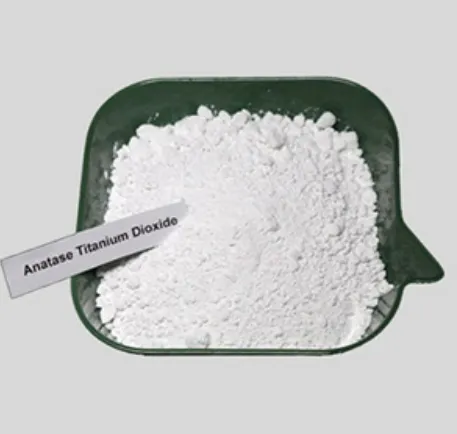
The Structural Foundations of Anatase and Rutile Type Titanium Dioxide
To understand the practical application of these minerals, one must first appreciate the physical differences that define rutile and anatase titanium dioxide. Both are derived from the same elemental source, yet the rutile crystal is more densely packed and compact. This density results in a higher refractive index, which is the physical property responsible for light scattering. In the world of powder coatings, a higher refractive index translates directly into better "hiding power," allowing a thinner layer of powder to completely obscure the substrate.
Conversely, the anatase structure is less dense and has a slightly different light absorption profile. Historically, the choice between these types of titanium dioxide was determined by a balance of cost and specific aesthetic requirements. However, as modern powder coatings move toward thinner film builds and more demanding exterior specifications, the industry has shifted its focus. Understanding the molecular "behavior" of these crystals during the curing process is essential for any formulator looking to maximize the visual impact and structural integrity of their finished product.
Navigating the Optical Efficiency of Rutile and Anatase Titanium Dioxide
When a designer or an architect specifies a "pure white" or a "vibrant pastel" powder coating, they are relying on the optical efficiency of the titanium dioxide pigment powder. The rutile form is the undisputed champion for most industrial applications because it reflects a broader spectrum of visible light. This results in a "warmer" white that provides exceptional coverage. For the manufacturer, this efficiency means that they can achieve the desired look with a lower pigment-to-resin ratio, which can improve the flow and leveling of the powder during the oven-curing stage.
On the other hand, anatase and rutile type titanium dioxide interact with blue and ultraviolet light differently. Anatase often provides a "cooler" or "bluer" undertone, which can be highly desirable for certain indoor appliances or decorative hardware where a crisp, stark white is the primary goal. However, because anatase is more optically active in the UV spectrum, it can sometimes lead to a loss of gloss if used in the wrong environment. Therefore, the selection process is not just about the initial titanium dioxide color; it is about how that color behaves under the specific lighting and environmental conditions of the end-use location.
Practical Applications of Different Types of Titanium Dioxide in Powder Systems
The "powder" nature of these coatings introduces unique challenges that are not present in liquid paints. The titanium dioxide pigment powder must be capable of accepting an electrostatic charge and must disperse evenly within the dry resin matrix during extrusion. Rutile grades are often preferred for high-speed electrostatic spraying because they are typically easier to treat with specialized inorganic coatings like alumina or silica. These treatments improve the "pourability" of the powder and ensure that the pigment particles do not clump together, which would otherwise cause "seeds" or surface defects in the finished film.
In specialized "low-bake" or "clear-coat" powder systems, the different types of titanium dioxide are used to manage transparency and haze. For instance, if a formulator wants to create a semi-transparent metallic finish, they might use a very small amount of high-clarity anatase to provide a subtle brightening effect without overwhelming the metallic flakes. This level of nuance highlights that the choice between rutile and anatase titanium dioxide is a strategic engineering decision. It requires a deep understanding of how the pigment's particle size and surface treatment will interact with the polyester, epoxy, or hybrid resins that form the backbone of the powder coating.
Managing Longevity and Titanium Dioxide Color Stability in Exterior Environments
For any powder coating intended for outdoor use—such as window frames, fence posts, or agricultural machinery—the primary concern is weatherability. This is where the distinction between anatase and rutile type titanium dioxide becomes most apparent. The rutile structure is significantly more inert and resistant to the "chalking" effect caused by UV exposure. When sunlight hits a powder-coated surface, it can trigger a photocatalytic reaction that breaks down the polymer binder. Rutile pigments are designed to suppress this reaction, ensuring that the titanium dioxide color remains vibrant and the surface stays glossy for many years.
In contrast, anatase is more photocatalytically active. While this property is useful in "self-cleaning" coatings, it can be detrimental to the life of a standard exterior powder coating. If a formulator mistakenly uses an untreated anatase grade for an outdoor application, the coating may appear to "fade" or develop a white, powdery residue within just a few months. This is why most titanium dioxide pigment powder for sale in the architectural market is strictly of the rutile variety. By choosing the more stable crystal form, manufacturers provide a product that maintains its value and protects the underlying metal from corrosion, even in the harshest climates.
Strategic Sourcing of Titanium Dioxide Pigment Powder for Global Markets
For the international trade professional, the decision to source specific types of titanium dioxide is driven by a combination of regional standards and application requirements. In the 2026 global market, the consistency of the pigment is the most valuable commodity. A powder coating facility in Southeast Asia must be able to produce the exact same "Signal White" as a facility in Eastern Europe. This level of standardization is only possible when the rutile and anatase titanium dioxide grades are processed to exacting microscopic tolerances.
Sourcing high-quality titanium dioxide pigment powder involves more than just comparing price points; it involves evaluating the manufacturer's ability to provide surface-treated grades that are compatible with modern, eco-friendly resin systems. As the industry moves toward "TGIC-free" and water-reducible powder technologies, the pigment must be able to adapt. The leading suppliers in the market are those who can provide technical data demonstrating the pigment's performance in a wide range of curing schedules and electrostatic settings. By focusing on these functional details, procurement managers can ensure that their supply chain is as resilient as the coatings they produce.
-
Where Titanium Dioxide Comes From: From Ore to Industrial Pigment
NotiziaApr.27,2026
-
The Safety of Titanium Dioxide in Large-Scale Industrial Handling and Processing
NotiziaApr.27,2026
-
Micronized Titanium Dioxide: Revolutionizing Fine-Film Industrial Coatings
NotiziaApr.27,2026
-
High-Gloss Durability: Rutile Titanium Dioxide Pigment in Marine Applications
NotiziaApr.27,2026
-
Choosing Between Anatase and Rutile Type Titanium Dioxide for Powder Coatings
NotiziaApr.27,2026
-
Achieving Pure White Aesthetics with Titanium Dioxide White Concrete Pigment
NotiziaApr.27,2026