

फरवरी . 13, 2026 09:59 सूची पर वापस जाएं
Using Titanium Dioxide to Enhance Paper Whiteness and Opacity
In the competitive world of print media and packaging, the visual quality of paper is often the first thing a consumer notices. Whether it is the crisp, white page of a luxury magazine or the high-opacity sheet of a legal document, the optical performance of paper is largely determined by a single, powerful ingredient: titanium dioxide pigment.
Titanium dioxide (TiO₂) is widely recognized as the most effective white pigment available due to its exceptionally high refractive index. In the paper industry, it serves as more than just a colorant; it is a functional filler and coating agent that fundamentally transforms the properties of the cellulose matrix. By leveraging the light-scattering power of high-purity TiO₂, manufacturers can produce papers that are thinner, lighter, and more brilliant than ever before.
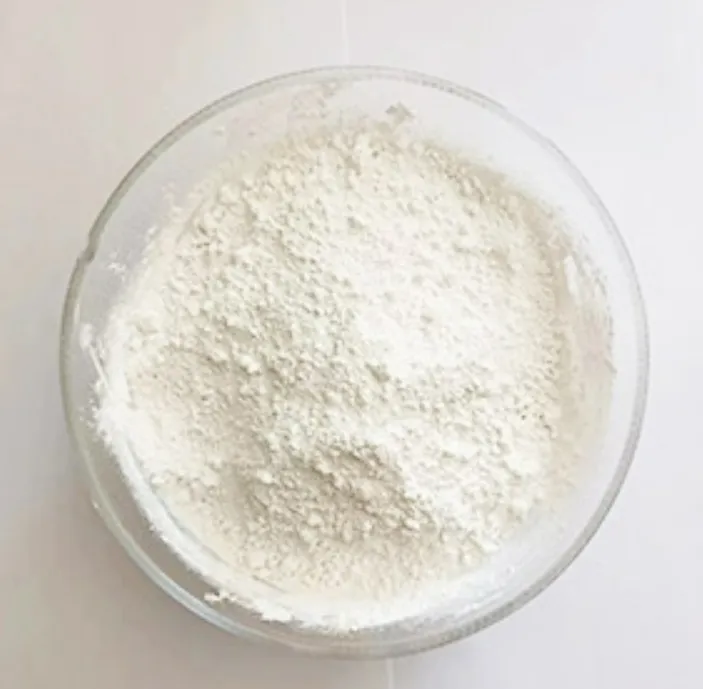
The Optical Science of Titanium Dioxide for Paper Making
The primary reason manufacturers prioritize titanium dioxide for paper making is its ability to manage light. Opacity—the measure of a paper's ability to prevent light from passing through—is critical for double-sided printing. Without sufficient opacity, text from the reverse side of a page bleeds through, creating a "shadow" effect that reduces readability and perceived quality.
Titanium dioxide achieves its high opacity through a physical phenomenon known as light scattering. Because TiO₂ has a refractive index of approximately 2.7 (for rutile) or 2.5 (for anatase)—which is much higher than the refractive index of paper fibers (1.5) or air (1.0)—it bends and reflects incoming light waves with extreme efficiency. When light hits a titanium dioxide pigment particle embedded in the paper, it is scattered in multiple directions. This prevents the light from penetrating the sheet, resulting in a high level of "hiding power." This efficiency is so high that adding even a small amount of TiO₂ can provide ten times more opacity than traditional fillers like calcium carbonate or talc.
रंजातु डाइऑक्साइड: Choosing Between Anatase and Rutile Crystal Forms
In the paper industry, the choice between the two main crystalline forms of TiO₂—anatase and rutile—depends on the specific end-use of the paper.
Anatase: The Choice for High-Brightness Papers
For many general-purpose papers, such as Bible paper, dictionary paper, and standard copier paper, anatase titanium dioxide is the preferred choice. Anatase is naturally "softer" than rutile, which minimizes the wear on high-speed paper machine components like the fourdrinier wires and slitter blades. More importantly, anatase provides a "cleaner" blue-white undertone. This specific hue is visually perceived by the human eye as being "whiter" and more brilliant than the neutral or slightly yellow-toned rutile.
Rutile: The Standard for Decorative and Industrial Papers
For applications requiring extreme durability, such as decorative laminates for furniture and flooring, or industrial wallpapers, rutile titanium dioxide is essential. Rutile is more photochemically stable, meaning it is better at absorbing UV radiation without breaking down the surrounding polymer or fiber matrix. This prevents the paper from yellowing when exposed to sunlight, ensuring that high-value architectural surfaces maintain their color for decades.
Strategic Sourcing from Titanium Dioxide Powder Suppliers
The consistency of a paper mill's output depends heavily on the quality of its raw materials. Professional टाइटेनियम डाइऑक्साइड पाउडर आपूर्तिकर्ताओं understand that the paper industry requires pigments with very specific particle size distributions. If the particles are too large, they won't scatter light effectively; if they are too small, they may be lost in the paper mill's waste stream.
The ideal particle size for TiO₂ in paper applications is approximately 200 to 250 nanometers. Leading टाइटेनियम डाइऑक्साइड पाउडर आपूर्तिकर्ताओं utilize advanced milling and sorting technologies to ensure that their products fall within this narrow range. Furthermore, they provide pigments with specialized surface treatments—often involving alumina or silica—that improve the retention of the pigment within the paper web. Without these treatments, a significant portion of the expensive pigment would be washed away during the wet-end of the papermaking process.
The Dominance of China Titanium Dioxide in Global Markets
As we enter 2026, China titanium dioxide has become the linchpin of the global supply chain. China currently produces the majority of the world's TiO₂ capacity, driven by massive investments in both the sulfate and chloride production processes. For the paper industry, this means a reliable and diverse range of grades tailored to everything from low-cost cardboard to premium specialty papers.
The rise of China titanium dioxide is not just a matter of quantity; it is a story of quality advancement. Many Chinese manufacturers now operate state-of-the-art R&D centers that focus specifically on "paper-grade" pigments. These products are designed to disperse instantly in water, forming a stable slurry that integrates seamlessly with wood pulp. This ease of use reduces energy consumption in the mill and ensures a more uniform distribution of the pigment throughout the sheet, resulting in a smoother surface and better printability.
Evaluating Quality Among Titanium Dioxide Manufacturers in China
For international buyers, identifying the right titanium dioxide manufacturers in China involves looking beyond the price point. Top-tier manufacturers, such as those with decades of experience like Hebei Caiqing or the large-scale Jiuta Chemical Group, prioritize ISO-certified quality management and environmental compliance.
The leading titanium dioxide manufacturers in China offer personalized customized services, allowing mills to specify the exact undertone, particle size, and dispersibility they require. This level of customization is vital for producing "Bible-grade" paper, where the pigment must provide maximum opacity in an ultra-thin sheet without making the paper brittle. By partnering with these established manufacturers, global paper brands can ensure their products meet the rigorous standards for whiteness and opacity that high-end publishers and packaging designers demand.
-
Why Rutile Titanium Dioxide is the Preferred Choice for Automotive Finishes
समाचारApr.17,2026
-
Utilizing Anatase Titanium Dioxide for Inks and Specialized Printing Media
समाचारApr.17,2026
-
The Science of Reflection: How Titanium Dioxide White Pigment Defines Modern Paints
समाचारApr.17,2026
-
The Role of Coated Titanium Dioxide in High-Performance Exterior Coatings
समाचारApr.17,2026
-
Enhancing Structural Longevity: Titanium Dioxide for Concrete and Masonry
समाचारApr.17,2026
-
Comparing the Optical Efficiency of Rutile and Anatase Titanium Dioxide
समाचारApr.17,2026