

अप्रैल . 13, 2026 15:11 सूची पर वापस जाएं
The Transformative Role Of Anatase Titanium Dioxide In The Modern Decorative Paint Industry
In the global landscape of architectural coatings and industrial finishes, the pursuit of the perfect white has led to the widespread adoption of specific mineral compounds. Among these, anatase titanium dioxide stands out as a premier choice for manufacturers seeking to balance brilliance with versatility. Unlike its rutile counterpart, which is often favored for heavy-duty exterior resistance, the anatase form offers a unique set of optical properties that make it indispensable for interior applications, paper coatings, and specialized artistic paints. As the demand for high-reflectivity and clean aesthetics continues to grow, understanding the practical application of this pigment becomes essential for any professional in the chemical or construction supply chain.
The journey from a raw mineral to a refined titanium dioxide powder is a testament to modern chemical engineering. For paint producers, this powder is more than just a colorant; it is a functional additive that dictates the opacity, brightness, and even the "feel" of the final liquid product. When integrated into a paint formula, the particles act as tiny mirrors, scattering light with incredible efficiency to hide the substrate beneath. This "hiding power" is the primary benchmark for quality in the paint industry, ensuring that a single coat of paint can transform a dark, weathered wall into a pristine, luminous surface.
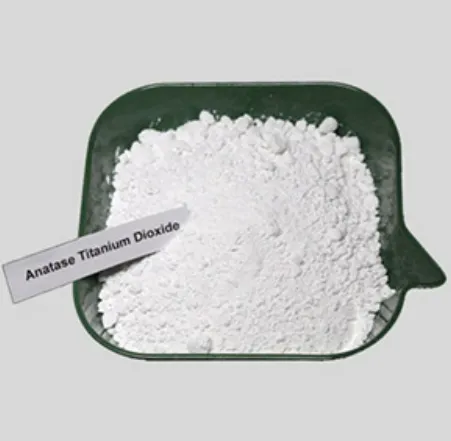
Enhancing Interior Aesthetics With Anatase Titanium Dioxide For Paints
When it comes to interior design, the purity of color is paramount. Using anatase titanium dioxide for paints allows formulators to achieve a "bluer" and cleaner white than almost any other pigment available. This is particularly important for ceiling paints and interior wall finishes where a crisp, clinical, or airy atmosphere is desired. Because anatase has a slightly lower refractive index than rutile, it produces a softer, more natural light scattering effect that is easier on the eyes in indoor environments. This characteristic makes it the preferred choice for residential projects where the goal is to maximize natural light without creating harsh glares.
Beyond its visual appeal, the application of this pigment in interior coatings also relates to the physical texture of the paint. Anatase particles are generally softer than rutile particles, which translates to less wear and tear on the machinery used during the paint mixing and application process. For the end-user, this means the paint flows more smoothly from the brush or roller, resulting in a more uniform finish with fewer visible streaks. In the world of high-end decorative finishes, the ability to provide a "velvet-like" white is a significant competitive advantage that relies heavily on the quality of the sourced anatase titanium dioxide.
The Global Supply Chain Influence Of Chinese Anatase Titanium Dioxide
The international paint market has seen a dramatic shift in sourcing patterns over the last decade, with chinese anatase titanium dioxide emerging as a dominant force. Manufacturers in China have refined the sulfate process to produce high-purity anatase that meets the stringent requirements of European and American paint standards. This accessibility has allowed paint factories worldwide to maintain consistent production cycles without the volatility often associated with rarer mineral pigments. The scale of production in regions like Sichuan and Shandong has turned these areas into global hubs for the coating industry's raw materials.
For a paint brand, the decision to incorporate chinese anatase titanium dioxide into their product line is often driven by the need for reliable consistency. In large-scale construction projects, where thousands of gallons of paint are used across multiple buildings, even a slight variation in the pigment's undertone can lead to visible discrepancies between walls. The standardized manufacturing processes used by major Asian suppliers ensure that the whiteness index remains stable from batch to batch. This reliability allows architects and developers to specify colors with confidence, knowing that the final result will match the original vision perfectly.
Navigating The Market Dynamics Of Anatase Titanium Dioxide Pigment Price
While technical performance is the priority for engineers, procurement officers must constantly monitor the anatase titanium dioxide pigment price to ensure commercial viability. The market for this pigment is influenced by a complex web of factors, including the cost of ilmenite ore, environmental regulations affecting the sulfate production process, and global shipping logistics. However, because anatase is generally more cost-effective to produce than rutile, it offers a strategic "buffer" for paint companies. By optimizing the ratio of anatase in their formulations, manufacturers can produce high-quality interior paints that remain accessible to the mass market.
The fluctuation in the anatase titanium dioxide pigment price also encourages innovation in paint formulation. When prices rise, chemists look for ways to increase the efficiency of the pigment through better dispersion techniques. Conversely, when the market is stable, brands often launch "premium white" collections that use higher concentrations of the pigment to offer superior one-coat coverage. This dynamic relationship between market cost and product innovation ensures that the paint industry remains one of the most fast-paced sectors in the chemical world. For the consumer, this competition results in better products that stay whiter for longer periods.
Practical Applications Of Titanium Dioxide Powder In Specialized Coatings
The utility of titanium dioxide powder extends far beyond standard house paint. In the world of industrial coatings, anatase is frequently used in the production of road marking paints, where high visibility is a safety requirement. The pigment's ability to remain bright under artificial light makes it ideal for highway lines and safety signage. Additionally, in the paper and printing ink industries, anatase is used to provide the high opacity needed for thin magazine pages, ensuring that the text on one side does not bleed through to the other.
In artistic circles, the "Titanium White" found in oil and acrylic tubes is almost always a concentrated form of this powder. Artists value the pigment for its non-toxic nature—a stark contrast to the lead-based whites of the past—and its incredible chemical stability. Whether it is a mural on a city street or a canvas in a gallery, the pigment resists yellowing and degradation over time, preserving the artist's original intent for decades. This permanence is a key selling point for high-quality paint brands that market to both professional contractors and fine artists.
As we look toward the future of the industry, the role of anatase titanium dioxide is likely to expand into functional coatings, such as air-purifying paints. Due to its photocatalytic properties, certain grades of anatase can help break down organic pollutants in the air when exposed to UV light. This turns a simple wall into an active environmental filter. Whether for its unmatched beauty, its economic value, or its burgeoning functional benefits, anatase remains the cornerstone of the modern pursuit of brilliance in every bucket of paint.
-
Why Rutile Titanium Dioxide is the Preferred Choice for Automotive Finishes
समाचारApr.17,2026
-
Utilizing Anatase Titanium Dioxide for Inks and Specialized Printing Media
समाचारApr.17,2026
-
The Science of Reflection: How Titanium Dioxide White Pigment Defines Modern Paints
समाचारApr.17,2026
-
The Role of Coated Titanium Dioxide in High-Performance Exterior Coatings
समाचारApr.17,2026
-
Enhancing Structural Longevity: Titanium Dioxide for Concrete and Masonry
समाचारApr.17,2026
-
Comparing the Optical Efficiency of Rutile and Anatase Titanium Dioxide
समाचारApr.17,2026