

Feb . 24, 2026 10:50 Back to list
Comprehensive Guide to Titanium Oxide Price Suppliers and Market Trends
Titanium Oxide Price Suppliers: A Comprehensive Guide
Navigating the global market for titanium dioxide (TiO2) can be complex, especially when seeking reliable titanium oxide price suppliers. TiO2 is a crucial pigment used in a vast range of industries, including paints, coatings, plastics, paper, and cosmetics. Understanding the factors influencing price, identifying trustworthy suppliers, and evaluating product quality are essential for successful sourcing. This article provides a detailed overview of the TiO2 market, focusing on key price drivers, reputable suppliers, and crucial considerations for buyers. Choosing the right supplier can significantly impact your production costs and product quality.
Factors Influencing Titanium Oxide Price
The price of titanium oxide isn't static; it fluctuates based on several key factors. Raw material costs, particularly titanium-bearing ores like ilmenite and rutile, are a major driver. Production capacity and supply chain disruptions also play a significant role. Global economic conditions, demand from end-use industries (like construction and automotive), and geopolitical factors can all influence pricing. Furthermore, the grade of TiO2 – rutile or anatase – affects its price, with rutile generally being more expensive due to its superior performance characteristics. Understanding these factors empowers buyers to make informed purchasing decisions and negotiate effectively with titanium oxide suppliers.
Key Price Influencers: Raw material costs, production capacity, global demand, geopolitical events, TiO2 grade (rutile vs. anatase).
Key Titanium Oxide Price Suppliers: A Comparative Overview
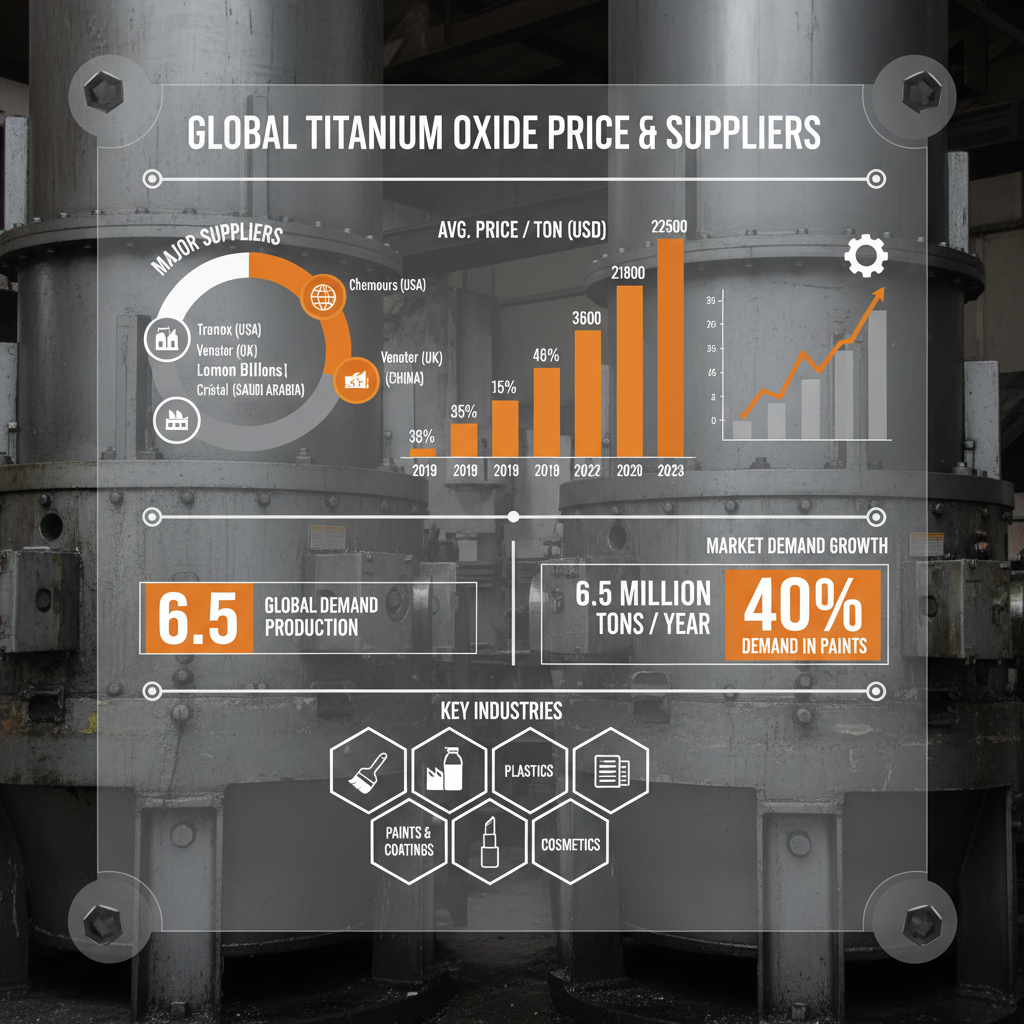
Identifying reliable titanium oxide price suppliers requires careful research. Several companies dominate the global market, each with its strengths and weaknesses. These include Chemours, Tronox, Venator, and Lomon Billions. Chinese manufacturers have also gained significant market share in recent years. When evaluating suppliers, consider factors like production capacity, product quality, pricing, delivery reliability, and technical support. The following table provides a comparative overview of some key players:
Evaluating TiO2 Quality: Key Specifications
The price is only one aspect of the equation; quality is paramount. Key specifications to evaluate include TiO2 purity, particle size, surface treatment, and whiteness index. Rutile TiO2 generally exhibits higher opacity and durability compared to anatase. Surface treatments can enhance dispersibility and performance in specific applications. It's crucial to request a Certificate of Analysis (CoA) from the supplier to verify that the TiO2 meets your required specifications. Consider conducting your own quality control testing to ensure consistency and reliability. CQ Titanium Dioxide provides detailed specifications and CoA’s for all their products.
The Importance of Building Strong Supplier Relationships
Beyond price and quality, fostering strong relationships with your titanium oxide suppliers is vital for long-term success. Open communication, transparent pricing, and reliable delivery are key elements of a successful partnership. Consider conducting regular supplier audits to ensure adherence to quality standards and ethical sourcing practices. A collaborative relationship can lead to preferential pricing, faster lead times, and customized solutions tailored to your specific needs.
Future Trends in the Titanium Oxide Market
The TiO2 market is dynamic, with several emerging trends shaping its future. Increasing demand for high-performance TiO2 in specialized applications, such as UV protection and photocatalysis, is driving innovation. Growing environmental concerns are pushing for the development of more sustainable production processes and alternatives to traditional TiO2. The rise of digital marketplaces and online sourcing platforms is also transforming the way buyers and suppliers connect. Staying abreast of these trends will enable you to make informed decisions and maintain a competitive edge.
Conclusion: Securing Reliable TiO2 Supply
Successfully navigating the titanium oxide market requires a strategic approach that considers price, quality, and supplier reliability. By understanding the factors influencing price, evaluating potential suppliers thoroughly, and building strong relationships, you can secure a consistent supply of high-quality TiO2 at a competitive price. CQ Titanium Dioxide is committed to providing exceptional products and services to meet your specific needs.
Frequently Asked Questions (FAQs)
What is the difference between Rutile and Anatase TiO2?
Rutile and Anatase are two crystalline forms of titanium dioxide, each possessing distinct properties. Rutile TiO2 is known for its superior opacity, higher refractive index, and greater weather resistance, making it ideal for applications requiring high performance and durability, such as paints and coatings. Anatase TiO2, while less expensive, offers excellent photocatalytic activity and is often used in applications like air purification and self-cleaning surfaces. The choice between Rutile and Anatase depends on the specific requirements of the end-use application. Generally, Rutile is preferred for its overall performance in most traditional uses.
How does surface treatment affect TiO2 performance?
Surface treatment significantly impacts TiO2 performance by modifying its surface properties. Coatings, typically made of inorganic materials like silica or alumina, enhance dispersibility, reduce agglomeration, and improve resistance to moisture and UV degradation. These treatments also optimize compatibility with different binder systems, enhancing color development, gloss, and overall coating performance. Properly treated TiO2 leads to better utilization of the pigment, resulting in improved optical properties and longer-lasting products.
What should I look for in a Certificate of Analysis (CoA)?
A Certificate of Analysis (CoA) is a critical document provided by the supplier, detailing the chemical and physical properties of a specific TiO2 batch. Key parameters to check include TiO2 purity, particle size distribution, whiteness index, oil absorption, and volatile matter content. Ensure the CoA values align with your specifications. Verify the test methods used are standardized and reputable. A comprehensive CoA demonstrates the supplier’s commitment to quality control and provides assurance that the product meets the required standards.
How can I minimize price fluctuations in TiO2 purchases?
Minimizing price fluctuations requires proactive strategies. Consider entering into long-term contracts with suppliers to secure favorable pricing. Diversify your supplier base to reduce reliance on a single source. Monitor market trends and anticipate price movements. Optimize your inventory management to avoid excessive stockpiling or shortages. Collaborate with your supplier to explore cost-reduction opportunities, such as optimized packaging or transportation methods.
-
Why Rutile Titanium Dioxide is the Preferred Choice for Automotive Finishes
NewsApr.17,2026
-
Utilizing Anatase Titanium Dioxide for Inks and Specialized Printing Media
NewsApr.17,2026
-
The Science of Reflection: How Titanium Dioxide White Pigment Defines Modern Paints
NewsApr.17,2026
-
The Role of Coated Titanium Dioxide in High-Performance Exterior Coatings
NewsApr.17,2026
-
Enhancing Structural Longevity: Titanium Dioxide for Concrete and Masonry
NewsApr.17,2026
-
Comparing the Optical Efficiency of Rutile and Anatase Titanium Dioxide
NewsApr.17,2026