

крас . 03, 2026 10:09 Вярнуцца да спісу
Navigating the Crystalline Divide: Strategic Selection Between Anatase and Rutile Titanium Dioxide
In the sophisticated realm of industrial chemistry, the transition from a raw mineral to a high-performance functional additive is a journey defined by molecular precision. For manufacturers and procurement specialists, the most critical decision often lies in the choice between the two primary polymorphic forms of the world’s most powerful whitening agent: anatase and rutile type titanium dioxide. While both share the same chemical formula, their internal atomic arrangements grant them vastly different physical properties, making each suitable for specific, non-overlapping industrial roles. Understanding these nuances is not merely a technical requirement; it is a strategic necessity for optimizing product longevity, aesthetic brilliance, and cost-efficiency in a global market that demands uncompromising quality.
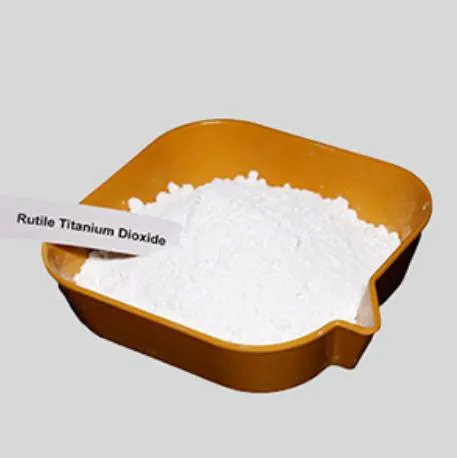
The Structural Foundation of Anatase and Rutile Type Titanium Dioxide
At the heart of the distinction between these two forms is the geometric arrangement of the titanium and oxygen atoms within the crystal lattice. In the rutile form, the atoms are packed more densely, resulting in a more compact and stable structure. This density is the direct cause of rutile’s higher refractive index and superior light-scattering ability. Conversely, the anatase structure is more open and less dense, which imparts a "softer" physical characteristic and a unique photocatalytic reactivity.
Пры разглядзе anatase and rutile type titanium dioxide, one must view them as specialized tools rather than interchangeable commodities. The rutile crystal is the "heavy-duty" variant, designed to withstand the rigors of the external environment, while the anatase crystal is the "precision" variant, valued for its purity of color and gentleness on processing equipment. This fundamental structural divergence dictates every subsequent application, from the paint on a skyscraper to the ink on a food wrapper.
The Power of Weatherability: Why Professionals Favor Titanium Dioxide Rutile
For any application destined for the outdoors, the choice is almost universally centered on titanium dioxide rutile. The compact nature of the rutile lattice makes it inherently more resistant to the destructive forces of ultraviolet (UV) radiation. When sunlight hits a surface, the photons attempt to break down the chemical bonds of the coating's resin binder. Rutile particles act as a formidable shield, absorbing and scattering this energy before it can cause the polymer matrix to degrade.
This resistance to "chalking"—the white, powdery erosion often seen on old paint—makes titanium dioxide rutile the backbone of the automotive and architectural industries. Beyond simple protection, the rutile form offers the highest level of "hiding power." Because it reflects light so efficiently, it allows for thinner coating layers that still provide total opacity. This efficiency is a major driver for innovation in high-durability industrial finishes, where the goal is to provide maximum protection with minimum material usage, ensuring that structures remain vibrant and intact across decades of exposure to the elements.
The Artistic Precision of Titanium Dioxide Anatase in Specialty Markets
While rutile dominates the exterior world, titanium dioxide anatase finds its home in the delicate environments of interior design, papermaking, and the graphic arts. The hallmark of the anatase form is its "clean" whiteness. While rutile often carries a very slight yellow undertone due to its absorption spectrum, anatase reflects light with a subtle blue bias. This results in a "brighter" and "cooler" white that is highly coveted by manufacturers of high-end stationery, interior ceiling paints, and specialized plastics.
Furthermore, titanium dioxide anatase is significantly less abrasive than its rutile counterpart. In industries like synthetic fiber production or high-speed printing, the hardness of the pigment can lead to premature wear of spinnerets, rollers, and blades. The softer anatase crystal glides through these mechanical systems with minimal friction, extending the life of expensive industrial machinery. This combination of optical purity and mechanical gentleness makes it the indispensable choice for indoor applications where the relentless protection against UV radiation is less critical than the pursuit of aesthetic perfection and operational longevity.
Identifying the Best Pigment Rutile Titanium Dioxide for High-End Use
In the search for the best pigment rutile titanium dioxide, manufacturers look beyond the basic crystal structure and focus on the sophisticated surface treatments that enhance performance. The raw rutile crystal is chemically active; therefore, the highest quality grades undergo a process of inorganic encapsulation. Layers of silica, alumina, or zirconia are applied to the particle surface to act as a buffer, preventing the pigment from reacting with the surrounding paint or plastic resin.
The best pigment rutile titanium dioxide is characterized by its exceptional dispersibility. In a high-volume production environment, time is a significant cost factor. A pigment that integrates quickly and evenly into a liquid or molten medium reduces energy consumption and prevents surface defects like "specking" or uneven gloss. By investing in these top-tier grades, companies ensure that their products not only look better at the point of sale but also maintain their structural integrity throughout their entire functional lifespan, fostering a reputation for quality and reliability in a competitive international market.
The Complex Chemistry Behind Chemical Titanium Dioxide Production
The production of chemical titanium dioxide is a testament to the advancements in modern industrial engineering. Two primary methods—the sulfate process and the chloride process—are used to transform titanium ore into these high-purity pigments. The sulfate process is more versatile, capable of producing both anatase and rutile forms, and is often the preferred method for creating specialized grades for the paper and fiber industries. The chloride process, while more technologically demanding, typically yields rutile pigments with a narrower particle size distribution and higher brightness.
This deep level of chemical titanium dioxide expertise allows manufacturers to offer personalized customized services to global clients. Whether a customer requires a specific surface treatment for better moisture resistance in tropical climates or a particular particle size for high-gloss automotive topcoats, the ability to manipulate the chemical properties of the pigment is a major differentiator. This unremitting pursuit of technological excellence ensures that the chemical industry continues to provide the diverse international market with solutions that are tailored to the specific challenges of modern manufacturing.
-
Why Rutile Titanium Dioxide is the Preferred Choice for Automotive Finishes
НавіныApr.17,2026
-
Utilizing Anatase Titanium Dioxide for Inks and Specialized Printing Media
НавіныApr.17,2026
-
The Science of Reflection: How Titanium Dioxide White Pigment Defines Modern Paints
НавіныApr.17,2026
-
The Role of Coated Titanium Dioxide in High-Performance Exterior Coatings
НавіныApr.17,2026
-
Enhancing Structural Longevity: Titanium Dioxide for Concrete and Masonry
НавіныApr.17,2026
-
Comparing the Optical Efficiency of Rutile and Anatase Titanium Dioxide
НавіныApr.17,2026