

Май . 08, 2026 11:31 Вярнуцца да спісу
Industrial UV Shielding: The Purpose of Titanium Dioxide in Plastic Manufacturing
The durability of modern plastic products is a marvel of material science that we often take for granted. From the heavy-duty agricultural films that protect our crops to the sleek casings of our high-end electronics, polymers are expected to maintain their strength, color, and structural integrity under a constant barrage of environmental stressors. However, without a specific internal defense mechanism, most plastics would rapidly become brittle, discolored, and prone to failure when exposed to sunlight. This is where the purpose of titanium dioxide shifts from being a mere colorant to acting as a sophisticated industrial UV shield, ensuring that the plastic world we live in remains resilient and functional.
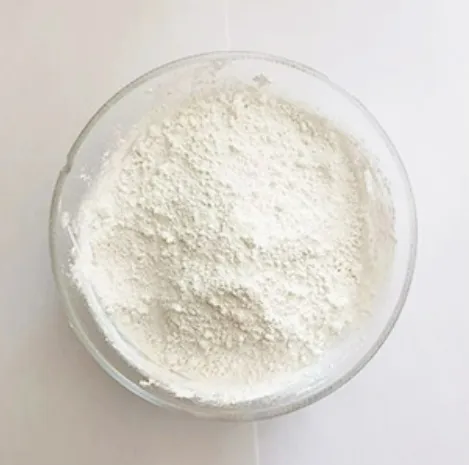
The Invisible Guardian: Understanding the Purpose of Titanium Dioxide in Polymers
To understand why this mineral is so vital, one must first look at the invisible threat posed by ultraviolet radiation. UV rays possess enough energy to break the molecular bonds of plastic polymers, a process known as photodegradation. When we discuss the purpose of titanium dioxide in this context, we are talking about its ability to act as a physical barrier. Instead of allowing the UV energy to penetrate the plastic and tear apart its chemical structure, the particles embedded within the material intercept and scatter that energy.
This protective quality is what allows plastic products to exist outdoors for years rather than weeks. It is the reason why a white plastic garden chair doesn't shatter the first time someone sits on it after a summer in the sun, and why the siding on a house maintains its protective seal against the elements. By absorbing and reflecting harmful radiation, this additive preserves the "elongation" and "impact strength" of the plastic, which are fancy ways of saying it keeps the material flexible and tough. Without this intervention, our modern reliance on plastic for long-term outdoor applications would be virtually impossible.
A World of Resilience: Products That Use Titanium Dioxide for Longevity
When we survey the landscape of modern consumer and industrial goods, the list of products that use titanium dioxide is nearly exhaustive. In the automotive sector, plastic bumpers, trim components, and interior dashboards rely on this mineral to prevent the "cracking" and "fading" that characterized older vehicles. Manufacturers integrate the pigment into the masterbatch—the concentrated mixture used to color plastic—to ensure that the protection is uniform throughout the entire part, not just on the surface.
In the world of infrastructure, the use of titanium dioxide is seen in PVC window frames, vinyl siding, and plastic piping systems. These items are expected to last for thirty years or more. Because these products are constantly exposed to the sun, they require a high-performance additive that won't wash away or degrade over time. Similarly, in the packaging industry, white plastic bottles for dairy products or pharmaceuticals use the pigment to protect the sensitive contents inside from light-induced spoilage. By creating an opaque barrier, the pigment ensures that the product reaches the consumer in the same condition it left the factory, highlighting that its role is as much about protecting the "inside" as it is about the "outside."
The Chemical Synergy of Titanium Dioxide Chemical in Masterbatch Production
The integration of a mineral into a polymer is a delicate process that requires a high degree of compatibility. As a titanium dioxide chemical, the material must be engineered to disperse perfectly within a molten plastic resin during the manufacturing process. If the particles clump together, they create weak points in the plastic and leave gaps in the UV shield. Therefore, high-quality additives are often treated with organic and inorganic coatings—such as silica or alumina—to help them "blend" with the plastic chains.
This chemical synergy is what allows for the creation of ultra-thin plastic films, such as those used in "mulch films" for industrial farming. These films are laid over soil to regulate temperature and moisture, and they are incredibly thin to save on material costs. Despite their thinness, they must survive months of intense field exposure. The titanium dioxide chemical provides the necessary opacity and UV resistance to keep the film from disintegrating before the harvest is complete. This application demonstrates that even at a microscopic level, the engineering of the pigment is directly linked to the success of large-scale industrial operations.
Why Rutile Titanium Dioxide Pigment is the Industry Standard for Outdoor Plastics
Not all pigments are created equal when it comes to the extreme demands of the plastics industry. For any application that involves direct sunlight, rutile titanium dioxide pigment is the preferred choice of engineers and formulators. The rutile crystal structure is more compact and dense than the anatase form, which gives it a much higher refractive index. In practical terms, this means it is a much more efficient "mirror" for light.
Furthermore, the rutile form is chemically more inert. In the high-temperature environment of a plastic extruder—where resins are melted at hundreds of degrees—the pigment must remain stable. Rutile titanium dioxide pigment can withstand these temperatures without changing color or reacting with the plastic resin. Its superior weatherability ensures that it won't facilitate "chalking"—that white, powdery residue you sometimes see on old, degraded plastic surfaces. By remaining locked within the polymer matrix, it provides a permanent shield that lasts as long as the product itself, making it the gold standard for everything from stadium seating to telecommunications cable sheathing.
The Precision of Titanium Dioxide Powder in High-Speed Injection Molding
The manufacturing of complex plastic parts, such as the housings for smartphones or medical devices, requires a material that flows perfectly into intricate molds. The quality of the titanium dioxide powder used in these applications is critical. If the powder is too coarse or inconsistent, it can cause defects in the surface finish or clog the precision nozzles of the molding machinery.
High-performance titanium dioxide powder is milled to a very specific and uniform particle size. This precision ensures that the color is perfectly consistent across millions of units and that the plastic maintains a smooth, high-gloss finish that is pleasing to the touch. In the medical field, where plastic components must be sterilized and remain pristine, the purity of this powder is a safety requirement. It ensures that the plastic doesn't leach chemicals or harbor bacteria in surface cracks. By providing a dense, smooth surface, the pigment helps create products that are as hygienic as they are durable.
-
The Role of High Purity Titanium Dioxide in Polymer Durability
НавіныMay.14,2026
-
Optimizing Industrial Coatings with Rutile Titanium Dioxide
НавіныMay.14,2026
-
Improving Brightness in Paper Industry with Anatase Grade TiO2
НавіныMay.14,2026
-
Enhancing Opacity in Premium Inks with Titanium Dioxide Pigment
НавіныMay.14,2026
-
Chemical Stability of Titanium Dioxide in Ceramic Glaze Applications
НавіныMay.14,2026
-
Advanced UV Protection: Titanium Dioxide for Construction Materials
НавіныMay.14,2026